
Farewell to Wolf-Dietrich Niemeier (1947–2026)
Diamantis Panagiotopoulos, 15.11.2026
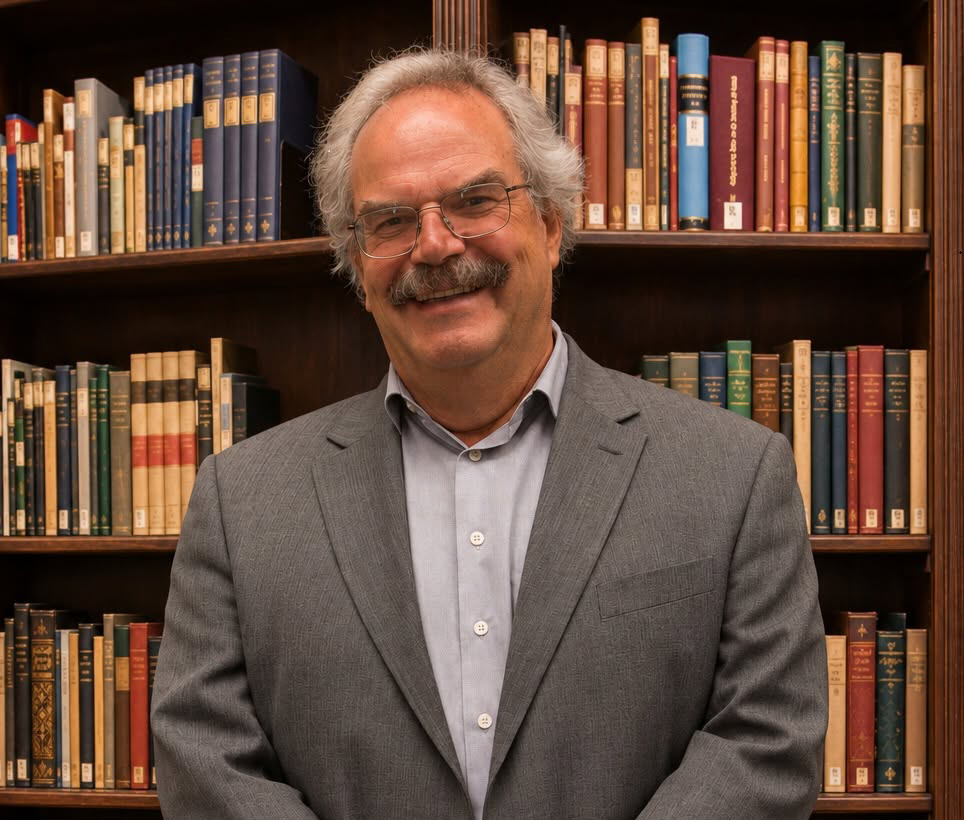
With deep sadness, the Institute of Classical Archaeology and Byzantine Archaeology at Heidelberg University has learned of the passing of Wolf-Dietrich Niemeier, one of the great figures of Aegean archaeology. The field has lost a towering scholar and many of us have lost a teacher, a mentor, a colleague, and a friend.
Wolf-Dietrich’s path began in Göttingen, where he studied Classical Archaeology, Ancient History, Prehistory, and Near Eastern Archaeology (1968-1974). His PhD dissertation on the Palace Style pottery of Knossos at the University of Mannheim under the supervision of Wolfgang Schiering (1976) already revealed what would define his work: a gift for combining different strands of archaeological evidence into new narratives that challenged conventional wisdom. From the Corpus of Minoan and Mycenaean Seals in Marburg (1976-1979) to Samos, from the University of Freiburg (1986-1991) to the University of Heidelberg (1991-2001), and finally to the directorship of the German Archaeological Institute (DAI) in Athens (2001–2013), he built a career of rare breadth and ambition.
Crete was at the heart of his scholarly life. Although he never had the opportunity to direct an excavation on the island, he had an extraordinary talent for finding traces of the Minoan world wherever his fieldwork took him. The Aegean-style frescoes at Tel Kabri and his discoveries at Miletus and on Samos reshaped our understanding of the connections between Bronze Age Crete and the wider Mediterranean. His work ranged far beyond the Bronze Age, from the Archaic sculptures unearthed in the Kerameikos in Athens to the early phases of the sanctuary at Abai/Kalapodi, where he explored how cult practices endured and changed over the centuries.
Generations of students in Freiburg and Heidelberg will remember the energy of his lecture courses. They were a torrent of images, observations, and hypotheses followed one another in quick succession, while the assistant at the projector searched through a forest of slides for the one he wanted to show again. There was always a reason to look twice, and for his students this was part of the excitement of seeing archaeology in practice. With their wealth of images and ideas, his guest lectures held colleagues and the wider public spellbound, no small feat given that some of them may well have been the longest in the history of Aegean archaeology.
In debates over Knossos, Aegean chronology and the Mycenaean presence on Crete, Wolf-Dietrich defended his ideas with conviction while taking opposing arguments seriously. The same curiosity that made him such an accomplished excavator made him a formidable and generous partner in debate. His international standing was reflected in the honorary doctorates awarded to him by the University of Liège in 2002 and the National and Kapodistrian University of Athens in 2019. Invitations to lecture and serve as a visiting professor took him to universities across five continents.
His discoveries will continue to shape major current questions of our discipline. Those who learned from him, dug with him or argued with him will remember the pleasure he took in working through those questions together. Our thoughts are now with his beloved wife and closest collaborator, Barbara, who supported his work for decades with rare professionalism, efficacy, and passion.
During his years in Heidelberg, Wolf-Dietrich liked to say that “every day north of the Alps is a day lost.” He was fortunate to spend the last and most productive part of his life in the region he loved and to which he devoted all his scholarly energy. May the thought of his happy and fulfilled life bring some consolation to all of us who will miss him deeply.
Καλό ταξίδι, Wolf-Dietrich. Danke für alles.