NEWS
The first book of the non profit organisation Monumenta appeared recently. The book publishes the proceedings of a two-day workshop held on the island of Naxos in 2008; it includes 9 papers and a discussion on the reasons that cause the destruction of the monuments of Naxos.
For further information: www.monumenta.org
HindustanTimes, 15/11/2010
A “sensational” discovery of 75-century-old copper tools in Serbia is compelling scientists to reconsider existing theories about where and when man began using metal. Belgrade – axes, hammers, hooks and needles – were found interspersed with other artefacts from a settlement that burned down some 7,000 years ago at Plocnik, near Prokuplje and 200 km south of Belgrade. The village
Maria Thermou, Το Βήμα, 16/11/2010
Ως τις 31 Δεκεμβρίου, ενδεχομένως και νωρίτερα, το στέγαστρο του Ακρωτηρίου της Σαντορίνης θα έχει αποκατασταθεί, ενώ στις 31 Μαΐου 2011 το έργο θα παραδοθεί ολοκληρωμένο στους αρχαιολόγους προκειμένου να οργανώσουν τον χώρο ώστε να ανοίξει για το κοινό. Το επεισόδιο της πτώσης τμήματος του στεγάστρου, που εκτός των άλλων στοίχισε τη ζωή σε έναν άνθρωπο, θα θεωρείται λήξαν. Ωστόσο
Michael Balter, Science, 18/10/2010
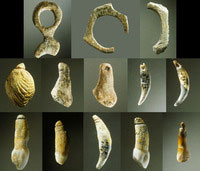
Neandertals are looking sharp these days. Many researchers now credit our evolutionary cousins, once regarded as brutish and dumb, with ‘modern behavior’, such as making sophisticated tools and fashioning jewelry, a sign of symbolic expression. But new radiocarbon dating at a site in France could mar this flattering view. The study concludes that the archaeological layers at the site are
Armenian News, 26/10/2010
Well-preserved burial places of people of the eneolithic age have been found in the caves of Arni 1, Vaiots Dzor, Armenia. Excavations are conducted in cooperation with archeologists from the University of California (USA) and University College Cork (UCC) (Ireland), head of the Armenian team Boris Gasparyan said.
Read more
George Siamourelis, Τα Μετέωρα
Το Σάββατο 23 Οκτωβρίου πραγματοποιήθηκαν τα εγκαίνια του σπηλαίου της Θεόπετρας από το Υπουργείο Πολιτισμού και Τουρισμού και από την Εφορεία Παλαιοανθρωπολογίας και Σπηλαιολογίας Νοτίου Ελλάδας η οποία είναι αρμόδια για τον εντοπισμό, την έρευνα, ανασκαφή, μελέτη, καθώς και για την προστασία και ανάδειξη των σπηλαίων (φυσικών ή τεχνητά διαμορφωμένων) που παρουσιάζουν ενδιαφέρον από φυσική, αρχαιολογική, ιστορική, παλαιοντολογική και παλαιοανθρωπολογική
Cornell archaeologists are helping to rewrite the early prehistory of human civilization on Cyprus, with evidence that hunter-gatherers began to form agricultural settlements on the island half a millennium earlier than previously believed. Beginning with pedestrian surveys of promising sites in 2005, students have assisted with fieldwork on Cyprus led by professor of classics Sturt Manning, director of Cornell’s archaeology
Neanderthals may be lampooned as slack-jawed low-brows who could just about wield a heavy club on a good day, but in one important respect they outperformed us: in the number of sex partners. So says an unusual study which suggests finger length can indicate promiscuity among hominins, as the ancient family of humans is known.
Read more
Maria Thermou, Το Βήμα, 06/11/2010
Η αρχαιολογία είναι η επιστήμη του παρελθόντος που βλέπει στο μέλλον. Αναγκαστικά. Τίποτε δεν αποκαλύπτεται με μιας. Οι ανασκαφές διαρκούν για χρόνια – ακόμη περισσότερο η μελέτη του υλικού – κάθε φορά μια νέα έρευνα μπορεί να προσθέσει, να αφαιρέσει κάτι ή να ανατρέψει ριζικά την αρχική εικόνα. Έπειτα καθετί που έρχεται στο φως ζει μια νέα ζωή. Δεν είναι
N. Kontrarou-Rassia, Ελευθεροτυπία, 06/11/2010
Δεν πρόλαβα τελικά να βεβαιωθώ αν όντως δοκίμασε ο Γιάννης Σακελλαράκης μια προϊστορική ελιά, όπως έλεγε. Ούτε αν η γεύση της ήταν γλυκόπικρη, όπως και η ζωή του αρχαιολόγου, του αφιερωμένου στην ποιητική της ανασκαφής και στην αναζήτηση του ανθρώπινου ίχνους μέσα από την αρχαία σκόνη. Μου αρκούσε η πολύχυμη γεύση που άφηναν τα υπέροχα συγγραφικά ονειροπολήματά του και η
Maria Thermou, Το Βήμα, 21/10/2010
Άνθρωπος του Νeanderthal ή Ηomo Sapiens ήταν ο πρώτος κάτοικος του σπηλαίου της Θεόπετρας; Η απάντηση αναζητείται στα ιζήματα του σπηλαίου, που έχουν χρονολογηθεί στα 130.000 με 140.000 πριν από σήμερα και στα ευρήματα των ερευνών, ανάμεσά τους και αποτυπώματα ανθρωπίνων πελμάτων και εργαλεία. «Τα ευρήματα αυτά είναι μοναδικά στον ελλαδικό χώρο και εξαιρετικά σπάνια σε παγκόσμια κλίμακα, αφού είναι
Eti Bonn-Muller, AIA, 09/11/2010
Chef-instructor Nikki Rose talks about the importance of protecting Crete’s natural and cultural resources—and how “green” the Minoans really were.
Read more
Jennifer Viegas, DiscoveryNews, 12/10/2010
Early humans may have evolved as prey animals rather than as predators, suggest the remains of our prehistoric primate ancestors that were devoured by hungry birds and carnivorous mammals. The discovery of multiple de-fleshed, chomped and gnawed bones from the extinct primates, which lived 16 to 20 million years ago on Rusinga Island, Kenya, was announced today at the Society
Heritage Key, 04/10/2010
German archaeologists have made new discoveries at modern day Hisarlik, northwest Turkey – ancient Troy. The finds further confirm the area occupied during the Bronze Age was not limited to the citadel; Troy VI and VII were much larger than originally thought. The three year research project at Troy – lead by Prof. Ernst Pernicka, from the University of Tubingen’s Institute of Pre-
ArchaeoNews, 30/10/2010
Although rock-cut tombs are relatively common in Sardinia (Italy), the Tomba della scacchiera has an altogether unique carved and painted rock-art heritage and is now at the centre of controversy. This monument, dating to the Ozieri period (between 3000 and 1500 BC), revealed by chance a wealth of painted and engraved art that graced its walls and ceiling. Following excavation,