Aegeus News
16.09.2026
[en]Test post – 16.09 – 01:12:00
Text in russian language goes here
Aegeus News
16.09.2026
Text in russian language goes here
BOOKS | 08.12.2025
The Lion Gate is an icon, a piece of art more than 3300 years old, representing the glory of Mycenaean Greece. Preserved in situ, it has passed through time and circumstance, witnessing its own civilisation fail and many others flourishing since. Often considered as an emblem for the royal house of Mycenae, it is the only surviving piece of large-scale sculpture of the Greek Bronze Age.
BOOKS | 08.12.2025
This publication presents the archaeological evidence from two associated Minoan sites situated at Apesokari in the Mesara Plain of South-Central Crete, Tholos Tomb A and the neighboring free-standing domestic complex on Vigla Hill.
BOOKS | 08.12.2025
The date of the destruction of the palace at Knossos on Crete has been one of the key problems of Aegean prehistory since the palace was excavated at the beginning of the 20th century. The excavator Arthur Evans argued for an LM II date as he presumed that the inscribed tablets found in the palace destruction layers must have been written by the people who had produced the large and richly adorned Palace Style jars which he dated to the LM II period.
BOOKS | 09.11.2025
It was during a conference dinner in Rome, a few years ago, that we started talking about a collective volume in honour of Penelope Mountjoy that now we can hold in our hands. Being a scholar of an indisputable quality, which transcends time and space, this volume does not intend to celebrate a special anniversary, but rather our honoree’s extraordinary and enduring contribution to Aegean archaeology.
BOOKS | 09.11.2025
Το παρόν βιβλίο αναδεικνύει τις εικόνες ως μεθοδολογικά σύνθετα ερευνητικά εργαλεία μελέτης της προϊστορικής αρχιτεκτονικής στην Ελλάδα. Εξετάζονται 200 και πλέον τελικές δημοσιεύσεις ανασκαφών προϊστορικών αρχαιολογικών θέσεων από την πρώτη ανασκαφή του Heinrich Schliemann στις Μυκήνες το 1876 μέχρι σήμερα.
BOOKS | 09.11.2025
In 1939, on the first day of excavation on a hill in western Messenia, Carl W. Blegen uncovered a Mycenaean palace that he called The Palace of Nestor. Its archives contained clay tablets inscribed in the so-called Linear B script, a syllabary employed to record the Greek language.
BOOKS | 04.10.2025
As editors and organisers, we were gratified to note a good number of early- and mid-career scholars among those contributing to this volume, and even more early-career scholars and students had expressed an interest in attending the meeting itself, leaving the editors in no doubt that interest in Mycenaean, and indeed Aegean studies more widely, is unbroken and continues to attract the intellectual attention of rising academics in a large number of disciplines.
BOOKS | 21.09.2025
Το έργο αυτό αποτελεί συστηματική μελέτη των απαρχών της οίκησης του Ελλαδικού Χώρου, από τις πρωιμότερες διαθέσιμες μαρτυρίες την Μεσολιθική έως και την Πρώιμη Εποχή του Χαλκού (9η – 3η χιλιετία π.Χ.), συνεκτιμώντας ανάλογα δεδομένα από την ευρύτερη Ανατολική Μεσόγειο (κυρίως 14η χιλιετία π.Χ. κ.ε.), Εγγύς Ανατολή, Μεσοποταμία, Ανατολία, Πόντος – Κασπία, Αίγυπτος – Αφρική.
BOOKS | 21.09.2025
The site of Phylakopi on Melos occupies a special place in the prehistory of the Aegean Bronze Age. The first work there by the British School at Athens in 1896–99 (there were two further campaigns, in 1911 and 1974–77) was memorably described by Carl Blegen as ‘the first really serious effort to understand stratification, the first really good excavation in Greece’. The Field Director, Duncan Mackenzie, kept detailed day-to-day records of the work, later applying methods developed on Melos to the excavation of Knossos.
NEWS | 08.04.2025
Μια εντυπωσιακή ψηφιακή αναπαράσταση βασισμένη σε προηγμένα εργαλεία 3D τεχνολογίας έδωσε πρόσωπο σε μία γυναίκα που έζησε πριν χιλιάδες χρόνια στις Μυκήνες, αποκαλύπτοντας άγνωστες πτυχές ενός κόσμου που μέχρι πρόσφατα έμοιαζε απρόσιτος.
AEGEAN STUDIES | 08.12.2022
Since the 1930s a constantly increasing number of warrior burials of Late Helladic IIIC date (12th and early 11th century B.C.) have come to light in the north-western Peloponnese, especially within the borders of the historical and modern region of Achaia.
WANDERINGS | 30.06.2021
Αν αναζητήσει κάποιος να βρει σε λεξικά ή στο διαδίκτυο τι είναι αρχαιολογία, το πιο πιθανό είναι να δει ότι η αρχαιολογία έχει ως σκοπό τη μελέτη των ανθρώπινων υλικών καταλοίπων του παρελθόντος, ενώ κύριο εργαλείο αυτής είναι οι ανασκαφές. Όμως τελικά είναι αυτός ο μοναδικός ή ο κύριος σκοπός της αρχαιολογίας ή είναι κάτι πιο πολύπλευρο και πολυσύνθετο; Πράγματι οι αρχαιολόγοι οφείλουν να μελετούν και να δημοσιεύουν τα ανασκαφικά τους ευρήματα, ωστόσο μπορούν να μεταδώσουν τις γνώσεις τους σε ένα ευρύ κοινό, που δεν κατέχει ούτε την επιστημονική γλώσσα ούτε φυσικά την αρχαιολογική ορολογία;
AEGEAN BOOK REVIEWS | 28.03.2021
In his book Seafaring and Seafarers in the Bronze Age Eastern Mediterranean Knapp deals with seafaring in 7 chapters. Preface and acknowledgements precede (p. 11-12) and then follows the list of illustrations. In the preface, Knapp expresses his gratitude to some scholars for their comments and/or unpublished material and the drawings of illustrations. The e-book version is free of charge. The list of the illustrations consists of maps (maps 1-5), figures (figure 1-51), tables (tables 1-5). The maps precede the first chapter in the book.
AEGEAN BOOK REVIEWS | 13.12.2019
This fascinating and richly illustrated book discusses the phenomenon of the modern reception of what we call the Minoan culture in various artistic media, from the moment of the great discovery of Minoan Crete in 1900, to the first decade of the 21st century. The volume explores a range of socio-cultural effects that Minoan Crete has had on contemporary arts and culture, such as architecture, design, fashion, dance, new religious movements, literature, etc., as well as the dynamics of modern responses to big archaeological discoveries and reconstructions.
WANDERINGS | 02.05.2019
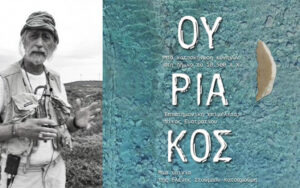
Στο δεύτερο και τελευταίο μέρος της συνέντευξης παρουσιάζεται η περίοδος από το 1960, όταν ο Γεώργιος Παπαθανασόπουλος έγινε Επιμελητής Αρχαιοτήτων στην Ολυμπία, μέχρι και σήμερα. Η συνέντευξη αυτή εστιάζει στις ανασκαφές του Παπαθανασόπουλου στον Διρό, στην ιδιαίτερη σχέση του με τη θάλασσα και ιδίως στην ίδρυση της Εφορείας Εναλίων Αρχαιοτήτων, στη δημιουργία του νεολιθικού μουσείου στον Διρό, καθώς και σε άλλες έρευνες.
AEGEAN STUDIES | 14.12.2018
Though it is generally agreed upon that the Greeks borrowed (and modified) the alphabet from the Phoenicians, there is no consensus about the moment when this took place.
WANDERINGS | 20.11.2018
Ο Γεώργιος Παπαθανασόπουλος είναι πλέον γνωστός στον κόσμο της ελληνικής αρχαιολογίας για τη συμβολή του στην ίδρυση της ενάλιας αρχαιολογικής και σπηλαιολογικής έρευνας. Χάρις στις δικές του ενέργειες οι Εφορείες Εναλίων Αρχαιοτήτων και Σπηλαιολογίας εγγράφονται οργανικά και αναπόσπαστα στις αρμοδιότητες του Υπουργείου Πολιτισμού. Στους δε προϊστορικούς αρχαιολόγους είναι επίσης γνωστός και από ένα άλλο γεγονός. Επί σειρά ετών υπήρξε συνεργάτης του αείμνηστου Carl Blegen στις ανασκαφές του ανακτόρου του Νέστορος στην Πύλο.
EXCAVATIONS & RESEARCH | 26.09.2018
This short paper based on my lecture at Aegeus (January 27, 2017) explores the variability and change of the funerary landscapes in Central Greece during the first six centuries of the 2nd millennium BC. It updates the main conclusions of my study on the Emergence of the Mycenaean civilization in Central Greece (2011), which dealt with MH-LH IIIA1 graves uncovered in 64 sites in Boeotia, Phocis and Phthiotis, as well as in Attica and Euboea.