
AEGEAN LECTURES | 2026
Beyond the surface: Technology and alteration of vitreous materials in the LBA Aegean
Swedish Institute at Athens (Μitseon 9, Acropolis Metro station)
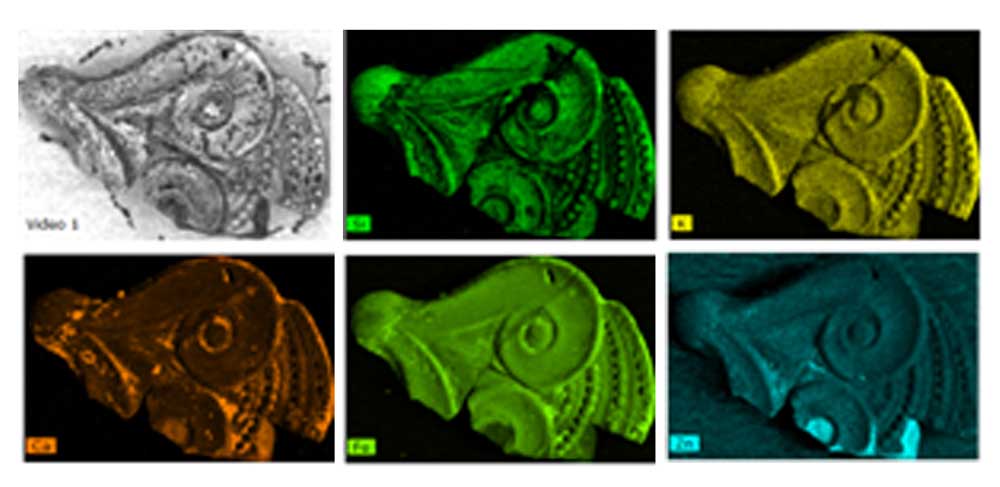
Glass has a fascinating history of more than 4000 years from today which reflects a captivating journey of innovation and cultural exchange. In the Late Bronze Age, glass was mostly manufactured in Egypt and Mesopotamia while the Mycenaeans had a significant role and were involved mostly to glassworking rather than glassmaking activities.
The Mycenaean civilization was characterized by advanced craftsmanship, including the production of glass and faience. These vitreous materials were not only used to create functional items but were also highly valued for their ornamental and symbolic roles. Such artifacts were commonly found in elite burials, reflecting their association with status and cultural significance.
Glass in the Mycenaean context was often made by heating a combination of silica (quartz pebbles), alkali (plant ashes), and various colorants, yielding materials that ranged from translucent to opaque. Faience, on the other hand, was produced using a quartz core body coated with a vitreous glaze, creating a brilliant, glossy finish. These vitreous materials are highly susceptible to degradation due to their composition and their burial environment leading to significant alteration of their visual characteristics.
This lecture is focusing on the technology and provenance of LBA glass found in Greece as well as on identifying the weathering mechanisms and associated compositional changes in the surface of the artifacts with the aid of state-of-the art non-invasive techniques.
A few words about the speaker
Dr. Artemios Oikonomou is the Scientific Research Officer at the Fitch Laboratory of the British School at Athens. He is a physicist-archaeological scientist, holding a PhD from the Department of Materials Science and Engineering at the University of Ioannina, as well as two Master’s degrees: one in Chemistry and Materials Technology, and another in History and Theory of Art & Curatorial Studies. His research focuses on the application of analytical techniques to address diverse questions regarding archaeological and historical materials. He has been awarded grants and fellowships from the Hellenic Foundation for Research and Innovation (H.F.R.I.), the Leventis Foundation, the European Union (Marie Skłodowska-Curie Post-Doctoral Fellowship-IEF), and the American School of Classical Studies at Athens. He has served as an Honorary Research Fellow at the Department of Archaeology, University of Nottingham, and currently holds the position of Associate Editor for the international peer-reviewed journals Journal of Archaeological Science: Reports, Heritage, and Encyclopedia. His research has been published in monographs, books, peer-reviewed journals, and conference proceedings, and he has participated in numerous national and international scientific conferences. Furthermore, he has extensive teaching experience at universities in Greece and abroad. He is a member of several national and international professional bodies, including the Hellenic Society for Archaeometry (elected Vice president), the Society of Archaeological Sciences (SAS), the Association Internationale pour l’ Histoire du Verre (AIHV), and the Association for the History of Glass (AHG).