NEWS
X. Κουκούλη-Χρυσανθάκη, Η. Τοdorova, Ι. Ασλάνης, Ι. Vajsov & Μ. Βάλλα, Archaeology & Arts, 23-09-2013
Ο οικισμός «Προμαχών-Τοpolnica» βρίσκεται περίπου 2 χλμ. νότια του βουλγαρικού χωριού Topolnica, 3,5 χλμ. νοτιοδυτικά από το ελληνικό συνοριακό χωριό Προμαχών και τέμνεται από τη γραμμή των συνόρων Ελλάδας-Βουλγαρίας.
Τα προγράμματα επιφανειακών αρχαιολογικών ερευνών που πραγματοποιήθηκαν στα τέλη της δεκαετίας του ’70 στις δύο πλευρές των συνόρων είχαν αναδείξει την πυκνότητα των νεολιθικών οικισμών στην κοιλάδα του Στρυμόνα και είχαν
The Australian, 19-09-2013
Before the first ancient Olympics, as Homer was writing his Iliad, there was a bustling early Iron Age city in Greece. And then it all but disappeared. Australian archaeologists will try to solve the ancient mystery of why the city was abandoned and whether a lack of fresh water was the cause. They’re off to Zagora, a city that was
Cyprus Department of Antiquities
The Department of Antiquities, Ministry of Communications and Works, announces the completion of the 2013 excavations at the PPNA (9th millennium) site of Ayia Varvara-Asprokremnos. The excavations were conducted from the end of March to mid-June 2013 under the direction of Dr. Carole McCartney on behalf of the Archaeological Research Unit of the University of Cyprus working in partnership with
www.fischerarchaeology.se
The excavations (May-June 2013) were directed by Professor Peter M. Fischer from the University of Gothenburg, Sweden. The Torsten Söderberg Foundation, Sweden, kindly supported by Dr. Tomas Söderberg, sponsored the project. Most welcome additional resources came from INSTAP and the Royal Society of Arts and Sciences in Gothenburg.
The results from a 1.3 hectare Ground-Penetrating Radar (GPR) survey in June
Leslie Gilbert Elman, CNN International, 13-09-2013
Ancient sites open your mind to just how old “old” can be and how sophisticated our ancient ancestors were in devising their artistic, engineering and construction methods. You’ll never equate “ancient” with “primitive” again.
You don’t need us to call your attention to the Colisseum in Rome or the pyramids in Egypt. So, like archaeologists, we’re digging deep for a
www.neolithicavgi.gr
Η ΚΘ΄ Εφορεία Προϊστορικών & Κλασικών Αρχαιοτήτων και η Επιστημονική Ομάδα των Ανασκαφών Αυγής σε συνεργασία με το Δήμο Καστοριάς συνεχίζουν τις εκπαιδευτικές δράσεις με αφορμή την αρχαιολογική έρευνα στο Νεολιθικό Οικισμό Αυγής. Μέσα από βιωματικές δραστηριότητες, που απευθύνονται πρωτίστως σε παιδιά, αλλά και σε ενήλικες, επιδιώκεται η επικοινωνία της αρχαιολογικής έρευνας με το ευρύ κοινό, καθώς και η ενεργή
Archaeology News Network, 10-09-2013
Researchers at the University of Sheffield have developed a method of sourcing obsidian artefacts that takes only 10 seconds — dozens of times faster than the current methods — with a handheld instrument that can be used at archaeological excavations. Obsidian, naturally occurring volcanic glass, is smooth, hard, and far sharper than a surgical scalpel when fractured, making it a
A. Papapostolou, Greek Reporter., 11-09-2013
A new excavation in the Xirokambi area of Aghios Vassilios west of Sparta, in the Peloponnese, Greece, has revealed a richness of Mycenean artefacts in the area, including the remains of a palace, Linear B tablets, fragments of wall paintings, and several bronze swords.
The excavation, led by emeritus ephor of antiquities Adamantia Vassilogrambrou, was presented publicly at the biennial
Maria Pappa, Archaeology & Arts, 09-09-2013
Από τις αρχές του προηγούμενου αιώνα ήταν ήδη γνωστό από τις έρευνες πρωτοπόρων αρχαιολόγων ότι η κοιλάδα του Ανθεμούντα, στα νοτιοανατολικά της Θεσσαλονίκης, κατοικείται κατά την προϊστορική περίοδο με μικρής έκτασης οικισμούς, οι οποίοι με το πέρασμα των χρόνων και τη συνεχή κατοίκησή τους σχημάτισαν τούμπες, μικρούς δηλαδή γηλόφους που δεσπόζουν στο σύγχρονο τοπίο. Μόνο κατά την τελευταία εικοσαετία του
The Archaeological Society at Athens
Η Αρχαιολογική Εταιρεία διοργανώνει κύκλο διαλέξεων-μαθημάτων με θέμα: “Η Αρχαιολογία της Κρήτης”. Τα μαθήματα ξεκινούν στις 6 Νοεμβρίου 2013 και θα γίνονται κάθε Τετάρτη, 18:00-20:00, στην Αρχαιολογική Εταιρεία, Πανεπιστημίου 22, Αθήνα.
Έναρξη εγγραφών: Από 1 Οκτωβρίου 2013, καθημερινά 08:00-13:30, Πανεπιστημίου 22, 5ος όροφος.
Δίδακτρα: 110 ευρώ / φοιτητές 70 ευρώ.
Πρόγραμμα:
Archaeological Museum of Thessaloniki, 12 September 2013 - 31 December 2014
Εγκαίνια έκθεσης: Πέμπτη 12 Σεπτεμβρίου 2013, ώρα: 19:30
 |
|
H αφίσα της έκθεσης. |
Η αρχαία Μεθώνη είναι μία από τις σημαντικότερες αρχαιολογικές θέσεις της Μακεδονίας. Βρίσκεται στη βόρεια Πιερία, στη δυτική ακτή του Θερμαϊκού Κόλπου κοντά στις νότιες εκβολές του Αλιάκμονα.
Οι ανασκαφές που διενεργούνται από την ΚΖ΄ Εφορεία Προϊστορικών και Κλασικών Αρχαιοτήτων από το 2003 μέχρι σήμερα έχουν φέρει στο φως
Rebecca Morelle, BBC News, 04-09-2013
A new timeline for the origin of ancient Egypt has been established by scientists. A team from the UK found that the transformation from a land of disparate farmers into a state ruled by a king was more rapid than previously thought. Using radiocarbon dating and computer models, they believe the civilisation’s first ruler – King Aha – came to
University of Gothenburg News, 21-08-2013
A Swedish archaeological expedition from the University of Gothenburg has excavated a previously unknown part of the Bronze Age city Hala Sultan Tekke (around 1600–1100 BC). The finds include a facility for extraction of copper and production of bronze objects, evidence of production of luxurious textiles, as well as ceramics and other objects imported from all over the Mediterranean but
The municipality of Chalkis, the 11th Ephorate of Prehistoric and Classical Antiquities and the 23rd Ephorate of Byzantine Antiquities, invites you to a guided tour and a series of lectures that will present the recent finds of the Lefkandi Xeropolis excavations. The event will take place in the archaeological site of Xeropolis, Lefkandi, on Sunday, September 8th, 05:00 p.m., with
tovima.gr, 28-08-2013
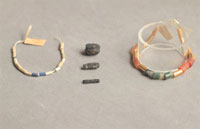
Θα μπορούσαν να αποτελούν απλώς ένα ακόμη προϊστορικό δείγμα του ότι στον άνθρωπο πάντα άρεσε να «στολίζεται». Οι ηλικίας άνω των 5.000 ετών χάντρες που έχουν βρεθεί στην Αίγυπτο, σε ένα νεκροταφείο της προδυναστικής περιόδου, περιβάλλονται όμως από ένα μοναδικό μυστήριο: είναι φτιαγμένες από σίδηρο σε μια εποχή που ακόμη ο σίδηρος δεν είχε εξορυχθεί. Πριν από μερικούς μήνες μια