NEWS
Archaeology News Network, 30-05-2013
Researchers at The Open University (OU) and The University of Manchester have found conclusive proof that Ancient Egyptians used meteorites to make symbolic accessories for their dead. The evidence comes from strings of iron beads which were excavated in 1911 at the Gerzeh cemetery, a burial site approximately 70km south of Cairo. Dating from 3350 to 3600 BC, thousands of
in.gr, 29-05-2013
Περί τα 8.000 θραύσματα αγγείων της νεολιθικής εποχής θα επιστρέψει στην Ελλάδα το μουσείο της Ομοσπονδιακής Δημοκρατίας της Γερμανίας Pfahlbaumeseum, σύμφωνα με έγγραφο του αναπληρωτή υπουργού Πολιτισμού Κώστα Τζαβάρα το οποίο διαβιβάστηκε στη Βουλή. Πρόκειται για 8.000 κομμάτια από αγγεία της νεολιθικής εποχής τα οποία προέρχονται από παράνομη ανασκαφή που έγινε το 1941 σε περιοχή κοντά στο Βελεστίνο και τα
Archaeology & Arts, 27-05-2013
Εκπαιδευτικό πρόγραμμα για παιδιά με τίτλο «Μεδεών – Μυκηναϊκές σφραγίδες» εγκαινιάζεται την Τετάρτη 29 Μαΐου 2013 και ώρα 09:00 στην Αρχαιολογική Συλλογή Διστόμου. Σκοπός του προγράμματος, το οποίο διοργανώνει η Θ’ Εφορεία Προϊστορικών και Κλασικών Αρχαιοτήτων, είναι η εξοικείωση των παιδιών με τη μυκηναϊκή τέχνη και ιδιαίτερα με τις μυκηναϊκές σφραγίδες. Ο Αρχαιολογικός Χώρος του Φωκικού Μεδεώνα είναι γνωστός κυρίως
Andrew Reinhard, The American School of Classical Studies at Athens, 20-05-2013
In 1995 Jeremy B. Rutter presented the pottery of the Fourth Settlement at Lerna in Lerna III: The Pottery of Lerna IV. The newest volume by Elizabeth C. Banks is the companion to the Rutter volume, outlining the architectural sequence of the EH III period at the site with descriptions of the major building types and other features, such
American School of Classical Studies at Athens / J.F. Costopoulos Foundation
 |
|
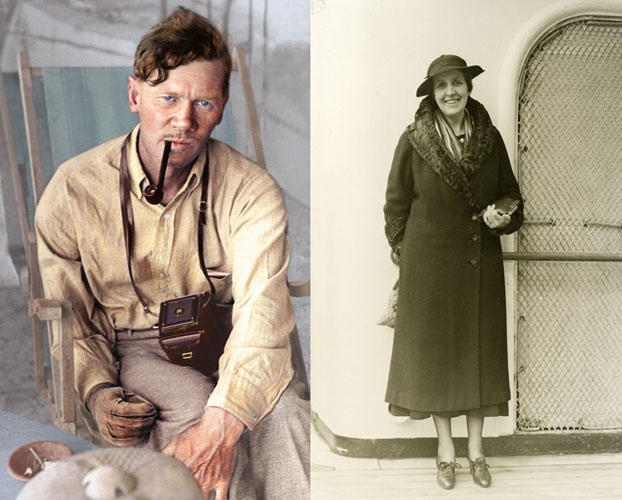
Ο Carl και η Elizabeth Blegen, ASCSA |
Η Αμερικανική Σχολή Κλασικών Σπουδών στην Αθήνα και το Ίδρυμα Ιωάννου Φ. Κωστοπούλου συνδιοργανώνουν στις 31 Μαΐου 2013, ημερίδα με τίτλο: Φόρος τιμής στον Carl και την Elizabeth Blegen. Μνήμη της οδού Πλουτάρχου 9.
Ο Carl W. Blegen (1887-1971), αρχαιολόγος και καθηγητής κλασικών σπουδών στο Πανεπιστήμιο του Cincinnati, είναι γνωστός από τις ανασκαφές
Jennifer Viegas, Discovery News, 22-05-2013
Anthropologists have discovered a beautiful Greek waterfront paradise once inhabited by generations of Neanderthals up to 100,000 years ago, according to a new study. This particular population was based at what is known as The Kalamakia Middle Paleolithic Cave site on the Mani peninsula of southern Greece. Previously, only one other Neanderthal tooth suggested that the now-extinct hominids settled in
Όπως κάθε χρόνο τον Μάϊο, οργανώνεται μεγάλο bazaar στην Αρχαιολογική Εταιρεία. Πάρα πολλά αρχαιολογικά και ιστορικά βιβλία αλλά και μεγάλη ποικιλία από βιβλία τέχνης, λαογραφίας, νομικά καθώς και παλαιά συλλεκτικά. Σας περιμένουμε όλους, την Πέμπτη, Παρασκευή και Σάββατο 23, 24 και 25 Μαϊου 2013, στη μεγάλη αίθουσα του μεγάρου της, Πανεπιστημίου 22.
Ωράρια: Πέμπτη, Παρασκευή, 10 π.μ. έως 6
Maria Thermou, Το Βήμα, 20-05-2013
Στους βράχους των Κυκλάδων σχεδίαζαν την εικόνα των πλοίων τους προφανέστατα γεμάτοι υπερηφάνεια για τα επιτεύγματά τους, έτσι ώστε να τα βρούμε εμείς σήμερα. Στον Αγιο Βασίλειο κοντά στην Σπάρτη ο εντοπισμός πινακίδων της Γραμμικής Β Γραφής συνεχίζεται κι ένα κτίριο μόλις αποκαλύπτεται.
Στην Ζώμινθο του Ψηλορείτη το μινωικό οικοδόμημα που έρχεται στο φως κρύβει πολύτιμους θησαυρούς. Και στην αρχαία
Zeta Xekalaki, Archaeology & Arts, 16-05-2013
«Ένας ευρωπαϊκός πληθυσμός στην Κρήτη της Μινωικής Εποχής του Χαλκού». Αυτός είναι, σε ελληνική μετάφραση, ο τίτλος του άρθρου που δημοσίευσε μια ομάδα επιστημόνων στο περιοδικό Nature και κάνει το γύρο του διαδικτύου τα τελευταία 24ωρα. Στο άρθρο υποστηρίζεται, μέσα από αποτελέσματα μελετών μιτοχονδριακού DNA που βρέθηκε σε Μινωικής περιόδου ανθρώπινα οστά από την Κρήτη, ότι οι εν λόγω Μινωίτες
Archaeology & Arts, 15-05-2013
The Greek polis, as a political and territorial entity, is a remarkable social organisation that emerged in the Greek world after the collapse of the Mycenaean palace system and the “transition” period that followed. Because of its very distinctive character within the ancient world, the city-state dominates the study of Greek history. But how did this start and how can
Discovery News, 14-05-2013
The Minoans, the builders of Europe’s first advanced civilization, really were European, new research suggests. The conclusion, published today (May 14) in the journal Nature Communications, was drawn by comparing DNA from 4,000-year-old Minoan skeletons with genetic material from people living throughout Europe and Africa in the past and today. “We now know that the founders of the first advanced
Margalit Fox, The New York Times, 11-05-2013
The woman was Alice Kober, an overworked, underpaid classics professor at Brooklyn College. In the mid-20th century, though hardly anyone knew it, Dr. Kober, working quietly and methodically at her dining table in Flatbush, helped solve one of the most tantalizing mysteries of the modern age. The mystery centered on a long-lost script from Aegean antiquity known as Linear B.
Archaeology News Network, 12-05-2013
Greece is preparing a case for the return of antiquities looted by the Nazis during World War II, officials said on Friday.“The entirety of the archaeological service’s archives is under investigation” in a search for photographs and sketches of lost items, the general secretariat for culture said in a statement. “Final and scientifically documented conclusions on the issue of Greek
École Française D'Athènes
Encadrement du séminaire :
Georgia KOURTESSI-PHILIPPAKIS (Département d’Archéologie, Université d’Athènes) & Rosalia CHRISTIDOU (Chercheur associée de l’UMR 5133 “Archéorient” du CNRS)
Avec les interventions de D. Malamidou, L. Stefani, Ch. Ziota et al.
Située entre les Balkans et la Méditerranée orientale, la Grèce du Nord est une région-clé pour la compréhension du processus de la Néolithisation de l’Europe et l’évolution
Archaeology News Network, 07-05-2013
New research from the University of Reading shows that Ice Age people living in Europe 15,000 years ago might have used forms of some common words including I, you, we, man and bark, that in some cases could still be recognized today. Using statistical models, Professor of Evolutionary Biology Mark Pagel and his team predicted that certain words would have