
AEGEAN LECTURES | 2026
The temporality of the Mycenaean landscape: wanax ideology and settlement hierarchy revisited
The lecture will take place at the British School at Athens, as part of the Annual Meeting of Aegeus
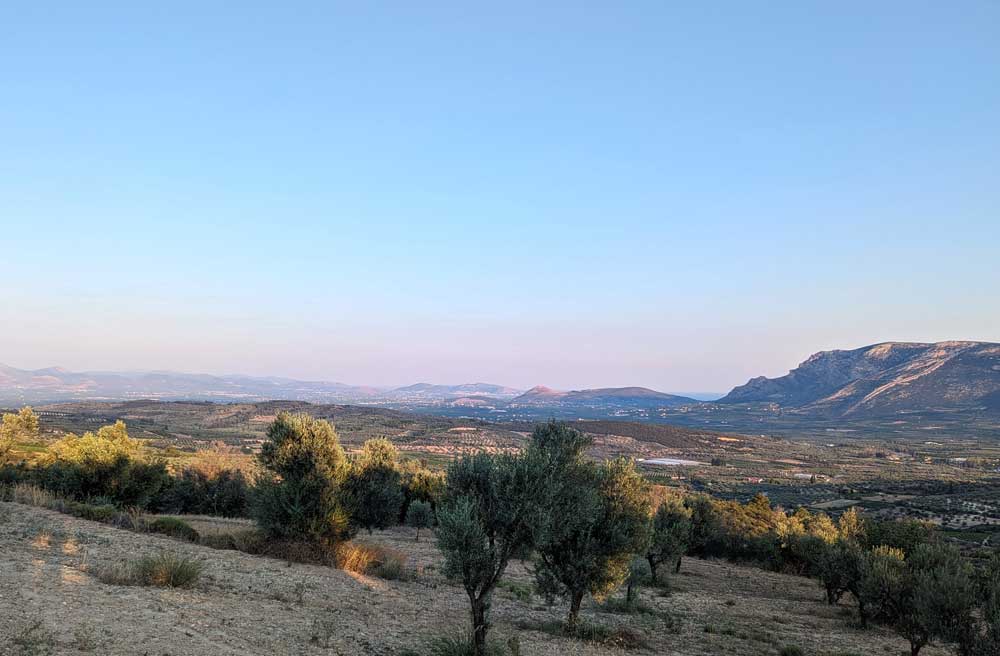
It is generally agreed that the Mycenaean world is characterized by hierarchy; in a series of brilliant papers in the 1980s, Klaus Kilian implicitly correlated the bureaucratic hierarchies of the palace (as reconstructed from the Pylos Linear B tablets) with the settlement hierarchies that surrounded the palatial centers in the Argolid. Subsequent landscape work in the Peloponnese has largely confirmed this general picture: the Messenian data suggest a four-tier settlement hierarchy, and the Berbati-Limnes survey also interpreted changes to settlement as integration into the palace economy of Mycenae. New results of the Western Argolid Regional Project, which show a resilient and conservative pattern apparently unaffected by developments at nearby (ca. 16 km) Mycenae, suggest that the pattern is less clear-cut and more complex. The paper uses this new evidence and recent analyses of palatial administration to reassess Argive settlement patterns and to revisit the critical relationship between palatial bureaucracy and settlement hierarchy.
A few words about the speaker
Dimitri Nakassis is professor in the Department of Classics at the University of Colorado Boulder. He received his degrees from the University of Michigan (1997) and the University of Texas at Austin (2006); prior to his appointment at Colorado in 2016, he taught at the University of Toronto. He is author of Individuals and Society in Mycenaean Pylos (2013) and co-author of The Palace of Nestor at Pylos in Western Messenia. Volume IV: The Inscribed Documents (2025). He’s co-director of the Western Argolid Regional Project and the Pylos Tablets Digital Project. He was named a fellow of the MacArthur Foundation in 2015 and a College Professor of Distinction by the College of Arts & Sciences of the University of Colorado Boulder in 2024. He’s currently at work on the final publication of the Western Argolid Regional Project and on a book that proposes a new way of understanding of the Mycenaean world by dismantling interpretations premised on its essential unity.