ARTICLES | 2011
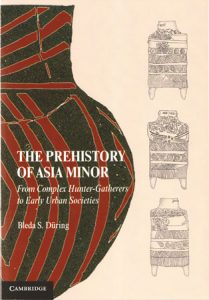
The Prehistory of Asia Minor. From Complex Hunter-Gatherers to Early Urban Societies
Cambridge
The evidence from Knossos on the Minoan calendar
The Mediterranean Archaeology & Archaeometry 11.1 (2011): 59-68.
From the early results of our archaeoastronomical investigations at the peak sanctuaries on Petsophas and Mt Juktas, we inferred that the Minoans had a lunisolar calendar that began at a particular phase of the moon on or following the autumn equinox. We used classical archaeoastronomical methods: a digital theodolite with observations of the sun to determine the orientation of the coordinate system, measuring the orientations of foundations to celestial bodies, and determining the positions of celestial bodies at the appropriate times in the past using our own programs.Some evidence on the first known residents of Katakekaumene (Burned Lands)
The Mediterranean Archaeology & Archaeometry 11.1 (2011): 69-74.
During the surface researches which we initiated to identify the Prehistoric and Protohistoric cultures in the geography of the city of Manisa located at a highly strategic point in the Western Anatolia, examinations were carried out also in the volcanic area known as “Katakekaumene” in the Ancient Age.CROCUSES IN CONTEXT: A diachronic survey of the crocus motif in the Aegean Bronze Age
Hesperia 80.3 (2011): 337-379.
Floral imagery plays a major role in Minoan art, and the crocus has long been recognized as an important motif. Previous studies, however, have been narrowly focused on specific materials or interpretations, thereby obscuring the richness of crocus iconography and its meanings.A deposit of Late Helladic IIIA2 pottery from Tsoungiza
Hesperia 80.2 (2011): 171-228.
Although Arne Furumark distinguished between early and late phases of Late Helladic IIIA2, few deposits from the former have ever been published. Presented here is a chronologically homogeneous settlement deposit of more than 10,000 sherds from Tsoungiza in the northeast Peloponnese, some from vessels probably employed in feasting.Systematic 14C dating of a unique Early and Middle Bronze Age cemetery at Xeropigado Koiladas, west Macedonia, Greece
Radiocarbon 53.3 (2011): 461-478.
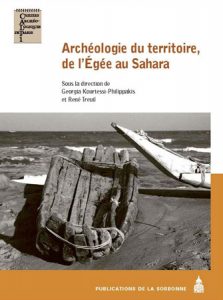
Systematic radiocarbon dating was performed on a unique EBA-MBA cemetery at Xeropigado Koiladas situated at the edge of the Kitrini Limni basin in the Kozani area, northwest Greece. It was found that this cemetery had a particularly long period of use of ~700 yr (between about 2420 and 1730 BC), which is especially pronounced if compared with the relatively small number of burials totaling 222.Archéologie du territoire, de l’Égée au Sahara
Paris
14C dating of a Final Neolithic-Early Bronze Age transition period settlement at Aghios Ioannis on Thassos (North Aegean)
Radiocarbon 53.1 (2011): 21-37.
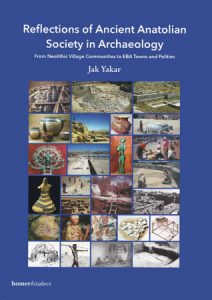
The transitional period known as the Final Neolithic-Early Bronze Age in Greece, falling in terms of absolute dates within the 4th millennium BC, is an obscure and enigmatic period. Few sites in northern Greece or the southern Balkans have produced evidence of 4th millennium BC occupation, and the sites that do are mainly concentrated in the last third of the 4th millennium toward the beginning of the EBA.Reflections of Ancient Anatolian Society in Archaeology from Neolithic Village Communities to EBA Towns and Polities
Istanbul
The Mycenaean administration of textile production in the Palace of Knossos: Observations on the Lc(1) textile targets
American Journal of Archaeology 115.4 (2011): 495-505.
The Linear B tablets from Knossos known as the Lc series record textile production targets for central and western Crete for a specific range of textiles called te-pa, pa-we-a, and tu-na-no. The production targets for wool textiles differed according to the groups assigned to fulfill the targets; these groups were designated according to ethnicity and occupation.Being Mycenaean: A view from the periphery
American Journal of Archaeology 115.4 (2011): 507-536.
Ethnic or cultural designations of past societies have often been employed uncritically and even casually. This general situation applies specifically to Mycenaean civilization. This article therefore considers a set of interrelated questions: What or who was a Mycenaean? How did the people termed “Mycenaeans” come into existence? What did it mean to be Mycenaean?Variations on a theme: Dual-processual theory and the foreign impact on Mycenaean and classic Maya architecture
American Journal of Archaeology 115.3 (2011): 329-353.
This article examines evidence for external influences on developing Mycenaean architecture, specifically at Pylos, during the Middle to Late Bronze Age. Previous investigation suggests that emerging mainland elites eclectically appropriated foreign material cultural forms, styles, and techniques into established local traditions, most likely for use in localized prestige competition.Well Built Mycenae. Fascicule 16/17: The Post-Palatial Levels
Oxford