ARTICLES | 2013
From Greek Boar’s-Tusk Helmets to the First European Metal Helmets: New Approaches on Development and Chronology
Oxford Journal of Archaeology 32:4 (November 2013): 391-412.
After more than a century of research into Bronze Age helmets throughout Europe, both the development and chronology of conical helmets with spool-shaped sockets still remain unclear. The comprehensive studies and analysis of the helmet from Biecz have not completely resolved the discussions.J.R.B. Stewart. An Archaeological Legacy
Uppsala
Off-Site Scatters and the Manuring Hypothesis in Greek Survey Archaeology: An Ethnographic Approach
Hesperia 82:4 (October - December 2013): 551-594.
This article addresses the debate over the origin(s) of “background” artifacts found between archaeological sites in Greek survey projects, within the general context of refuse disposal practices.Form, Function and Context of the Triton Shells in Minoan Culture
Archaeologischer Anzeiger 2013/1: 1-30.
In the very first excavations on the island of Crete the shells of triton snails were found. Over the years they were joined by numerous imitations made of stone, clay and faience whose exact function was initially unclear. By comparison of the morphology and the find contexts and by examination of the role of triton shells in Minoan art an attempt is made to identify what function the shells had in Bronze Age culture.Ambelikou Aletri. Metallurgy and Pottery Production in Middle Bronze Age Cyprus
Uppsala
Investigating Compositional Variability among Early Neolithic Ceramics from Korça Region, Albania
Chronika 3 (2013): 1-15.
In this study, Laser-Ablation ICP-MS and other archaeometric methods shed light on the technological and compositional variability of the ceramics from Podgori and Vashtëmi, two Early Neolithic settlements located in the Korça Plateau in Southeast Albania.Vasilikos Valley Project. Part 12. The Field Survey of the Vasilikos Valley III. Human Settlement in the Vasilikos Valley
Uppsala
Ovis/Capra, It’s what’s for Dinner; Preliminary Analysis of Faunal Material from a Minoan Settlement
Chronika 3 (2013): 47-54.
The processing, cataloguing, and preliminary analyses of faunal material from the Minoan settlement of Gournia began during the 2012 excavation season. This included backlogged material from the two previous seasons.Warrior Burials and the Elevation of a Military Elite in LHIIIC Achaia
Chronika 3 (2013) 67-77.
The collapse of Mycenaean civilization around 1200 B.C.E. left in its wake not only displaced and vulnerable settlements, but also a kind of ‘structural vacuum’ which forced populations to re-establish settlement patterns without the strict guidance of what had been a highly stratified and hierarchical authority under the Mycenaean palace centers.The Manufacture of Minoan Metal Vessels. Theory and Practice
Uppsala

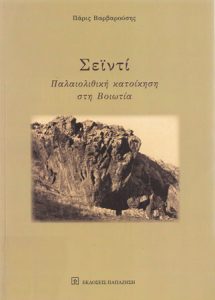
Σεϊντί. Παλαιολιθική κατοίκηση στη Βοιωτία
Athens
The Prehistory of the Paximadi Peninsula, Euboea
Philadelphia

The New Swedish Cyprus Expedition 2012. Excavations at Hala Sultan Tekke
Opuscula 6 (2013): 45-79.
The third season of excavation at Hala Sultan Tekke added knowledge to the project, the main objective of which is the investigation and determination of the complete occupational sequence of the pre-12th century BC levels.What are these Queer Stones? Baetyls: Epistemology of a Minoan Fetish
Oxford