ARTICLES | 2014
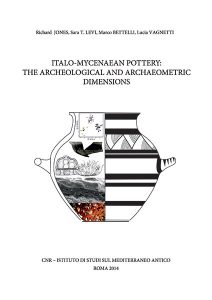
Italo-Mycenaean Pottery: The Archaeological and Archaeometric Dimensions
Rome
Optimal foraging, dietary change, and site use during the Paleolithic at Klissoura Cave 1 (southern Greece)
Journal of Archaeological Science 52 (December 2014), 39-55
This paper evaluates a long sequence of zooarchaeological remains from Klissoura Cave 1 (southern Greece) within the paradigm of evolutionary ecology. The prey choice, central place foraging, and patch choice models are applied to the dataset in order to understand subsistence shifts related to local resource depression and changes in the intensity of site use from the Middle Paleolithic through Mesolithic.Modeling the impacts of Mediterranean island colonization by Archaic Hominins: The likelihood of an insular Lower Palaeolithic
Journal of Mediterranean Archaeology 27.2 (2014), 231-254
It has been suggested that the islands of the Mediterranean were first settled during the Pleistocene. Attention has in particular been paid to recent claims that the occupation of Crete by hominins dates to the Middle Pleistocene.Reflections on Pleistocene island occupation
Journal of Mediterranean Archaeology 27.2 (2014), 255-259
We are extremely pleased that the topic of hominin island occupation has attracted particular attention in this issue of JMA in the two fascinating and contrasting papers by Runnels and Leppard. These two papers set out to address similar questions, namely: ‘was there an early Palaeolithic human presence on the Mediterranean islands?’ and ‘why has it been so elusive?’So… What? Does the paradigm currently want to budge so much?
Journal of Mediterranean Archaeology 27.2 (2014), 267-272
The debate over the extent and significance of Palaeolithic maritime activity in the Mediterranean stands in danger of unhelpful polarisation and dumbing down of its crucial subtleties, a process by which we would all turn out to be the long-term losers.Response: Where do we stand?
Journal of Mediterranean Archaeology 27.2 (2014), 272-274
In the spirit of open discussion advocated by Broodbank, I welcome Leppard’s stimulating contribution, as well as the thoughtful comments of the discussants. It is evident that where my work is concerned some of my colleagues have difficulty accepting parts of the evidence, or find some hypotheses too far reaching.Response: The elusive insular Lower Palaeolithic and the problem of intentionality
Journal of Mediterranean Archaeology 27.2 (2014), 275-278
I am writing this response while sitting in Guam, the largest island in Micronesia. Bathed in sunlight for half the year, drenched by rain the other, surrounded by shallow, productive seas, and tropically verdant, Guam should, accordingly, have been an ideal environment for hominins during Quaternary interstadials.Fouilles exécutées à Malia: Les abords Nord-Est du palais I. Les recherches et l’histoire du secteur
Athens

Η έρευνα της Νεολιθικής εποχής στην Ελλάδα
Athens

Hagios Charalambos: A Minoan Burial Cave in Crete I. Excavation and Portable Objects
Philadelphia, Pennsylvania

3D imaging of Skoteino Cave, Crete, Greece: Successes and difficulties
Journal of Field Archaeology 39:2 (May 2014), 180-192
Interpreting cave use, especially from antiquity, requires the perception of subterranean space in all dimensions (floor to ceiling to lateral extent) including spatial variability resulting from geological factors. Subterranean conditions, coupled with variable atmospheric conditions, create a special environment not readily conveyed by conventional mapping techniques limited to two-dimensional floor plans.Metallurgical remains from regional surveys of “non-industrial” landscapes: The case of the Kythera Island Project
Journal of Field Archaeology 39:1 (February 2014), 67-83
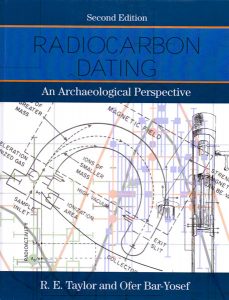
This paper explores the potential of studying metallurgical remains recovered during regional surveys in the reconstruction of past metallurgical practices across a given landscape, using as a case study the relevant finds from the Kythera Island Project.Radiocarbon Dating. An Archaeological Perspective (Second Edition)
Walnut Creek, California
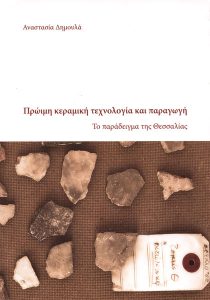
Πρώιμη κεραμική τεχνολογία και παραγωγή: το παράδειγμα της Θεσσαλίας
Thessaloniki