BOOKS | 2010
Thessaloniki
2010
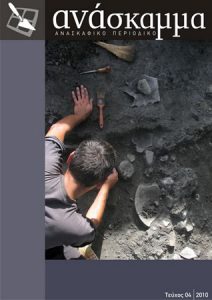
The books is the fourth issue of the Greek journal Anaskamma.
Julie Hruby
American Journal of Archaeology 114.2 (April 2010): 195-216.
The pantries (Rooms 18–22) of the Palace of Nestor at Pylos provide an ideal opportunity to study the ways in which the Mycenaeans themselves classified their pottery. This is because the material is extensive, varied, well preserved, largely contemporaneous, and was shelved by type.
Trümper, M.
Gnomon
Trümper, M., 2010. Review of D. Collard, Function and Ethnicity: ‘Bathtubs’ from Late Bronze Age Cyprus (Sävedalen: Paul Åströms, 2008), Gnomon 82.2: 182-184.
Nikoloudis, S.
Bryn Mawr Classical Review
Nikoloudis, S., 2010. Online review of H. Landenius Enegren, The People of Knossos: Prosopographical Studies in the Knossos Linear B Archives. Boreas. Uppsala Studies in Ancient Mediterranean and Near Eastern Civilizations 30 (Uppsala: Acta Universitatis Upsaliensis, 2008), Bryn Mawr Classical Review 2010.05.10.
Read the book review
Margarita Nazou
Shima: The International Journal of Research into Island Cultures 4.1 (2010): 3-15.
This article explores the issue of archaeological construction of maritime identity in the region of Attica and the surrounding islands (Greece) during the Final Neolithic and the Early Bronze Age.
Ina Berg
Shima: The International Journal of Research into Island Cultures 4.1 (2010): 16-26.
Research into past and present islands and coastal communities in Greece has long remained steeped in biogeographical concepts. An overview of relevant surface survey publications highlights their focus on landscape investigations, such as settlement patterns, mortuary landscapes, land use, soil analysis, botanical reconstructions and terracing.
Helen Dawson
Shima: The International Journal of Research into Island Cultures 4.1 (2010): 82-98.
This paper explores the relations between island settlement, identity and sense of place in the prehistoric Mediterranean. It uses modern examples and archaeological case studies to discuss the effects of colonisation and abandonment on island communities and the creation of distinctive identities as a form of cultural resistance.
M.G.L. Baillie
Antiquity 84, No. 323 (March 2010): 202–215.
Good archaeology relies on ever more precise dates – obtainable, notably, from ice-cores and dendrochronology. These each provide year-by-year sequences, but they must be anchored at some point to real historical time, by a documented volcanic eruption, for example. But what if the dating methods don't agree?
Paraskevi Elefanti, Gilbert Marshall & Clive Gamble
Antiquity 84, No. 323 (March 2010): online article.
The Prehistoric Stones of Greece (SOG) project began in 2005. Our main focus was chipped stone dated to the Palaeolithic, Mesolithic and Neolithic periods, but the project required us to collate for the first time in a standardised way, all the archaeological field surveys undertaken in Greece and the findspots and sites located. Published and unpublished sources were assembled, the latter including a variety of materials supplied by survey directors such as project daily record sheets, annotated maps and notebooks. The whole database is now publically available online.
Eirini I. Petroutsa & Sotiris K. Manolis
Journal of Archaeological Science 37.3 (March 2010): 614-620.
The Late Bronze Age is a period of great importance in prehistoric Greece, due to the rise of the Mycenaean and Minoan civilizations. Settlements, palatial complexes and cemeteries have been excavated whilst a plethora of findings among which wall paintings and artifacts provided a large amount of information regarding the period.
Sharon Zuckerman, David Ben-Shlomo, Penelope A. Mountjoy & Hans Mommsen
Journal of Archaeological Science 37.2 (February 2010): 409-416.
The occurrence of imported Mycenaean pottery in the Late Bronze Age southern Levant is one of the most conspicuous aspects of Eastern Mediterranean trade connections during this period. A group of 183 Mycenaean pottery vessels from 14 sites in northern Israel, from both coastal and inland settlement contexts were analyzed by Neutron Activation Analysis.
Triantaphyllou, S.
Bryn Mawr Classical Review
Triantaphyllou, S., 2010. Online review of A. Ingvarsson-Sundström, Asine III: Supplementary Studies on the Swedish Excavations 1922-1930. Fasc. 2, Children Lost and Found: A Bioarchaeological Study of Middle Helladic Children in Asine with a Comparison to Lerna (Stockholm: Svenska institutet i Athen, 2008), Bryn Mawr Classical Review 2010.04.26.
Read the book review
Panagiotis Karkanas
Athens
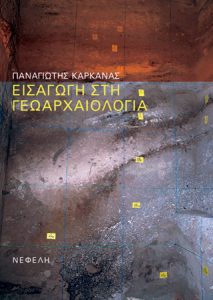 "Μιας και η αρχαιολογία βρίσκει όλα τα βασικά δεδοµένα της µε την ανασκαφή, κάθε αρχαιολογικό πρόβληµα ξεκινά ως πρόβληµα της γεωαρχαιολογίας". H ρήση αυτή του διάσημου αρχαιολόγου C. Renfrew φανερώνει τη σημασία ενός επιστημονικού κλάδου που ξεκίνησε μεν τυπικά πριν από τριάντα πέντε χρόνια περίπου, αλλά παραμένει ακόμη νεωτερισμός για πολλές αρχαιολογικές ανασκαφές.
Konstantinidi-Syvridi, E.
Bryn Mawr Classical Review
Konstantinidi-Syvridi, E., 2010. Online review of C. Paschalidis, The LMIII Cemetery at Tourloti, Siteia: The ‘Xanthoudidis Master’ and the Octopus Style in East Crete. With a contribution by P.J.P. McGeorge (BAR International Series 1917) (Oxford: Archaeopress, 2009), Bryn Mawr Classical Review 2010.03.51.
Read the book review
Kourelis, K.
Bryn Mawr Classical Review
Kourelis, K., 2010. Online review of D. Damaskos & D. Plantzos (eds.), A Singular Antiquity: Archaeology and Hellenic Identity in Twentieth-Century Greece (Athens: Benaki Museum, 2008), Bryn Mawr Classical Review 2010.01.43.
Read the book review
