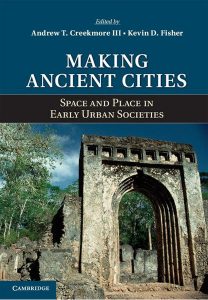
Edited by Andrew M.T. Creekmore III & Kevin D. FisherNew York2014
This volume investigates how the structure and use of space developed and changed in cities, and examines the role of different societal groups in shaping urbanism. Culturally and chronologically diverse case studies provide a basis to examine recent theoretical and methodological shifts in the archaeology of ancient cities.
Παρά τον μεγάλο αριθμό μελετών για τα λίθινα αντικείμενα στην προϊστορική Κρήτη, οι περιοχές εξόρυξης των πρώτων υλών για την κατασκευή τους, έχουν αποτελέσει ελάχιστα μέχρι σήμερα αντικείμενο έρευνας. Οι σύντομες, συνήθως, αναφορές περιορίζονται σε ένα αυστηρό πλαίσιο θετικιστικών προσεγγίσεων, παραγνωρίζοντας έτσι τη σημασία τους ως πολιτισμικών τοπίων, με κοινωνικές, πολιτικές, συμβολικές και άλλες όψεις και συνακόλουθα τον ρόλο τους σε ευρύτερα κοινωνικο-οικονομικά δίκτυα.
Inscribed Minoan stone vessels are ritual gifts that index their dedicants’ intention that both their gift and their name should survive permanently at the place of dedication. These vessels contained offerings, yet the vessels themselves were also offerings, serving as permanent records of a ritual act. These rituals were most likely communal, incorporating group feasting and drinking.
Kostis S. ChristakisΚρητικά Χρονικά 34 (2014), 201-218
The extensive and well-built storerooms of Cretan Bronze Age palaces, the stores in the central complexes of peripheral settlements, and storerooms in many of the excavated elite mansions and ordinary houses highlight the importance that social groups placed on the production, collection, processing and storage of agricultural and pastoral goods.
The archaeological remains of Pre- and Protopalatial (Early Minoan I to Middle Minoan IIB) Crete include a large number of tombs and cemeteries dating to the third and second millennium B.C.E. These periods constitute a distinct cycle in terms of mortuary customs that was clearly defined by two significant attributes: the use of similar types of tombs and the deposition of significant amounts of material, objects that must be considered socially valuable.
Thomas P. LeppardWorld Archaeology 46:4 (2014), 484-501
The spread of the Neolithic throughout Mediterranean Europe involved, at least to some degree, the physical movement of farmers westwards. This mobility has often been attributed to demographic or climatic factors, and long-term environmental changes of this type surely provided the backdrop against which subsistence practices and behavioral strategies developed.
This paper investigates the question of human mobility from a practice-centered perspective, and argues for the value of such approaches in elucidating how new ideas and objects enter a community and become ‘local’ over time.
Louise A. Hitchcock & Aren M. MaeirWorld Archaeology 46:4 (2014), 624-640
Historical accounts indicate pirates were able to create culturally mixed tribal entities and identities by incorporating new followers from different cultures into their social structure.
Alberto Bernabé & Eugenio R. LujanLouvain-la-Neuve, Walpole
Since the decipherment of the Linear Β script by Michael Ventris in 1952, many books and papers have contributed to a better understanding of the Mycenaean texts and their cultural context. F. Aura Jorro has been able to critically review and systematize the richness and variety of the scholarship devoted to the interpretation of Mycenaean in his outstanding Diccionario micénico.
Analyses of performance (and performance events) depicted in the iconography from Minoan Crete most often focus upon religious aspects of these activities. In this article, a performance approach is adopted; this alternative viewpoint emphasizes the significance of performances for materializing ideologies, reinforcing elements of the socio-political order and the negotiation of power relations.
Η τοπογραφία του ιερού στον Αγ. Γεώργιο στο Βουνό, οι συνθήκες οι οποίες επικράτησαν στον χώρο μετά την επίσημη εγκατάλειψη της μινωικής αποικίας και ιδιαίτερα η συνεχόμενη χρήση του χώρου, ακόμη και μετά τη Βυζαντινή εποχή, συνετέλεσαν αποφασιστικά στη σημερινή εικόνα στρωματογραφικής ασυνέχειας και ανομοιογένειας.
A Danish eighteenth-century find of some bronze figurines tells the story of the practising of similar ritual performances across Bronze Age Europe from Egypt to Scandinavia. The Danish figurines, as well as Swedish rock carvings, show backwards-bending female acrobats doing backward handsprings.
Η παρούσα έκδοση, προϊόν πολύπλευρης συνεργασίας με πολιτιστικούς και κοινωνικούς φορείς της Τρίπολης, της Αρκαδίας και της Πελοποννήσου, αποτελεί το επιστέγασμα μιας προσπάθειας που άρχισε το έτος 2012, για να προβάλει μια πλευρά της έρευνας που μέχρι τότε δεν είχε κινήσει το ενδιαφέρον των Αρχαιολόγων και του Κοινού
Thanasis I. Papadopoulos & Litsa Kontorli-PapadopoulouUppsala
Since 1893 excavations by six different archaeologists at Vravron on the east coast of Attica have uncovered 37 Mycenaean tombs. The excavations, carried out by Stais (1893), Theochares and Papadimitriou (1955–1956), Verdelis (1965–1966), Themelis (1972–1973) and Kakavoyanni (1984), were not fully published and not all were well documented.
Peter Grave, Lisa Kealhofer, Ben Marsh, Ulf Dietrich Schoop, Jürgen Seeher, John W. Bennett & Attila StopicAntiquity 88:342 (December 2014), 1180-1200
The island of Cyprus was a major producer of copper and stood at the heart of east Mediterranean trade networks during the Late Bronze Age. It may also have been the source of the Red Lustrous Wheelmade Ware that has been found in mortuary contexts in Egypt and the Levant, and in Hittite temple assemblages in Anatolia.