ARTICLES | 2017
Σύμπλεγμα σπηλαίων στα Λουτρά Λουτρακίου Αλμωπίας. Το σπήλαιο «Αποθήκη Ανταρτών»
In P. Adam-Veleni & Κ. Tzanavari (eds) 2017. Το Αρχαιολογικό Έργο στη Μακεδονία και στην Θράκη 26, 2012, Thessaloniki: 225-232.
A system of caves has been developed on both slopes of the St. Nicolaou gorge, that is located on the foothills of Mt. Voras, approximately 13 kms west of the town of Aridea. “Avra”, “Keramikon”, “Bear”, “Varathron” and “Apothiki Antarton” caves are the most important concerning their archaeological interest.Πλαταμών Στοπ! «Μυκηναϊκό» νεκροταφείο και οικισμός της Ύστερης Εποχής του Χαλκού στη θέση «Τριμπίνα 2/Πλαταμών Στοπ» στον Πλαταμώνα Πιερίας
In P. Adam-Veleni & Κ. Tzanavari (eds) 2017. Το Αρχαιολογικό Έργο στη Μακεδονία και στην Θράκη 26, 2012, Thessaloniki: 213-224.
The rescue excavation at Platamonas, at the site of «Trimpina 2/Platamon Stop», was conducted due to the works for the construction of the new national road. Two phases of site use were recognised: the earlier, which contained scarce remains of a LBA settlement and the later with abundant evidence from a LBA cemetery with «Mycenaeanising» types of grave goods.Η έρευνα στη Μαυροπηγή και στο φράγμα Ιλαρίωνα κατά το 2012
In P. Adam-Veleni & Κ. Tzanavari (eds) 2017. Το Αρχαιολογικό Έργο στη Μακεδονία και στην Θράκη 26, 2012, Thessaloniki: 47-90.
In 2012, despite having been dismissed, acquiring stand-by status, I was called by the Ministry of Culture to conclude the large rescue excavations in lignite mines and a dam construction by DEI Ltd.Καταγραφή και έρευνα των σπηλαίων της λίμνης Μεγάλης Πρέσπας. Πρώτα συμπεράσματα και προοπτικές
In P. Adam-Veleni & Κ. Tzanavari (eds) 2017. Το Αρχαιολογικό Έργο στη Μακεδονία και στην Θράκη 26, 2012, Thessaloniki: 41-46.
The research program conducted by the Ephorate of Paleoanthropology-Speleology of Northern Greece at the Great Prespa Lake (Florina, Greece) aims firstly to the location, exploration, documentation and recording of the numerous rock shelters, caves and potholes situated on its banks.Στην Αυγή των πρώτων αγροτών. Εκπαιδευτικές δράσεις στο νεολιθικό οικισμό Αυγής Καστοριάς
In P. Adam-Veleni & Κ. Tzanavari (eds) 2017. Το Αρχαιολογικό Έργο στη Μακεδονία και στην Θράκη 26, 2012, Thessaloniki: 1-8.
The archaeological practice is a contemporary activity. Archaeological reasoning and interpretation reflects the way we think about ourselves and our social world. The way we manage the past is strongly determined by modern political and social issues and also affects the contemporary reality.Le guerrier, le chat, l’aigle, le poisson et la colonne: la voie spiralée des signes. Approche sémiologique, structurale et archéologique du disque de Phaistos
Oxford

The Alatzomouri Rock Shelter. An Early Minoan III Deposit in Eastern Crete
Philadelphia

Architecture minoenne à Malia. Les bâtiments principaux du Quartier Mu
Paris

Social Change in Aegean Prehistory
Oxford-Philadelphia

L’émeri. Modalités d’exploitation dans le monde égéen protohistorique et antique
Paris

Ανάδειξη και προστασία του αρχαιολογικού χώρου στο Ακρωτήρι Θήρας
In P. Triantafyllidis (ed.), 2017. Το Αρχαιολογικό Έργο στα Νησιά του Αιγαίου. Διεθνές Επιστημονικό Συνέδριο, Ρόδος, 27 Νοεμβρίου-1 Δεκεμβρίου 2013, vol. A, Mytilene:: 153-162
Until the early 1990s the shelter, constructed by Marinatos to protect the monuments in the prehistoric city he brought to light in the excavations conducted at Akrotiri on the island of Thera, under the auspices of the Archaeological Society at Athens, had functioned effectively.Ακρόπολη Αγίου Ανδρέα Σίφνου. Διαμόρφωση-ανάδειξη-αρχαιολογικά δεδομένα
In P. Triantafyllidis (ed.), 2017. Το Αρχαιολογικό Έργο στα Νησιά του Αιγαίου. Διεθνές Επιστημονικό Συνέδριο, Ρόδος, 27 Νοεμβρίου-1 Δεκεμβρίου 2013, vol. A, Mytilene: 101-114.
The hill of Aghios Andreas (425 m.) is located in southern Siphnos, Greece, in a dominant and highly strategic position, since it controls a large part of the island, as well as a large part of the Aegean Sea. A mighty fortified citadel was founded at the top of the hill during the Mycenaean period (13th century BC).Eργασίες προστασίας, συντήρησης και ανάδειξης του οχυρωμένου προϊστορικού οικισμού στο Παλαμάρι της Σκύρου στο πλαίσιο των Κοινωνικών Συγχρηματοδοτούμενων Προγραμμάτων (Γ’ ΚΠΣ και ΕΣΠΑ)
In P. Triantafyllidis (ed.), 2017. Το Αρχαιολογικό Έργο στα Νησιά του Αιγαίου. Διεθνές Επιστημονικό Συνέδριο, Ρόδος, 27 Νοεμβρίου-1 Δεκεμβρίου 2013, vol. A, Mytilene: 21-31.
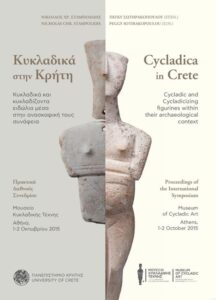
In 2000, the excavation of Palamari joined the EU co-financed projects through Fund of Credits Management for Archaeological Projects under the title “Research, Protection, Conservation and Configuration of the Fortified Prehistoric settlement of Palamari in Skyros”.Cycladica in Crete. Cycladic and Cycladicizing figurines within their archaeological context. Proceedings of the International Symposium, Museum of Cycladic Art, Athens, 1-2 October 2015
Athens-Rethymno