BOOK REVIEWS | 2010
Whitley, J.
Cambridge Archaeological Journal
Whitley, J., 2010. Review of J.S. Smith, Art and Society in Cyprus from the Bronze Age into the Iron Age (New York 2009), Cambridge Archaeological Journal 20.3: 460-463.
Vincenzo La Rosa
Annuario della Scuola Archeologica di Atene e delle Missioni Italiane in Oriente LXXXVII (2009) [2010]: 105-115.
Based also on personal experience, we try to sketch the complex figure of Director Levi, “restorer” of the School after its unfortunate closure during the Second World War. In particular, we stress the personality of the man, the organizer, the person who accomplishes things, and the teacher.
Edited by C. Michel & M.-L. Nosch
Oxford
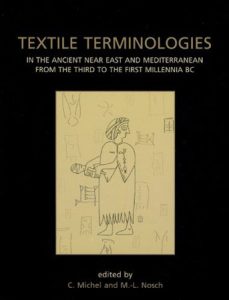 Written sources from the ancient Near East and eastern Mediterranean, from the third to the first millennia BC, provide a wealth of terms for textiles. The twenty-two chapters in the present volume offer the first comprehensive survey of this important material, with special attention to evidence for significant interconnections in textile terminology among languages and cultures, across space and time. For example, the Greek word for a long shirt, khiton, ki-to in Linear B, derives from a Semitic root, ktn. But the same root in Akkadian means linen, in Old Assyrian a garment made of wool, and perhaps cotton, in many modern languages.
Edited by Iain Morley & Colin Renfrew
Cambridge
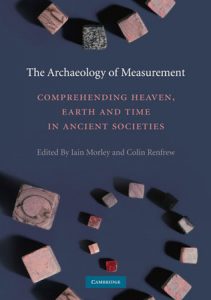 The construction of formal measurement systems underlies the development of science, technology, economy and new ways of understanding and explaining the world. Human societies have developed such systems in different ways, in different places and at different times, and recent archaeological investigations highlight the importance of these activities for fundamental aspects of human life.
Guy D. Middleton
Oxford
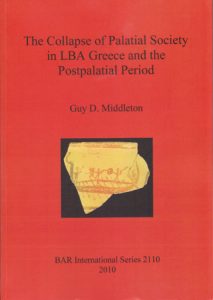 This monograph deals with the destruction and disappearance of the palaces and palace societies of Late Bronze Age or Mycenaean Greece c.1200 and aspects of continuity and change in the subsequent Postpalatial period of the twelfth and eleventh centuries (LHIIIC). It is primarily concerned with mainland Greece and the islands, excluding Crete. An emphasis in this work, where analysis of the Greek material itself or theories based upon it is attempted, is the potential for differences between palatial and non-palatial areas.
Luca Girella
Padova
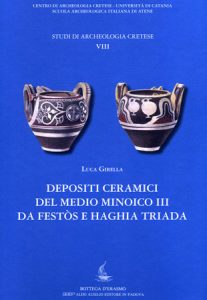
This volume deals with the Middle Minoan (MM) III pottery deposits from Phaistos and Ayia Triada, and has several purposes: firstly, to provide the evidence for a reassessment of the chronological sequence of the MM III in southern Crete; secondly, to add ceramic data to the scanty architectural evidence from both sites during this crucial period; thirdly, to clarify the key passage from MM III to LM IA by presenting specific deposits that support the MM IIIA and IIIB terminologies used in this volume; fourthly, to enlarge the ceramic corpus already embodied by substantial data published from Kommos.
Edited by Isabelle Boehm & Sylvie Müller-Celka
Lyon
Y a-t-il une distinction entre civil et religieux en Grèce à l’âge du Bronze ? Les auteurs des contributions réunies dans ce volume abordent cette délicate question en suivant une démarche originale, croiser les points de vue de l’archéologue, de l’épigraphiste et du linguiste.
Evangelia Stefani
Thessaloniki
 The prehistoric settlement of Angelochori, Emathia, in Macedonia, is located in a rural area, near to its modern namesake village. The excavations lasted from 1994 until 2003 and were conducted by the 17th Ephorate of Prehistoric and Classical Antiquities. The remains of a Late Bronze Age settlement have come to light.
Steel, L.
Levant
Steel, L., 2010. Review of A. Brysbaert, The Power of Technology in the Bronze Age Eastern Mediterranean. The Case of the Painted Plaster (London 2008), Levant 42.1: 102-103.
J.M. Webb & D. Frankel
Levant 42.2 (2010): 185-209.
Early Bronze Age communities on the north coast of Cyprus developed a distinctive ceramic tradition with a rich array of forms, including ritual vessels with symbolically complex decoration reflecting the importance of horned animals and other phenomena in a local cosmology.
Cheryl R. Floyd & Philip P. Betancourt
Hesperia 79.4 (2010): 465-498.
Excavations in 1996 and 1997 at Chrysokamino-Chomatas, a site near the Chrysokamino metallurgy workshop in East Crete, revealed two architectural phases from the Late Minoan period in addition to earlier (pre-LM IB) and later (post–Bronze Age) remains. The first architectural phase, destroyed in LM IB-Final, consisted of the poorly preserved walls of a single isolated building.
Gemma Marakas
Oxford
 The study of Greek ritual practice throughout the LH III B to Protogeometric periods is the central theme of this research. Chapter Two acknowledges the work of previous Aegean archaeologists and their methods for classification of the features which should be present in order for a site to be categorised as cultic in nature. The chapter goes one step further with the creation of new criteria specifically adapted to be relevant to all types of sanctuaries, be they palatial cult centres, settlement shrines, or isolated open-air shrines throughout the period.
Arianna Rizio
Patras
 Η διαπραγμάτευση της αχαϊκής τοπογραφίας κατά τη μυκηναϊκή περίοδο αποτελεί τμήμα της διδακτορικής διατριβής της συγγραφέως που αφορά τους οικισμούς της Πελοποννήσου κατά την Ύστερη περίοδο του Χαλκού. Η διατριβή επιπλέον επικεντρώνεται στη συλλογή μαρτυριών που έχουν σχέση με τα οικιστικά κατάλοιπα αυτής της περιόδου, καθώς επίσης και στην ανάπτυξη μιας προβληματικής, αντικείμενο της οποίας αποτελεί η θεώρηση της δημιουργίας και ανάπτυξης του μυκηναϊκού οικισμού. Κατά τη διάρκεια της συγγραφής της και στο πλαίσιο της κατάταξης και ανάλυσης των οικιστικών εγκαταστάσεων ανά νομό, η συγγραφέας προσπάθησε να δώσει έμφαση στα τοπικά χαρακτηριστικά ώστε να γίνει αντιληπτό ότι αυτά έπαιξαν το δικό τους δυναμικό ρόλο στη δημιουργία και οργάνωση των οικιστικών πυρήνων της Ελλάδας κατά την υπό έρευνα περίοδο.
Edited by Nikolaos Kaltsas, Sylvian Fachard, Athanasia Psalti, Mimika Giannopoulou
Athens
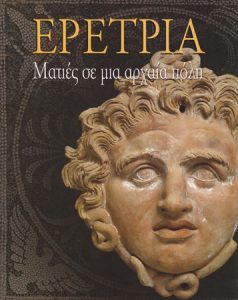 Greek catalogue of the temporary exhibition “Eretria: Insights into an Ancient City” that was hosted at the National Archaeological Museum from April 26th to August 25th, 2010. The exhibition, which was co-organized by the National Archaeological Museum and the IA’ Ephorate of Prehistoric and Classical Antiquities and was an initiative of the Swiss School of Archaeology, narrated the past of the city of Eretria and central Euboea from the prehistoric times until Late Antiquity.
A.J. Koh & P.P. Betancourt
Mediterranean Archaeology & Archaeometry 10.2 (2010): 15-23.
Aphrodite’s Kephali is a small hilltop site in Eastern Crete. Its pottery indicates that it was inhabited during Early Minoan I (EM I), ca. 3200–2700 B.C. The fortified site has a considerable amount of storage, including nine pithoi. The analysis by gas chromatography of sherds from the site indicates that vessels contained olive oil and wine.
