BOOK REVIEWS | 2010
Antonaccio, C.
JHS
Antonaccio, C., 2010. Review of A.M. Snodgrass, Archaeology and the Emergence of Greece (Ithaca, NY 2006), Journal of Hellenic Studies 130: 241-243.
Vassilios Aravantinos
Athens
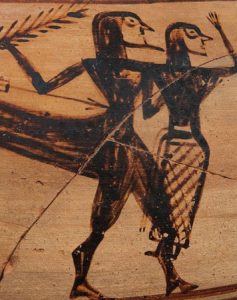 The book is the twelfth volume in the Museums Cycle series, which is published every year by the John S. Latsis Public Benefit Foundation. It focuses on the archaeological museum of Thebes and in general on Boeotia.
Marie-Claude Boileau & James Whitley
Annual of the British School at Athens 105 (2010): 225-268.
This paper presents the results of a large-scale petrological study of Early Iron Age (twelfth-seventh centuries BC) coarse wares from north-central Crete. 210 samples were taken for analysis from six locations at Knossos, representing distinct funerary, domestic, and ritual contexts.
Edited by Francesca Buscemi
Acireale - Roma
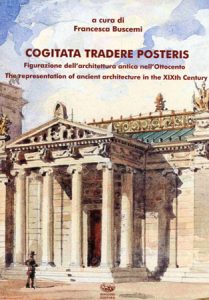 This volume is based on the essays presented to the conference ‘The graphic documentation of ancient monuments in the 19th Century. Technique and ideology’, hosted by the Faculty of Literature of the University of Catania on 25 November 2009. It contains 10 articles written in Italian, English and French. Two of the articles focus on the rediscovery of Mycenae and the Treasury of Atreus.
L. Papazoglou-Manioudaki, A.Νafplioti, J.H. Musgrave & A.J.N.W. Prag
Annual of the British School at Athens 105 (2010): 157-224.
This article is the third in a series inspired by the rediscovery in 2003 of two skeletons excavated in 1877 in Shaft Grave VI in Circle A at Mycenae by Panayiotis Stamatakis. Having studied those two individuals and reconstructed their faces, and having conducted a study of strontium isotope analyses on all the individuals from Grave Circle A, we now move on to a reconsideration of the circumstances in which Shaft Graves III, IV and V were excavated by Schliemann and Stamatakis, and place the human remains in the context of the other finds from the graves (no human remains from Graves I and II can be located at present).
David E. Wilson
Annual of the British School at Athens 105 (2010): 97-155.
This article presents a selection of early Prepalatial pottery and a clay sealing found in tests made by Nikolaos Platon between 1955 and 1957 during a programme of conservation and restoration work in the palace. The pottery not only adds to the ceramic characterization of the Early Minoan I – Early Minoan IIB phases at Knossos, but also provides new information about the extent and scale of use of the early Prepalatial settlement.
A. Pentedeka, E. Kiriatzi, L. Spencer & A. Bevan
Annual of the British School at Athens 105 (2010): 1-81.
An intensive archaeological survey covering the entire extent of the island of Antikythera has recently revealed a sequence of prehistoric activity spanning the later Neolithic to Late Bronze Age, with cultural affiliations that variously link its prehistoric communities with their neighbours to the north, south and east.
Soultana-Maria Valamoti & Glynis Jones
Annual of the British School at Athens 105 (2010): 83-96.
Lallemantia, an exotic oil plant, recently identified at Bronze Age sites in the Macedonia region of northern Greece, has a natural distribution lying outside Europe, in regions ranging from Iran to Anatolia, Jordan, Palestine, and Israel. The possible routes through which Lallemantia arrived in northern Greece are considered in relation to evidence for Bronze Age trade in metals, in particular tin.
Edited by Nikos Merousis, Evaggelia Stefani & Marianna Nikolaidou
Thessaloniki
 The volume is dedicated to the memory of the Professor of prehistoric archaeology at the Aristotle University of Thessaloniki Angeliki Pilali-Papasteriou, who passed away in 2007. The 18 articles, composed by her colleagues and students, are divided into three sections: 1) Macedonia, 2) Peloponnese-Cyclades-Crete and 3) Theoretical approaches. All articles refer to prehistoric times of the Aegean and are written in Greek followed by English summaries.
Anastasia Christophilopoulou
MOSAIKjournal 1 (2010): 67-126.
This paper investigates aspects of community identity in the Aegean Islands and Crete through examination of their domestic environments, between c. 1200–900 BC, a period when Cycladic, Eastern Aegean islands and Crete were en-gaged in different social developments.
Sturt W. Manning, Carole McCartney, Bernd Kromer & Sarah T. Stewart
Antiquity 84 (September 2010): 693–706.
Intensive survey and initial excavations have succeeded in pushing back the Neolithic human occupation of Cyprus to the earlier ninth millennium cal BC. Contemporary with PPNA in the Levant, and with signs of belonging to the same intellectual community, these were not marginalised foragers, but participants in the developing Neolithic project, which was therefore effectively networked over the sea.
Le Roy, C.
Revue Archéologique
Le Roy, C., 2010. Review of B. Lion & C. Michel (ed.), Histoires de déchiffrements. Les écritures du Proche-Orient à l’Égée (Paris 2009), Revue Archéologique (fascicule 1): 126-127.
Blantin, B.
Revue Archéologique
Blantin, B., 2010. Review of N.J. Coldstream, Greek Geometric Pottery. A Survey of ten Local Styles and their Chronology (Exeter 2008), Revue Archéologique (fascicule 1): 75-76.
Lefèvre-Novaro, D.
Revue Archéologique
Lefèvre-Novaro, D., 2010. Review of S. Privitera, Case e rituali a Creta nel periodo neopalaziale (Athens 2008), Revue Archéologique (fascicule 1): 73-74.
Sørensen, L.W.
Revue Archéologique
Sørensen, L.W., 2010. Review of A. Hermary (ed.), Hommage à Annie Caubet, Actes du colloque international “Chypre et la côte du Levant aux IIe et Ier millénaires”, Paris 14-16 juin 2007 (Paris 2007), Revue Archéologique (fascicule 1): 71-73.
