
ARTICLES | 2010
A pride of leopards: A unique aspect of the hunt frieze from Tell el Dab‘a
Egypt and the Levant. International Journal for Egyptian Archaeology and Related Disciplines XX (2010): 263-301.
Tell el Dab‘a (Avaris) is situated along what was, in ancient times, the eastern bank of the most easterly branch of the Nile Delta. The settlement would have been surrounded by channels and basins, with natural inlets perfect for harbours. To this strategic location - en route to the East and next to a river course leading to the Mediterranean -Aegean artists were apparently brought to paint the walls of Egyptian palaces.Mykenische Keramik aus verlorenen Kontexten – die Grabung L. Loats in Gurob
Egypt and the Levant. International Journal for Egyptian Archaeology and Related Disciplines XX (2010): 207-225.
Als L. Loat im Jahre 1904 seine Forschungen in Gurob unternahm, waren dieser Kampagne bereits zwei Saisonen intensiver Grabungstätigkeit vorangegangen. Im Jahre 1888 begann Flinders Petrie - neben seiner Haupttätigkeit in Kahun - die erste Grabungskampagne in diesem Gebiet; der Ausgräber beschreibt in der folgenden Publikation, wie er zwischen beiden Grabungsplätzen hin- und her pendelte, eine kontinuierliche Beaufsichtigung der Arbeiten in Gurob erfolgte somit nicht.Objects of Prestige? Chariots in the Late Bronze Age Eastern Mediterranean and Near East
Egypt and the Levant. International Journal for Egyptian Archaeology and Related Disciplines XX (2010): 67-181.
The light, two-wheeled chariot, which makes its appearance in the Near East and Eastern Mediterranean during the second millennium BC, is often seen as a hallmark of the great states and internationalism characteristic of the Late Bronze Age (c. 1600-1150 BC). Chariots are credited with revolutionizing warfare, hunting, and transportation, as well as providing a new emblem of royal and elite status.Archaeology in Situ: Sites, Archaeology, and Communities in Greece
Lanham
Excavations in Midea 2008-2009
Opuscula - Annual of the Swedish Institutes at Athens and Rome 3 (2010): 7-32.
Excavations in Midea continued in 2008 and 2009 as a Greek-Swedish programme under the direction of Dr Katie Demakopoulou in collaboration with Dr Ann-Louise Schallin. On the lower west terrace of the Acropolis excavation continued in Trench C in order to conclude the investigation of the syrinx discovered in 2007.The bronze headbands of Prehistoric Lofkënd and their Aegean and Balkan connections
Opuscula - Annual of the Swedish Institutes at Athens and Rome 3 (2010): 33-54.
This paper begins with an overview of the bronze headbands from the prehistoric (Late Bronze to Early Iron Age) burial tumulus of Lofkënd in Albania, which were found among the richest tombs of the cemetery, all of them of young females or children. It is argued that these individuals represent a class of the special dead, those who have not attained a critical rite de passage: marriage.Aegean and Cypro-Aegean Non-Sphragistic Decorated Gold Finger Rings of the Bronze Age
Liège & Austin
Ornament und Bedeutung. Zur Motivik mittelminoischer Feinkeramik
Oxford
The subject of this study is middle-Minoan fine ware, also known as ‘Kamares’-ware. Earlier scholars were adapting typological and stylistic results for psychological explanations and therefore the meanings of motifs on vases from the point of view of the perceptions of the original artists and the users of their vessels have been misunderstood.
Iklaina archaeological project 2010 season. Internet report
Online article
The fourth excavation season of the Iklaina project took place for six weeks from May 28 to July 10, 2010. Excavation progressed in two areas: the Cyclopean Terrace and its adjacent buildings (South Sector) and the area of Megaron Γ (North Sector). The total surface under excavation is 2100 sq. m.New light on the Ship Fresco from Late Bronze Age Thera
Praehistorische Zeitschrift 85.2 (2010): 243-257.
The wall paintings from the ancient town of Akrotiri on the island of Thera, part of the Santorini island group, are among the most precious and well-preserved artworks of Late Bronze Age Aegean. The West House at Akrotiri has yielded a miniature fresco frieze depicting ships sailing from one harbour to another.The Philistines and Aegean Migration at the End of the Late Bronze Age
Cambridge
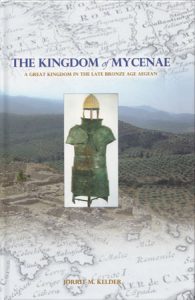
The Kingdom of Mycenae; A Great Kingdom in the Late Bronze Age Aegean
Bethesda, Maryland
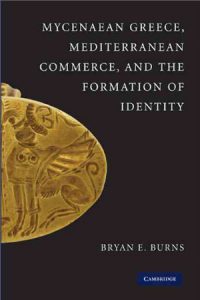
Mycenaean Greece, Mediterranean Commerce, and the Formation of Identity
New York
Body Parts and Bodies Whole. Changing Relations and Meanings
Oxford

This volume grew out of an interdisciplinary discussion held in the context of the Leverhulme-funded project ‘Changing Beliefs in the Human Body’, through which the image of the body in pieces soon emerged as a potent site of attitudes about the body and associated practices in many periods.