Edited by Anastasia Papathanasiou, William A. Parkinson, Daniel J. Pullen, Michael L. Galaty & Panagiotis KarkanasOxford2018
This edited volume offers a full scholarly interdisciplinary study and interpretation of the results of approximately 40 years of excavation and analysis. It includes numerous chemical analyses and a much needed long series of radiocarbon dates, the corresponding microstratigraphic, stratigraphic and ceramic sequence, the human burials, stone and bone tools, faunal and floral remains, isotopic analyses, specific locations of human activities and ceremonies inside the cave, as well as a site description and the history of the excavation conducted by G. Papathanassopoulos.
Most of the papers presented here are multifaceted and complex in that they do not deal with only one topic or narrowly focus on a single line of reasoning or dataset. Arranged geographically they explore a series of key themes: Chronology, cultural affinities, and synchronization in material culture; changing social structure and economy; inter- and intra-site space use and settlement patterns, caves and include both site reports and regional studies.
Το παρόν βιβλίο εξετάζει την παρουσία των αρχιτεκτονικών απεικονίσεων στις αρχαιολογικές δημοσιεύσεις προϊστορικών θέσεων στο Αιγαίο από την εποχή των πρωτοπόρων της έρευνας, όπως ο Heinrich Schliemann, ο Χρήστος Τσούντας και ο Arthur Evans, όταν τα σχέδια εν μέρει υποκαθιστούσαν και τις φωτογραφίες στις δημοσιεύσεις ανασκαφών, μέχρι και τις σύγχρονες ανασκαφές, οι οποίες διεξάγονται με την εκτενή χρήση της ψηφιακής τεχνολογίας, με αποτέλεσμα την εύκολη και γρήγορη παραγωγή πολλών εικόνων.
Edited by Eric Walcek Averett, Jody Michael Gordon & Derek B. CountsNorth Dakota2016
The range of projects and contexts ensures that Mobilizing the Past for a Digital Future is far more than a state-of-the-field manual or technical handbook. Instead, the contributors embrace the growing spirit of critique present in digital archaeology.
The present book consists in the full publication of both the structures and related finds excavated in the Protopalatial building located at the southern slope of the so-called Acropoli Mediana at Phaistos, ca. 100 m West of the Palace (Rooms CV, CVI and CVII). This building was the object of a rescue excavation, carried out by Doro Levi in 1969 and 1971.
Edited by P. Carlier†, Fr. Joannès, Fr. Rougemont & J. ZurbachPisa, Roma2017
Les échanges scientifiques et, plus précisément, le travail de comparaison à différentes échelles entre les palais égéens et proche-orientaux est très vite apparu comme une nécessité après le déchiffrement du linéaire B, et même avant. Le travail en commun et la comparaison restent des défis, et les méthodes de comparaison (échelles, objets, finalités) restent des objets de discussion.
Knut Ødegård and his collaborators have held a key position here, but their survey work and other projects have focused on an analysis of the landscape surrounding Tegea and on the urban centre, not on the sanctuary. We expect, however, that the results from our first excavation project in the sanctuary of Athena Alea, as they are presented here, will encourage work to be continued also there.
Knut Ødegård and his collaborators have held a key position here, but their survey work and other projects have focused on an analysis of the landscape surrounding Tegea and on the urban centre, not on the sanctuary. We expect, however, that the results from our first excavation project in the sanctuary of Athena Alea, as they are presented here, will encourage work to be continued also there. In such a continuation also the Norwegian institute and Norwegian archaeologists want to participate.
Emily Anderson turns light on the moment just before the palaces, recognizing it as a remarkably vibrant phase of socio-cultural innovation. Exploring the role of craftspersons, travelers and powerful objects, she argues that social change resulted from creative work that forged connections at new scales and in novel ways.
Edited by Robert B. KoehlPhiladelphia, Pennsylvania2016
In the area of metalwork, several papers investigate interconnections within and around the Aegean during the Early, Middle, and Late Bronze Ages (Betancourt, Ferrence, and Muhly, Weingarten, Kopcke), while others examine metal ware in its social context (Wiener). Papers on wall painting range from studies of pigments and optical illusions (Vlachopoulos), to representations of water (Shank). Anthropomorphic representations, or their absence, of goddesses or priestesses (Jones), rulers (Palaima), or initiates (Koehl) are also studied here with new eyes and fresh insights.
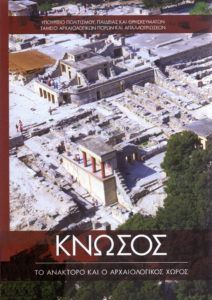
Ο οδηγός παρέχει με ευσύνοπτο τρόπο βασικές πληροφορίες για το φυσικό περιβάλλον, τους μύθους και την ιστορία του τόπου. Αναφέρει. συνοπτικά τις έρευνες, τις ανασκαφές και τις εργασίες προστασίας των ερειπίων.
Sono molti, ancora oggi, i punti oscuri della storia delle Cicladi durante l’antica Età del Bronzo, in particolare sui suoi rapporti culturali e sugli scambi commerciali con la Grecia continentale, con l’isola di Creta e con la città anatolica di Troia.
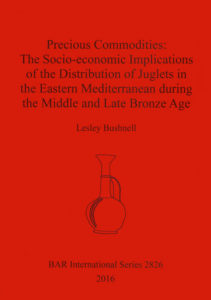
The distribution of ceramic juglets in the eastern Mediterranean of the Middle to Late Bronze Age has become linked to the provision of precious commodities, such as perfumed oil to lower elite segments of society.
Edited by Zetta Theodoropoulou Polychroniadis & Doniert EvelyOxford 2015
The honorand of this volume, Matti Egon, has been a great benefactor to museums, schools, universities and hospitals in the UK and also in Greece: all areas that her back-ground and life’s interests have made dear to her.
Edited by L. Vance Watrous, D. Matthew Buel, Eleni Kokinou, Pantelis Soupios, Apostolos Sarris, Sabine Beckmann, Geor-gos Rethemiotakis, Lee Ann Turner, Scott Gallimore & Mark D. HammondPhiladelphia 2017
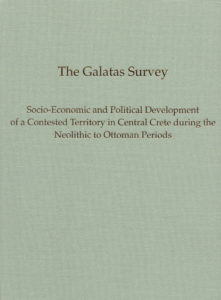
This volume explores the results of the American archaeological survey (2005-2007) carried out around the area of Galatas in Central Crete, as requested by Georgos Rethemiotakis, the Director of Excavations at Galatas.