The excavations by Klaus Kilian in the Lower Citadel of Tiryns between 1976 and 1983 brought to light one of the most important settlements of the Mycenaean postpalatial period (LH III C).
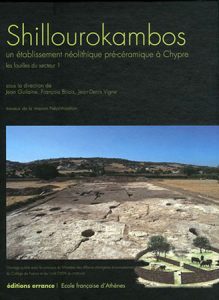
Edited by Jean Guilaine, François Briois & Jean-Denis VigneAthens/Paris2011
Shillourokambos est l΄un des plus anciens sites néolithiques de l΄île de Chypre. Il a été fondé vers 8500 avant notre ère et occupé peu ou prou sans interruption jusqu΄aux alentours de -7000. Consacré au secteur 1 de la localité, cet ouvrage en décrit les divers aménagements, pour la plupart attribuables aux plus anciennes phases d΄occupation, ainsi que des matériaux archéologiques et fauniques correspondants.
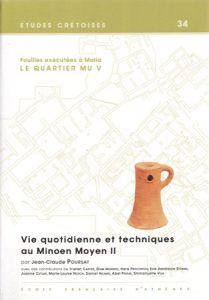
This fifth volume publishing the excavations of Quartier Mu presents several categories of finds, discovered in the final destruction layer of the complex's various buildings (Middle Minoan II, ca. 1700 BC). On the one hand, it includes stone tools and loom weights, as well as ceramic objects such as lamps, souvlaki stands, incense burners, etc;
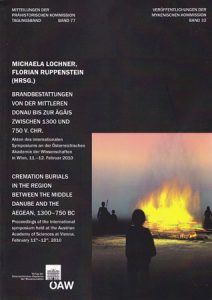
Edited by Michaela Lochner & Florian RuppensteinVienna2013
A change in burial customs took place in large parts of central Europe during the 13th century BC. The dead were no longer buried in inhumation graves –as was customary until then– but were burned and laid to rest in urns.
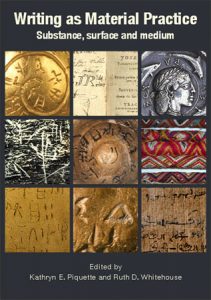
Edited by Kathryn E. Piquette & Ruth D. WhitehouseLondon2013
Writing as Material Practice grapples with the issue of writing as a form of material culture in its ancient and more recent manifestations, and in the contexts of production and consumption. Fifteen case studies explore the artefactual nature of writing - the ways in which materials, techniques, colour, scale, orientation and visibility inform the creation of inscribed objects and spaces, as well as structure subsequent engagement, perception and meaning making.
Figurine material included in this Corpus follows the typological presentation of the first two volumes entitled respectively Figurines of Neolithic Thessaly I and II: it is distinguished in two main categories, heads and bodies (male, female or parts of them) each one of them comprising naturalistic and schematic figurines (according to their prevailing features) with easily discernible subcategories.
The precious and abundant material of this volume includes 407 figurines, of which 119 are classified as heads and 288 as bodies, including 11 items representing only parts of human body, as for instance a leg, a nose or a foot. It is presented (as in the first volume) with emphasis to its modelling and form.
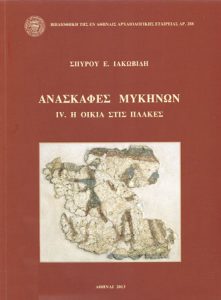
H οικία ευρίσκεται στην θέση «Πλάκες», στους ΝΔ. πρόποδες του λόφου του Προφήτη Ηλία, επάνω από τη δεξιά όχθη του ρέματος της Κοκορέτσας και σε απόσταση περίπου 200 μ. από την βόρεια πύλη της ακρόπολης των Μυκηνών, σε ένα σημείο όπου ο Steffen σημειώνει λείψανα αρχαίων θεμελίων και αναλημμάτων (Antike Grund- und Stützmauern), χωρίς αυτά πού επισημαίνει να συμπίπτουν με βεβαιότητα με την θέση της ανασκαφής (Karten von Mykene, Blatt I, Berlin 1884).
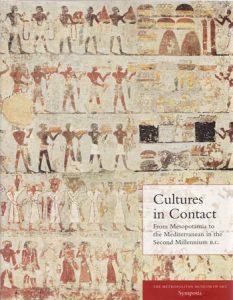
Edited by Joan Aruz, Sarah B. Graff & Yelena Rakic New York2013
In conjunction with the 2008–9 exhibition Beyond Babylon: Art, Trade, and Diplomacy in the Second Millennium B.C. at The Metropolitan Museum of Art, a series of lectures brought together major international scholars in a variety of fields concerned with the worlds of the Near East and the eastern Mediterranean in the middle and late Bronze Ages.
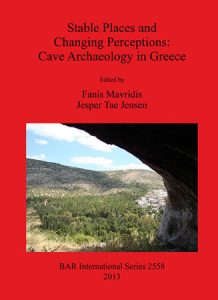
Edited by Fanis Mavridis & Jesper Tae JensenOxford2013
Caves are considered as important elements of world cultural heritage, having been actively used by man, with significant scientific, historical, archaeological, and anthropological value. However, it is not only their unique value, regarding these aspects, that makes caves particularly important.
The subject of the present study, which presents the results of my doctoral dissertation at the University of Heidelberg, is the local pottery of the province of Rethymnon, Crete in the Late Minoan III period. The primary aim is to pinpoint the exact location of the regional workshop, and to explore its relation to other ceramic workshops in Crete.
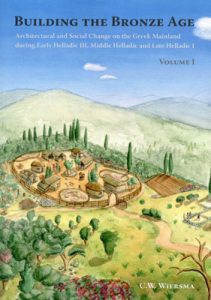
The Early Helladic III (EH III) and Middle Helladic (MH) periods in Greece are assumed in the literature to be simple in terms of social organization and material remains. However, these periods have barely been the subject of detailed studies of social change. Domestic architecture and the level of the household in particular, have received little consideration.
Edited by Bradley J. Parker & Catherine P. FosterWinona Lake, Indiana2012
The foundational tenets of household archaeology were established more than three decades ago by anthropological archaeologists seeking multiscalar approaches to the archaeological record. The study of the household as the basic unit of society and as a window to larger social, economic, and political change reflected in the everyday actions of individual people has since become integral to archaeological practice.
This monograph presents the LH IIIC grave assemblages of Naxos, with the objective of shedding light on the material culture and the ideological horizon of the island's population, and of tracing as fully as possible Naxos' role in the Aegean during this period.
edited by Nikos Efstratiou, Alexandra Karetsou & Maria NtinouPhiladelphia2013
The site of Knossos on the Kephala hill in central Crete is of great archaeological and historical importance for both Greece and Europe. Dating to 7000 B.C., it is the home of one of the earliest farming societies in southeastern Europe, and, in the later Bronze Age periods, it developed into a remarkable center of economic and social organization within the island, enjoying extensive relations with the Aegean, the Greek mainland, the Near East, and Egypt.