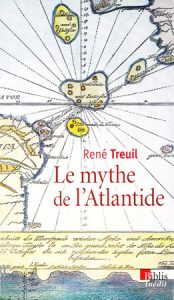
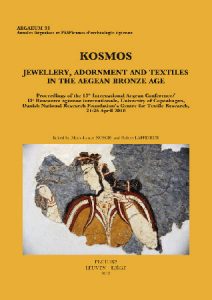
Traditionnellement associé à la quête géographique d’une brillante civilisation disparue, le mythe de l’Atlantide invite à un questionnement passionnant sur la modernité de cette fable des origines perdues.
L. Vance Watrous, Donald Haggis, Krzysztof Nowicki, Natalia Vogeikoff- Brogan & Maryanne SchultzPhiladelphia, Pennsylvania2012
This project was conceived in 1991 by L.V. Watrous. At that time, the Mirabello Bay area had been the focus of excavation at various sites - e.g., Vasiliki, Mochlos, Kavousi, and Pseira - for a number of years. Moreover, two surveys had just been completed in the Istron and Kavousi areas.
Since 2007, the Belgian School at Athens has undertaken excavations on the Kefali or Buffo hill, east of the village of Sissi, on the north coast of Crete where a Minoan site was occupied approximately between 2500 and 1200 BC.
Ο παρών τόμος (Helike IV) είναι ο τέταρτος στη σειρά τόμος Πρακτικών Διεθνών Συνεδρίων αφιερωμένων στην Αρχαία Ελίκη και Αιγιαλεία, που οργανώνονται από την Εταιρεία Φίλων της Αρχαίας Ελίκης (ΕΦΑΕΛ) και πραγματοποιούνται στην περιοχή της Αιγιαλείας.
Ce livre rend hommage à l’action pionnière de Christian Zervos, l’un des premiers à considérer les antiquités des Cyclades comme de véritables œuvres d’art, sources d’inspiration pour les artistes contemporains, à qui il ouvrait les pages des Cahiers d’art.
Philip P. Betancourt Philadelphia, Pennsylvania2012
When the Temple University archaeological project was excavating at the Bronze Age seaport on Pseira Island and Richard Hope Simpson discovered two massive stone and soil dams that were built in the middle of the second millennium B.C., we knew we had opened a new chapter in prehistoric engineering and water management.
This volume offers the first comprehensive examination of an ancient writing system from Cyprus and Syria known as Cypro-Minoan. After Linear B was deciphered by Michael Ventris in 1952, other un-deciphered scripts of the second millennium B.C. from the Aegean world (Linear A) and the Eastern Mediterranean (Cypro-Minoan) became the focus of those trying to crack this ancient and historical code. Despite several attempts for both syllabaries, this prospect has remained unrealized.
Πότε ξεκινά ο ελληνικός πολιτισμός; Πώς μπορούμε να ορίσουμε μεθοδολογικά την αφετηρία του και να την εντοπίσουμε στον χρόνο; Σε ποιους χρόνους και σε ποιες διαδικασίες μπορεί να αναχθεί η προέλευση του ελληνισμού των ιστορικών χρόνων;
O τρίτος τόμος της σειράς Aρχαιολογία εξετάζει την Πελοπόννησο, επικράτεια σημαντικών πόλεων-κρατών, γενέθλια γη μυθικών ηρώων, έδρα σεπτών ιερών πανελλήνιας εμβέλειας, κοιτίδα αρχαίων λατρειών και των σημαντικότερων αθλητικών αγώνων του αρχαίου κόσμου.
Think of a souvenir from a foreign trip, or an heirloom passed down the generations--objects allow us to think and act beyond the proximate, across both space and time.
This study investigates the double axe as a tool in Crete during the Minoan period. Previous scholars have attributed the double axe to the equipment of a woodworker, a carpenter, a stonemason and a butcher. The working activities performed by the different users plausibly would have left various kinds of use-wear on the axe, but this has not been studied until now.
My interest in Thermos goes back to the time when I served as Ephor of Antiquities for Achaia and Aitoloakarnania (1976-1983). It was my obligation to deal with archaeological matters of that site, such as the arrangement of the agora. Thus, when, in 1983, at the request of the Archaeological Society in Athens, I undertook the continuation of the excavation of Thermos, which had been conducted by Rhomaios until 1932, I began with the agora.
Το παρόν βιβλίο, αποτελεί την τρίτη εκδοτική συνέχεια, μετά από εκείνο για την «Ιστορία της ενορίας και του χωριού Αγάπητος» και το δεύτερο με τίτλο «Τοπωνυμικά και Ονοματολογικά της νήσου Τήνου» (ΠΕΡΙΟΔΟΣ: ΒΥΖΑΝΤΙΝΑ-ΜΕΣΑΙΩΝΙΚΑ, Βιβλίο Νο 1 και Νο 2 αντίστοιχα) με τα οποία εγκαινιάστηκε μια σειρά ειδικών δημοσιευμάτων που αφορούν την Ιστορία της Τήνου και απασχόλησαν τον συγγραφέα επί 36 συνεχή χρόνια.
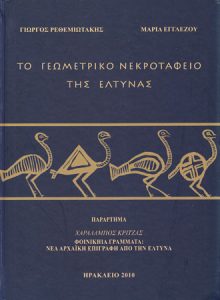
Η αρχαία κρητική πόλη Ελτυναία, Ελτυνία ή Έλτυνα εκτεινόταν στη μικρή, αλλά εύφορη κοιλάδα των Πεζών, που βρίσκεται δεκαπέντε χιλιόμετρα νότια του Ηρακλείου και της Κνωσού. Η παρούσα πραγματεία αποτελεί δημοσίευση συνόλου από σωστική ανασκαφή της ΚΓ΄ Εφορείας Προϊστορικών και Κλασικών Αρχαιοτήτων, η οποία πραγματοποιήθηκε κάτω από τις γνωστές δύσκολες συνθήκες, που συνοδεύουν ανασκαφές αυτού του είδους