Classical Spies is the first insiders' account of the operations of the American intelligence service in World War II Greece. Initiated by archaeologists in Greece and the eastern Mediterranean, the network drew on scholars' personal contacts and knowledge of languages and terrain. While modern readers might think Indiana Jones is just a fantasy character, Classical Spies discloses events where even Indy would feel at home: burying Athenian dig records in an Egyptian tomb, activating prep-school connections to establish spies code-named Vulture and Chickadee, and organizing parachute drops.
More than fifteen years ago, W.D.E. Coulson published a paper titled The Greek Dark Ages. A review of the evidence and suggestions for future research (Athens 1990). There, he posed a series of questions related to some of the major research problems regarding the Greek "Dark Ages" which he deemed, in a wider sense, as the period spanning roughly 1125-700 B.C.
H παρούσα έκδοση, πλούσια εικονογραφημένη με φωτογραφικό και σχεδιαστικό υλικό, παρουσιάζει εκατόν ογδόντα έξι αντιπροσωπευτικά αντικείμενα από το ανασκαφικό έργο στο Σπήλαιο Αλεπότρυπα του Διρού Μάνης. Ο τόμος περιλαμβάνει αναλυτική εισαγωγή, όπου προβάλλεται μια διαφορετική οπτική γωνία για τις ιδιομορφίες και το χαρακτήρα του Νεολιθικού Πολιτισμού στην Ελλάδα, στις τελευταίες φάσεις του οποίου, δηλαδή τη Νεότερη και Τελική Νεολιθική εποχή, τοποθετείται και η χρήση του Σπηλαίου Αλεπότρυπα.
People often ask me, "Why monkeys?" Then they ask, "Were there monkeys in the Mediterranean?" In answer to the first question, my interest in monkeys began in 1984, when my mother and I decided to convert our guesthouse into a primate sanctuary for baboons and macaques.
Joseph Maran & Philipp W. Stockhammer (επιμέλεια)Oxford2011
'Materiality and Social Practice' investigates the transformative potential arising from the interplay between material forms, social practices and intercultural relations. Such a focus necessitates an approach that takes a transcultural perspective as a fundamental methodology and, then a broader understanding of the inter-relationship between humans and objects.
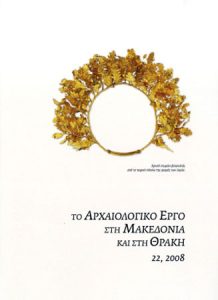
Η σειρά των πρακτικών του Αρχαιολογικού 'Εργου στη Μακεδονία και στη Θράκη έφθασε αισίως στον εικοστό δεύτερο τόμο της, με έναν επιπλέον εικοστό τρίτο τόμο που εκδόθηκε εμβόλιμα ως επετειακός με αφορμή την εικοσαετία της συνάντησης, αποτελώντας έναν τόμο συνθετικών μελετών για τους κατ' επανάληψη ανασκαμμένους αρχαιολογικούς χώρους. Στις σελίδες του παρόντος τόμου καταγράφονται οι ανασκαφικές και ερευνητικές δραστηριότητες στον βορειοελλαδικό χώρο του έτους 2008. Πλούσιος για άλλη μία χρονιά ο αμητός των ευρημάτων αποκαλύπτει το εύρος των δυνατοτήτων και των εκπλήξεων που μας επιφυλάσσουν ακόμη η μακεδονική και θρακική γη, η έρευνα των οποίων βρίσκεται σε συνεχή εξέλιξη.
Bjӧrn Forsén & Esko Tikkala (επιμέλεια)Helsinki2011
The Thesprotia Expedition was scheduled originally in 2003 to last for five years. With additional funding from the Academy of Finland, field work was continued for another two years, thus covering a total of seven years. The last field season and archive study season was conducted in 2010 and the focus of the project is now directed towards studying the remaining categories of finds and publishing the results of the project.
Το ανασκαφικό έργο που επιτέλεσαν οι Εφορείες Αρχαιοτήτων του ΥΠΠΟΤ τα τελευταία χρόνια είναι τώρα στο διαδίκτυο. Δημοσιευμένο συστηματικά μέχρι σήμερα μόνο από την έκδοση “Αρχαιολογικόν Δελτίον”, το έργο των αρχαιολόγων του ΥΠΠΟ παρέμενε μέχρι σήμερα – εκτός από ελάχιστες εξαιρέσεις – δύσκολα προσβάσιμο και συνεπώς σχετικά άγνωστο.
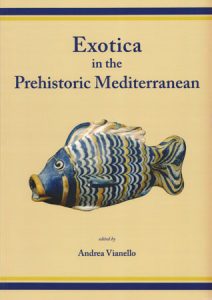
Exotica in archaeology are usually identified as any foreign as opposed to indigenous materials and products. The presence of exotica can map movements of people and help recognise exchange networks by linking human societies with sometimes distant places.
Aegina has long been recognised as a major production centre of a variety of widely exported ceramic containers not only in the relatively recent past but also in Classical antiquity and especially during the Middle and Late Bronze Age.
Ο Άδωνις Κύρου στις αρχαιολογικές περιπλανήσεις και αναζητήσεις του επεσήμανε την ύπαρξη άφθονων οστράκων και άλλων αρχαίων γύρω από την εκκλησία του Αγίου Γεωργίου στη θέση «στο Βουνό» στα Κύθηρα. Το ανακοίνωσε στον Γιάννη Σακελλαράκη ο οποίος έκρινε ότι ο τόπος άξιζε μια συστηματική ανασκαφή, κάτι που πραγματοποίησε με τη γνωστή του θεληματικότητα και επιστημοσύνη.
Giovanni Gallo, Vincenzo La Rosa, Filippo Stanco & Davide Tanasi (επιμέλεια)Caltanissetta2011
Πρόκειται για τη δημοσίευση δύο ημερίδων που έλαβαν χώρα στις 11 και 28 Νοεμβρίου 2008 στην Κατάνια της Ιταλίας. Το θέμα των ημερίδων αφορά στις ψηφιακές εφαρμογές στην αρχαιολογία της Μινωικής Κρήτης. Τα άρθρα είναι γραμμένα στα Ιταλικά και στα Αγγλικά.
Thomas Guttandin, Diamantis Panagiotopoulos, Hermann Pflug & Gerhard PlathHeidelberg2011
Die Ägäis erlebte in der Bronzezeit eine rasante kulturelle Entwicklung, bei der das maritime Element eine entscheidende Rolle spielte. Zuerst waren es die Kykladen-Bewohner und später die Minoer, die seetüchtige Boote und Schiffe entwickelt haben, mit denen sie die wichtigsten maritimen Wege beherrschten.
Bernhard Hänsel & Ioannis Aslanis (επιμέλεια)Rahden/Westf 2010
This is the third and pivotal one of six volumes on the tell settlement excavated to some 1% in 1994-1996. The 18 layers of the upper part of the tell, which was ca. 200 x 100 x 30 m large and originally situated at the sea and on the river Olynthius, reach from the transition between the Early to Middle Bronze Age [cal. B.C. 2060] to the Protogeometric Phase [early 1st mill. B.C.].
Kevin T. Glowacki & Natalia Vogeikoff-Brogan (επιμέλεια)Princeton2011
This volume presents the papers of an international colloquium on the archaeology of houses and households in ancient Crete held in Ierapetra in May 2005. The name of the conference—and of the present volume—was inspired by the “Great Code” of Gortyn, where stega (literally, “roof”) is used to refer to the “house” both as a building and as an important element of a citizen’s “household.” Indeed, understanding the relationship between “house” as physical structure and “household” as social unit remains among the fundamental goals and challenges of household archaeology in any time period or geographical location.