Το μυκηναϊκό νεκροταφείο βρίσκεται στη θέση Καραγιάννη, στα χαμηλά πρανή του Μιτοπολιάνικου βουνού ή αλλιώς Κομποβουνίου του Δήμου Ωλενίας, απ΄ όπου μπορεί κανείς να ελέγξει όλη τη ΒΔ πεδινή έκταση της Αχαΐας καθώς και τον Πατραϊκό κόλπο. Ιδιαίτερη σημασία έχει η εξάρτηση του αρχαιολογικού χώρου της Μιτόπολης από το Τείχος Δυμαίων, για το οποίο ορισμένοι μελετητές πιστεύουν ότι ήταν το διοικητικό κέντρο ή ο ναύσταθμος των μυκηναϊκών εγκαταστάσεων της επαρχίας Πατρών.
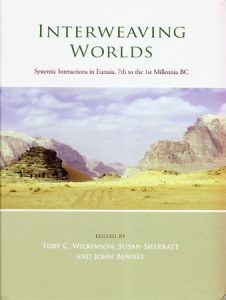
Toby C. Wilkinson, Susan Sherratt & John Bennet (επιμέλεια)Oxford/Oakville 2011
How do we understand the systemic interactions that took place in and between different regions of prehistoric Eurasia and their consequences for individuals, groups and regions on both a theoretical and empirical basis? Such interactions helped create economic and cultural spheres that were mutually dependent yet distinct.
While "corridor houses" such as the House of the Tiles at Lerna have provoked widespread discussion about the origins of social stratification in Greece, few settlements of the Early Bronze Age (ca. 3100 to 2000 B.C.) have been thoroughly excavated.
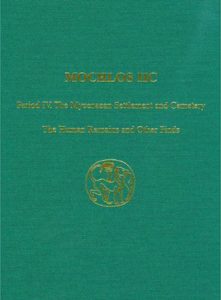
Jeffrey S. Soles and Costis Davaras (επιμέλεια)Philadelphia Pennsylvania 2011
Excavations carried out at the Late Minoan III settlement and cemetery at Mochlos in eastern Crete yielded domestic artifacts, human remains, grave goods, and ecofactual material from 31 tombs and 11 houses. These objects are cataloged, discussed, and illustrated. Radiocarbon dates for the site are also presented.
This book presents the ceramic vessels from the Late Minoan (LM) II-III settlement at Mochlos and its cemetery at Limenaria, which lies opposite the settlement a short distance to the south.
Davide Tanasi & Nicholas C. Vella (επιμέλεια)Monza 2011
The Bronze Age of the Maltese archipelago has long been overlooked by archaeologists whose attention has mostly been focused on the Late Neolithic temples. This book attempts to understand the islands’ Bronze Age society in the course of the second millennium BC by exploring the history of Borġ in-Nadur in south-east Malta.
Ilse Schoep, Peter Tomkins & Jan Driessen (επιμέλεια)Oxford/Oakville 2012
Ever since their first discovery, more than a century ago, the Minoan Palaces have dominated scholarship on the Cretan Bronze Age. Opinion long held that their first appearance, seemingly at the beginning of the Middle Bronze Age, marked a pivotal transformation point, during which the simple, egalitarian societies of the Early Bronze Age were transformed into something significantly more complex, hierarchical and civilised.
From 1957 to 1961 the British School at Athens undertook an extensive programme of stratigraphical excavations at Knossos under Sinclair Hood, then Director of the School. This report publishes in detail the results of investigations into Early Minoan levels, which shed much new light on the era before the "Old Palace" was established.
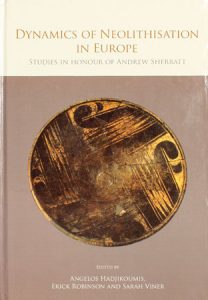
Angelos Hadjikoumis, Erick Robinson & Sarah Viner (επιμ.)Oxford/Oakville 2011
Dynamics of Neolithisation in Europe examines the development of early agriculture in Neolithic Europe, drawing on the work of the late Professor Andrew Sherratt. His untimely death coincided with an important period of research that moved beyond searching for singular causal mechanisms behind the ‘neolithisation’ of Europe in favour of developing a better understanding of the complex interrelationships of cultural, ecological, economic and social factors.
Ο τέταρτος τόμος του περιοδικού Pasiphae χωρίζεται σε δύο μέρη. Το πρώτο μέρος παρουσιάζει τα συμπεράσματα του διεθνούς συνεδρίου “Riflessioni sulla cronologia egea alla luce delle recenti scoperte di Santorini”, το οποίο έλαβε χώρα στο Μιλάνο κατά τις 27-28 Απριλίου 2009.
Elisabeth Schofield (με τη συνεργασία των Jack L. Davis & Carol Hershenson και αρχιτεκτονικά σχέδια της Whitney Powell-Cummer)Darmstadt2011
The book is a premature publication of Elizabeth Schofield, who died in 2005. It presents the Western Sector of the Ayia Irini site on Keos (Cyclades). Two features of the Late Bronze Age Western Sector are of particular importance for understanding the disposition of the settlement of Keos and the way it was reorganised in Periods VI (= LH I) and VII (= LH II).
The Eastern Mediterranean has been a field of cultural interaction since early prehistoric times (11th mill. BC). Due to the need for the acquisition of raw materials, ceramic technologies and metalwork, interaction became more intensive in the second half of the third millennium BC.
Joanne M.A. Murphy (επιμ.)Philadelphia, Pennsylvania 2011
Since the inception of Minoan archaeology, studies pertaining to tombs and tomb deposits have played seminal roles in our understanding of Minoan culture and the reconstruction of Bronze Age society. For several geographical areas and chronological periods of Cretan history, tombs are the most abundant source of data.
Walter Gauss, Michael Lindblom, R.A.K. Smith & James C. Wright (επιμέλεια)Oxford2011
Most of us first encounter Festschriften when in graduate school. In the seminar at Bryn Mawr they were all grouped together on several shelves. There I became accustomed to expect, upon opening one, to see a formal photograph of a mature to ageing scholar in a formal suit or dress. Nowadays we generally have dispensed with these formalities, in part because of our changing use of the camera and perception of what the image should convey.
Peter Van Dommelen & A. Bernard Knapp (επιμ.)London/New Yok 2011
Material Connections in the Ancient Mediterranean explores the social identity of prehistoric and historic Mediterranean peoples through the combined lenses of materiality, migration, colonial encounters, hybridisation and connectivity or insularity.