ΣΥΝΘΕΤΗ ΑΝΑΖΗΤΗΣΗ +

Αιγεύς Εταιρεία Αιγαιακής Προϊστορίας

ΒΙΒΛΙΑ

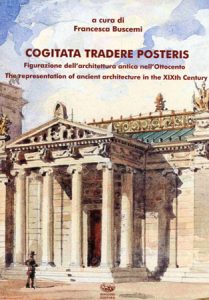
Cogitata tradere posteris: figurazione dell’architettura antica nell’Ottocento. The Representation of Ancient Architecture in the XIXth Century

Acireale - Roma 2010

Cogitata tradere posteris: figurazione dell’architettura antica nell’Ottocento. The Representation of Ancient Architecture in the XIXth Century This volume is based on the essays presented to the conference ‘The graphic documentation of ancient monuments in the 19th Century. Technique and ideology’, hosted by the Faculty of Literature of the University of Catania on 25 November 2009. It contains 10 articles written in Italian, English and French. Two of the articles focus on the rediscovery of Mycenae and the Treasury of Atreus.

ΙΡΙΣ. Μελέτες στη μνήμη της καθηγήτριας Αγγελικής Πιλάλη-Παπαστερίου

Θεσσαλονίκη 2010

ΙΡΙΣ. Μελέτες στη μνήμη της καθηγήτριας Αγγελικής Πιλάλη-Παπαστερίου Ο τόμος αφιερώνεται στη μνήμη της Αγγελικής Πιλάλη-Παπαστερίου, καθηγήτρια προϊστορικής αρχαιολογίας στο Αριστοτέλειο Πανεπιστήμιο Θεσσαλονίκης, η οποία απεβίωσε το 2007. Τα 18 άρθρα, που έχουν συγγράψει συνάδελφοι και μαθητές της Πιλάλη-Παπαστερίου, αναφέρονται όλα στο γνωστικό αντικείμενο της εκλειπούσης και διαχωρίζονται σε τρεις ενότητες: 1) Μακεδονία, 2) Πελοπόννησος-Κυκλάδες-Κρήτη και 3) Θεωρητικές προσεγγίσεις.

Raum und Ritus. Zur Rekonstruktion minoischer Kultpraxis

Oxford 2009

Raum und Ritus. Zur Rekonstruktion minoischer Kultpraxis In this study of Minoan cult practice, the author looks beyond the many vivid images from Cretan prehistory, focussing on the stratigraphy of the artefacts and buildings. She lists all the known cultural rooms in a database and divides them into “primary” and “secondary” rooms, according to their cultural objects and architectural situation. The former were selected for their good state of preservation, with their artefacts found in situ.

Cyprus and the East Aegean. Intercultural Contacts from 3000 to 500 BC. An International Archaeological Symposium held at Pythagoreion, Samos, October 17th – 18th 2008

Λευκωσία 2009

Cyprus and the East Aegean. Intercultural Contacts from 3000 to 500 BC. An International Archaeological Symposium held at Pythagoreion, Samos, October 17th – 18th 2008 The study of the archaeology and history of a country is not confined within the narrow boundaries of its physical borders, but it expands much further, to include its relations with the neighbouring countries and the outside world in general. The more so when this country is a small island, like Cyprus, whose survival presupposes continuous overseas contacts. The Mediterranean has been uniquely blessed and is a good example of die phenomenon of a sea which unites and does not separate the countries which it borders. This elongated sea, with a number of islands scattered from one end to the other, has made communications possible, even in prehistoric times, when the means of navigation were primitive.

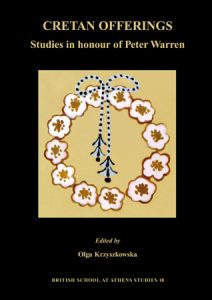
Cretan Offerings: Studies in Honour of Peter Warren

London 2010

Cretan Offerings: Studies in Honour of Peter Warren In recognition of the outstanding contribution made by Peter Warren to Aegean archaeology — and in particular to Cretan studies — this volume offers a collection of 36 papers reflecting his wide-ranging research interests. Among the topics addressed are material culture and iconography, including frescoes, pottery, seals and stone vases; chronology, inter-site relationships, overseas connections and religion; Knossos and the legacy of Sir Arthur Evans;

Humfry Payne. Ελλάδος περιήγησις. Αρχαιολογία και νεοελληνική πραγματικότητα στα χρόνια του μεσοπολέμου

Αθήνα 2008

Humfry Payne. Ελλάδος περιήγησις. Αρχαιολογία και νεοελληνική πραγματικότητα στα χρόνια του μεσοπολέμου Ο Humfry Gilbert Garth Payne (1902-1936) ήταν Βρετανός αρχαιολόγος. Γεννήθηκε στο Wendover, στην κομητεία του Buckinghamshire, στις 19 Φεβρουαρίου 1902. Ήταν ο μοναδικός γιος του Edward John Payne (1844-1904), ανθρωπολόγου και ιστορικού του Νέου Κόσμου, ενώ ένας από τους προγόνους του ήταν ο Sir Richard Payne-Knight, διάσημος συλλέκτης αρχαιοτήτων και ανταγωνιστής του λόρδου Έλγιν.

Wilhelm Dörpfeld: Daten meines Lebens – Σταθμοί της Ζωής μου

Πάτρα 2010

Wilhelm Dörpfeld: Daten meines Lebens – Σταθμοί της Ζωής μου Το αυτοβιογραφικό χειρόγραφο, το οποίο για πρώτη φορά δημοσιεύεται, καταγράφει τη ζωή του Dörpfeld κατά χρονολογική αλληλουχία. Ο αρχαιολόγος άρχισε τις καταγραφές το 1916, συμπλήρωσε μέχρι τότε την προηγούμενη ζωή του, και συνέχισε μέχρι λίγο πριν από τον θάνατό του. Η έκδοση γίνεται στη γερμανική και στην ελληνική γλώσσα.

Neolitico a Festòs

Roma 2009

Neolitico a Festòs Il neolitico di Festòs è stato pubblicato, nel tempo, da diversi autori in riviste e volumi, tuttavia riteniamo opportuno riprodurre le più importanti edizioni, oggi difficilmente reperibili, relative agli scavi diretti da Luigi Pernier su tutta l’area palaziale e a quelli condotti da Doro Levi limitatamente al cortile 40 e al corridoio 7 del Palazzo di Festòs. La ragione di quest'ultima particolare scelta è data dal fatto che gli scavi di queste due aree sono stati controllati direttamente da Enrica Fiandra, durante i lavori di rifinitura dei saggi scavati, di rilevamento grafico e fotografico nel cortile 40 e di scavo e rilievo in occasione del restauro delle lastre di gesso alabastrino del pavimento nel corridoio 7, effettuato nel 1957.

MESOHELLADIKA – MΕΣΟΕΛΛΑΔΙΚΑ. La Grèce continentale au Bronze Moyen – Η ηπειρωτική Ελλάδα στη Μέση Εποχή του Χαλκού – The Greek Mainland in the Middle Bronze Age

Αθήνα 2010

MESOHELLADIKA – MΕΣΟΕΛΛΑΔΙΚΑ. La Grèce continentale au Bronze Moyen – Η ηπειρωτική Ελλάδα στη Μέση Εποχή του Χαλκού – The Greek Mainland in the Middle Bronze Age During the first half of the 2nd millennium BC, as the first palaces appear in Crete and the Minoan civilisation is flourishing, the Greek mainland goes through what is considered a period of stagnation, it not decline and social regression: the Middle Helladic period. The Middle Bronze Age in the Greek mainland has received very little attention, perhaps because of the relative austerity of the material culture and the absence of overt social differentiation.

The Archaeology of Tomb A1K1 of Orthi Petra in Eleutherna: The Early Iron Age Pottery

Αθήνα 2008

The Archaeology of Tomb A1K1 of Orthi Petra in Eleutherna: The Early Iron Age Pottery The present volume publishes some of the finds and results of the excavations conducted by Professor N. Stampolidis of the University of Crete in the Early Iron Age necropolis of Orthi Petra in Eleutherna, Crete. The necropolis, which is a palimpsest of intensive human activity, the denser and most legible lines of which pertain to the 9th – 6th centuries BC, lies on the originally rather steep, but now terraced, west slopes of the hill of Prines, 20-40m above the Chalopota stream.

Die Bedeutung der minoischen und mykenischen Glyptik. VI. Internationales Siegel-Symposium aus Anlass des 50 jährigen Bestehens des CMS Marburg, 9.-12. Oktober 2008

Mainz 2010

Die Bedeutung der minoischen und mykenischen Glyptik. VI. Internationales Siegel-Symposium aus Anlass des 50 jährigen Bestehens des CMS Marburg, 9.-12. Oktober 2008

Το βιβλίο παρουσιάζει τα αποτελέσματα του 6ου Διεθνούς Συνεδρίου Σφραγιδογλυφίας με τίτλο ‘Die Bedeutung der minoischen und mykenischen Glyptik‘. Το συνέδριο έλαβε χώρα στο Marburg (Γερμανία) τον Οκτώβριο του 2008, με την ευκαιρία των 50 ετών του Corpus der Minoischen und Mykenischen Siegel. Τα 33 άρθρα είναι γραμμένα στα αγγλικά (23), γερμανικά (8) και γαλλικά (2).

Dawn of Discovery: The Early British Travellers to Crete. Richard Pococke, Robert Pashley and Thomas Spratt, and their Contribution to the Island’s Bronze Age Archaeological Heritage

Oxford 2010

Dawn of Discovery: The Early British Travellers to Crete. Richard Pococke, Robert Pashley and Thomas Spratt, and their Contribution to the Island’s Bronze Age Archaeological Heritage It is intended to focus on three important British travellers to Crete during the 18th and 19th centuries to establish whether or not they wade any significant contribution to the field of research with regard to the archaeological heritage of Bronze Age Crete. It is an attempt to bring these ‘lost pioneers’ of antiquity to the fore and to recognize their efforts as part of the foundation of the discovery of the island’s Bronze Age archaeology prior to the groundbreaking excavations of Sir Arthur Evans. They arc Richard Pococke (1704-65), Robert Pashley (1805-59) and Thomas Spratt (1811-88).

Αρχαιολογικό έργο Κρήτης 1: Πρακτικά της 1ης συνάντησης, Ρέθυμνο, 28-30 Νοεμβρίου 2008

Ρέθυμνο 2010

Αρχαιολογικό έργο Κρήτης 1: Πρακτικά της 1ης συνάντησης, Ρέθυμνο, 28-30 Νοεμβρίου 2008

Από τις 28 έως τις 30 Νοεμβρίου 2008 έγινε στο Πανεπιστήμιο Κρήτης η 1η Συνάντηση για το Αρχαιολογικό Έργο Κρήτης, που οργανώθηκε από το Τμήμα Ιστορίας και Αρχαιολογίας του Πανεπιστημίου Κρήτης και την 28η Εφορεία Βυζαντινών Αρχαιοτήτων. H Παγκρήτια αυτή συνάντηση, αίτημα με μακρά ιστορία, πραγματοποιήθηκε μέσα σε κλίμα βαθιάς ικανοποίησης και με τη συμμετοχή πολλών νέων και πεπειραμένων συναδέλφων. Ο τόμος περιλαμβάνει το μεγαλύτερο μέρος των προφορικών και επιτοίχιων ανακοινώσεων με ποικίλο περιεχόμενο: ανασκαφές, αποκαταστάσεις, αναστηλώσεις, εργασίες συντήρησης, ψηφιακές εφαρμογές.

Η Ελλάδα στο ευρύτερο πολιτισμικό πλαίσιο των Βαλκανίων κατά την 5η και 4η χιλιετία π.Χ.

Αθήνα 2010

Η Ελλάδα στο ευρύτερο πολιτισμικό πλαίσιο των Βαλκανίων κατά την 5η και 4η χιλιετία π.Χ. Με την ευκαιρία της φιλοξενίας της έκθεσης "Το ξεχασμένο παρελθόν της Ευρώπης. Η κοιλάδα του Δούναβη, 5000-3500 π.Χ.", το Μουσείο Κυκλαδικής Τέχνης, σε συνεργασία με το Υπουργείο Πολιτισμού και Τουρισμού - Γενική Διεύθυνση Αρχαιοτήτων και Πολιτιστικής Κληρονομιάς, οργανώνει για συγκριτικούς σκοπούς μια παράλληλη παρουσίαση περίπου 90 αρχαιολογικών αντικειμένων από ελληνικές νεολιθικές θέσεις με κατοίκηση κατά την 5η και 4η χιλιετία π.Χ. Η παρουσίαση έχει ως στόχο να αναδείξει τις ομοιότητες αλλά και τις διαφορές μεταξύ της Ελλάδας και άλλων περιοχών της ΝΑ Ευρώπης πριν από 7.000 χρόνια και να εντάξει τις εξελίξεις που λαμβάνουν χώρα στον ελλαδικό και αιγαιακό χώρο την περίοδο αυτή σε ένα ευρύτερο ιστορικό και πολιτισμικό πλαίσιο.

The Lost World of Old Europe: The Danube Valley, 5000-3500 BC

New York 2010

The Lost World of Old Europe: The Danube Valley, 5000-3500 BC

In the prehistoric Copper Age, long before cities, writing, or the invention of the wheel, Old Europe was among the most culturally rich regions in the world. Its inhabitants lived in prosperous agricultural towns. The ubiquitous goddess figurines found in their houses and shrines have triggered intense debates about women's roles. The Lost World of Old Europe is the accompanying catalog for an exhibition at New York University's Institute for the Study of the Ancient World. This superb volume features essays by leading archaeologists as well as breathtaking color photographs cataloguing the objects, some illustrated here for the first time.