ΒΙΒΛΙΑ
Edited by Anna Lucia D’Agata, Aleydis van de Moortel & M.B. Richardson
Princeton
2009
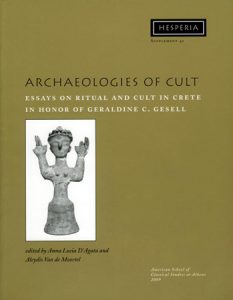 Twenty-five years after Colin Renfrew’s seminal book, The Archaeology of Cult, was published, the study of ritual and religion in Crete remains one of the most vital and debated areas of research in Old World prehistory. For the present volume, 25 specialists in the archaeology of the island have been invited to bring the subject up to date. Their multivocalist discourse ranges in time from the Bronze to the Iron Age and includes, in five diverse sections, unpublished finds, theoretically-informed discussion of ritual behavior, and innovative reconstructions of sacred landscapes.
Μαρία Ανδρεαδάκη-Βλαζάκη (επιμέλεια)
Χανιά
2009
 H πόλη των Χανίων υπερηφανεύεται δικαίως ότι συγκαταλέγεται στις πόλεις με μακραίωνη ιστορία και ειδικά στις πόλεις στις οποίες οι ανασκαφικές εργασίες έχουν αποκαλύψει συνεχή κατοίκηση σε αλλεπάλληλα οικιστικά στρώματα. Είναι η μοναδική πόλη στη σύγχρονη Κρήτη που ξεθάβει τόσες πολλές μνήμες καθημερινά και φέρνει στο φως τόσα πολλά ίχνη από το μακρινό παρελθόν της. Ίχνη σβησμένα και ξανασβησμένα, όπως σε ένα παλίμψηστο χειρόγραφο, αλλά πάντα με αναγνώσιμα και αναγνωρίσιμα αποτυπώματα. Έτσι έχει αρχίσει η ανασύνθεση του μοναδικού αρχιτεκτονικού παλίμψηστου της πόλης των Χανίων, η οποία έχει χαρακτηριστεί στην Επικράτεια Πολιτισμού ως η πόλη της αρχιτεκτονικής της Μεσογείου. Ταυτόχρονα, είναι μια από τις αρχαιότερες πόλεις της Μεσογείου και ολόκληρης της Ευρώπης, τίτλος που στηρίζεται στην ύπαρξη οργανωμένου οικισμού με «αστικό» χαρακτήρα ήδη από την τρίτη χιλιετία π.Χ.
Mihael Budja (επιμέλεια)
Ljubljana
2009

The 16th Neolithic Studies anthology comprises seventeen selected papers presented at the fifteenth Neolithic Seminar Climate Anomalies, Population and Culture Dynamics in Prehistory that took place at the Department of Archaeology, University of Ljubljana in November 2008.
Helen Hughes-Brock με τον John Boardman
Mainz
2009
 These volumes publish the 516 Minoan and Mycenaean seals in the Ashmolean Museum, Oxford. Although many have been previously published, this publication is far more comprehensive than any which precede it and several artefacts previously considered doubtful or fake have been re-examined and rehabilitated. The seals are each illustrated and photographed with descriptions, commentary, comparanda and bibliographies.
Mercourios Georgiadis & Chrysanthi Gallou (επιμέλεια)
Oxford
2009
 The present volume is the outcome of a session held at the 12th European Archaeological Association conference at Krakow in Poland, in September 2006, titled The Past in the Past: The Significance of Memory and Tradition in the Transmission of Culture. In the papers presented in this session as well as in the chapters presented in this volume there were three central concepts, which were very closely linked and interrelated, memory, tradition and identity. It became apparent that there were various ways in which they were perceived and consciously exploited within different societies.
Στέλλα Δρούγου, Δέσποινα Ευγενίδου, Χαράλαμπος Κριτζάς, Νικόλαος Καλτσάς, Βάσω Πέννα, Ηώς Τσούρτη, Μίνα Γαλάνη-Κρίκου και Ευτέρπη Ράλλη (επιμέλεια)
Αθήνα
2009
 Ο Ιωάννης Τουράτσογλου επιβεβαιώνει την μακρά παράδοση των διευθυντών του Νομισματικού Μουσείου, οι οποίοι υπήρξαν αναγνωρισμένοι επιστήμονες με έντονη προσωπικότητα. Οι τόμοι αυτοί είναι ένα δείγμα αναγνώρισης, ένα αντίδωρο για την προσφορά του στο Μουσείο. To πλήθος των συμμετοχών και των ειδικοτήτων μαρτυρεί για την εκτίμηση, τη φιλία και την αναγνώριση από συναδέλφους του, οι οποίοι προέρχονται από πολλούς επιστημονικούς χώρους, με τους οποίους ο τιμώμενος συνεργάστηκε ή ήρθε σε επαφή. To Νομισματικό Μουσείο προσπάθησε να δημιουργήσει τις προϋποθέσεις, ώστε να δοθεί η δυνατότητα σε όλους αυτούς που θέλησαν να συμμετέχουν σε αυτήν την έκφραση τιμής στον Ιωάννη Τουράτσογλου. To αποτέλεσμα θα κριθεί από τη χρήση αυτών των τόμων.
Joanna S. Smith
Cambridge
2009

Dramatic social and political change marks the period from the end of the Late Bronze Age into the Iron Age (ca. 1300–700 BC) across the Mediterranean. Inland palatial centres of bureaucratic power weakened or collapsed ca. 1200 BC while entrepreneurial exchange by sea survived and even expanded, becoming the Mediterranean-wide network of Phoenician trade. At the heart of that system was Kition, one of the largest harbour cities of ancient Cyprus. Earlier research has suggested that Phoenician rule was established at Kition after the abandonment of part of its Bronze Age settlement.
Michel B. Sakellariou
Αθήνα
2009
 L’auteur s’emploie à identifier et situer, dans l’espace et dans le temps, les ethnè grecs apparus avant c.a. 1100/1050 de l’ère préchrétienne, sur la base à la fois d’éléments de tradition et d’indices onomastiques, culturels, institutionnels, dialectaux et autres, tous établis suivant de règles uniformes et après discussion critique détaillée. Les vingt-cinq chapitres, pour autant d’ethnè identifiés, sont précédés d’une introduction touchant : (1) à l’arrivée des Protogrecs, (2) à l’image d’un ethnos grec à l’âge du Bronze, et (3) aux normes à appliquer, et suivis de conclusions générales par trois unités thématiques : (1) description de chaque ethnos identifié, (2) pays où il se laisse repérer et dates respectives, et (3) les étapes de son expansion et, le cas échéant, sa diffusion.
Haralampos V. Harissis & Anastasios V. Harissis
Oxford
2009
 This study surveys the evidence for beekeeping in the Prehistoric Aegean, from references in later literature to archaeological remains of beekeeping paraphernalia, symbolic depictions in jewellery and on seals, and the evidence of folklore and mythology. Finds of hives, smoking pots, honey extractors (some of them identified as such by the authors) and so-on indicate systematic Minoan apiculture, and the authors propose that contra Evans, seals can be reinterpreted as depicting apiculture, rather than religious scenes, and used by overseers of beekeeping, a high-status and highly valued industry.
Aνδρέας Γ. Bλαχόπουλος (επιμέλεια)
Αθήνα
2009

Μετά την έκδοση του πρώτου τόμου Νησιά του Αιγαίου της σειράς Αρχαιολογία, στον δεύτερο εξετάζεται η Εύβοια και η Στερεά Ελλάδα, η ευρεία γεωγραφική ζώνη που εκτείνεται από τις δυτικές ακτές του Αιγαίου έως τα παράλια του Ιόνιου πελάγους. Στην ιστορική και αρχαιολογική αυτή περιήγηση η Εύβοια και ο νότιος ελλαδικό κορμός - Αττική, Βοιωτία, Φθιώτιδα, Ευρυτανία, Φωκίδα, Αιτωλία και Ακαρνανία - παρουσιάζονται από την προϊστορική περίοδο έως το τέλος του αρχαίου κόσμου. Τριάντα πέντε Έλληνες και ξένοι αρχαιολόγοι αναλαμβάνουν το ταξίδι του αναγνώστη στην ιστορία και τα μνημεία, δίνοντας επιστημονική πληροφορία για κάθε περιοχή.
Αθήνα
2008
 Τα Αρχαιολογικά Ανάλεκτα εξ Αθηνών (ΑΑΑ) πρωτοεκδόθηκαν το 1968 από τον αείμνηστο καθ. Σπ. Μαρινάτο. Σήμερα εκδίδονται από το Υπουργείο Πολιτισμού. Τα περισσότερα άρθρα είναι γραμμένα στην ελληνική γλώσσα, και συνοδεύονται από εκτεταμένη περίληψη στα αγγλικά. Πέντε από τα άρθρα του τελευταίου τόμου αναφέρονται στους προϊστορικούς χρόνους.
Georgios Deligiannakis & Yannis Galanakis (επιμέλεια)
Oxford
2009
 Proceedings of the first Oxford-Athens graduate student workshop organized by the Greek Society and the University of Oxford Taylor Institution, April 2005.
J.W. Shaw
Padova
2009
 This book has been written with the aim of providing a guide, for students and professional archaeologists alike, to the building materials used by the ‘Minoans’ and the techniques they used to prepare and set them into place. It often focuses on the finer buildings discovered, thus on the architectural style characterizing the Minoan «Palaces» and the houses of the affluent.
Θεσσαλονίκη
2008

Το δίτομο αυτό έργο περιλαμβάνει τα πρακτικά του πρώτου Διεθνούς Συνεδρίου Ιστορίας & Πολιτισμού της Θεσσαλίας, που διοργανώθηκε στη Λάρισα το 2006. Ο πρώτος τόμος εστιάζει στην περίοδο από τους προϊστορικούς χρόνους μέχρι και τη ρωμαϊκή περίοδο, ενώ ο δεύτερος τόμος στους βυζαντινούς και σύγχρονους χρόνους.
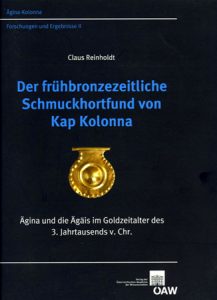
Claus Reinholdt
Wien
2008
The jewellery hoard excavated under the floor of an Early Bronze Age house-unit in the prehistoric settlement of Cape Kolonna/Aigina represents in many ways an exceptional collection still unique in the central Aegean of the late third millenium B.C. The material consists of precious metals (gold, silver) and several nonmetallic valuable objects (carnalian, rock-crystal, frit) and belongs to a secondary hoard of pins, pendants and beads, partly bent for the deposit context (pins).
