ΒΙΒΛΙΑ
Metaxia Tsipopoulou & Erik Hallager with contributions by Cesare D’Annibale & Dimitra Mylona
Αθήνα
2010
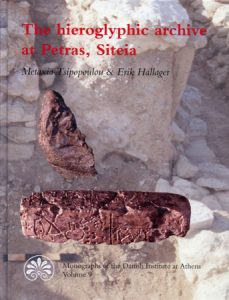 The excavation at Petras started in 1985, initially as a small - scale test dig. In the late 1980’s it was granted the status of a ‘systematic research project’ by the Hellenic Ministry of Culture. It is a happy coincidence that the 25th anniversary of the excavation and the studies of its finds is marked by the presentation to the scholarly community of this monograph which constitutes the final publication of the hieroglyphic archive that came to light in a MM IIB destruction deposit of the palace of Petras.
John C. McEnroe
Austin
2010
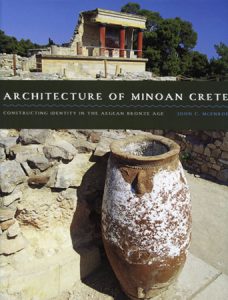 Ever since Sir Arthur Evans first excavated at the site of the Palace at Knossos in the early twentieth century, scholars and visitors have been drawn to the architecture of Bronze Age Crete. Much of the attraction comes from the geographical and historical uniqueness of the island. Equidistant from Europe, the Middle East, and Africa, Minoan Crete is on the shifting conceptual border between East and West and chronologically suspended between history and prehistory. In this culturally dynamic context, architecture provided more than physical shelter; it embodied meaning. Architecture was a medium through which Minoans constructed their notions of social, ethnic, and historical identity: the buildings tell us about how the Minoans saw themselves, and how they wanted to be seen by others.
Susan M. Lupack
Oxford
2008
 There is a great deal of evidence within the Linear B tablets that the administrations of the Mycenaean palaces took an interest in the religious aspect of their communities. Many tablets record the offerings that the palace sent to various deities and their shrines, and it is clear that there were numerous religious festivals in which the communities of the Mycenaean palaces, presumably with the wanax at their head, took part. However, the exact nature of the relationship between the palace and the religious sector is more difficult to discern, and has recently become a matter for debate among some Mycenologists.
Kalliope Sarri
Munich
2010
 Το βιβλίο παρουσιάζει το τμήμα εκείνο της προϊστορίας του Βοιωτικού Ορχομενού που - παρά την πρώιμη αναγνώριση της σημασίας του - παρέμενε μέχρι σήμερα αδημοσίευτο. Σε ένα εισαγωγικό μέρος του τόμου παρουσιάζεται η μέχρι τώρα έρευνα στον οικισμό και στο φυσικό του περιβάλλον, τον Κωπαϊδικό χώρο, όπου η σταδιακή εκμετάλλευση των φυσικών πόρων δημιούργησε τις απαραίτητες προϋποθέσεις για το σχεδιασμό των μεγάλων αποστραγγιστικών έργων της μυκηναϊκής εποχής.
Θεσσαλονίκη
2010
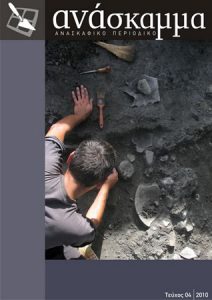
Πρόκειται για το τέταρτο τεύχος του περιοδικού Ανασκάμματος.
Edited by Onur Özbek
Κωνσταντινούπολη
2008
 This book constitutes a thoroughly refereed International Workshop held in Çanakkale in 2006 and organised by two universities conjointly on funeral rites, rituals and ceremonies from Prehistory to Antiquity. The book covers a time span from mostly Bronze Age to Classical periods and examines some of the archaeological evidence while presenting and discussing individual sites on funeral practices. Scholars of history and archaeology from different countries, contribute to this volume by providing examples not only from the Troas region itself but also from neighbouring and more distant lands. Recent excavations and field surveys in the Troas and its neighbours provide additional information about the details of our ancestors’ response to the universal inevitable reality: the death.
Edited by J. Lesley Fitton
London
2009
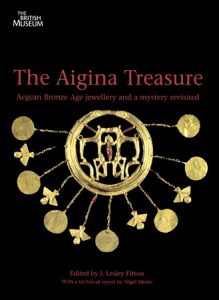
The Aigina Treasure, a group of Greek Bronze Age gold jewellery and other objects believed to come from the island of Aigina, was memorably described by Reynold Higgins as ‘a rich, beautiful and very perplexing collection’. It has both fascinated and puzzled scholars and the wider world since it first came to notice in 1891, when it was offered to the British Museum for sale. The fascination arises from the recognition that such rich assemblages are rare: the Treasure potentially provides very significant evidence both for the history of early jewellery and for the history of the culture that made and used it. However, the lack of precise provenance and known associations makes it difficult to determine exactly where in our picture of the ancient world the Aigina Treasure fits.
Alix Hänsel
Berlin
2009
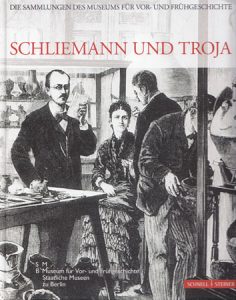
Bis heute ist Heinrich Schliemanns Bedeutung — Schatzgräber oder Pionier archäologischer Forschung — ebenso umstritten wie die Frage, ob die von ihm ausgegrabene Stadt tatsächlich das homerische Troja war. Das Berliner Museum für Vor- und Frühgeschichte besitzt weltweit die größte Sammlung von archäologischen Funden aus Schliemanns Grabungen in Troja, der sagenhaften Stadt des Dichters Homer.
Δέσποινα Δανιηλίδου (επιμέλεια)
Αθήνα
2009
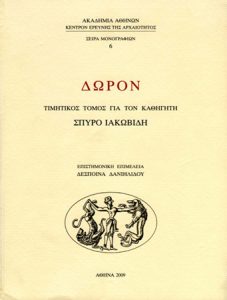
To 2008 ο καθηγητής Σπύρος Ιακωβίδης γιόρτασε τα 85 χρόνια του και το ίδιο έτος συμπληρώθηκαν 50 χρόνια ακούραστης συμμετοχής του στις ανασκαφές των Μυκηνών, αρχικά ως συνεργάτης του Γεωργίου Μυλωνά και την τελευταία 20ετία ως διευθυντής τους. Με την ευκαιρία αυτή, μαθητές, συνάδελφοι και φίλοι θέλησαν vα του προσφέρουν ένα τόμο με μελέτες πάνω σε θέματα μυκηναϊκής αρχαιολογίας, στην οποία ο Σπύρος Ιακωβίδης αφιέρωσε το μεγαλύτερο μέρος της επιστημονικής του δραστηριότητας. Μικρό δείγμα σεβασμού, εκτίμησης και αγάπης στον πανεπιστημιακό δάσκαλο και φίλο είναι αυτός ο τόμος, που ο τίτλος του - ΔΩΡΟΝ - είναι λέξη που πρωτομαρτυρείται, ταιριαστά για τον τιμώμενο, σε πινακίδα Γραμμικής Β (PΥ Τn 316) με την έννοια της προσφοράς (do-ra).
Helène Whittaker (επιμέλεια)
Oxford
2008

With the exception of Gullög Nordquist’s and Michael Wedde’s contributions, the articles in this volume derive from a session held at the eleventh annual meeting of the European Association of Archaeologists in Cork, September, 2005. The title of the session was Aegean Archaeology in the Wider European Context. The papers centred around questions concerning direct contacts and specific influences, cultural interaction between the Mycenaean world and the rest of Europe, and the role of Aegean material in discussions and interpretations of material found elsewhere.
Georgia Kourtessi-Philippakis (επιμέλεια)
Paris
2009
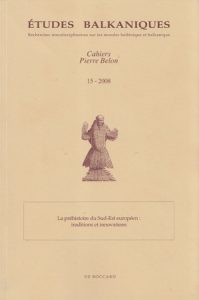 Le passé préhistorique du Sud-Est de l’Europe est à l’heure actuelle au centre de débats passionnants. Les enjeux sont, en effet, importants tant pour la péninsule balkanique elle-même, qui, entre la Méditerranée orientale et centrale, s’étire sur des latitudes importantes, que pour le vieux continent européen aux portes duquel elle se situe.
Sturt W. Manning & Mary Jaye Bruce (επιμέλεια)
Oxford
2009
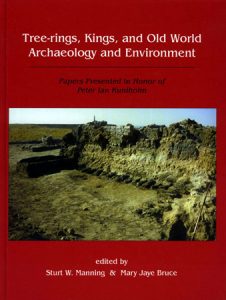 Dendrochronology, or tree-ring dating, provides a key resource for understanding archaeological sites and art historical objects and serves as a stepping stone for investigating past climate. In the Aegean and Eastern Mediterranean, Peter Ian Kuniholm is synonymous with dendrochronology and dendro-archaeology. Since 1973, he has collected wood and developed chronologies from forests, historic buildings, and archaeological sites throughout Greece, Turkey, and surrounding lands; the wood archive at Cornell houses thousands of samples, some of which extend back to 7000 BC.
Philip P. Betancourt & Costis Davaras (επιμέλεια)
Philadelphia
2009
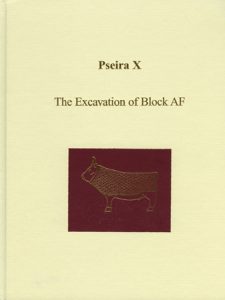 This book is the tenth volume in the series of excavation reports about the harbor town of Pseira, which is located on the island of the same name, just off the northeast coast of Crete. The book focuses on the excavation and interpretation of the architecture and material culture in Block AF. This southern group of buildings is one of the most important areas in the settlement because of its long succession of building phases. Block AF provides the fullest sequence of building phases from any one area at Pseira, with habitation extending from before MM II to LM III. It has examples of complex architectural details including a “pillar crypt”, elaborate upstairs floors, a well-preserved U-shaped staircase, and a well-designed kitchen, all of which contribute significantly to our knowledge of East Cretan building practices.
Dimitris Damaskos & Dimitris Plantzos (επιμέλεια)
Αθήνα
2008
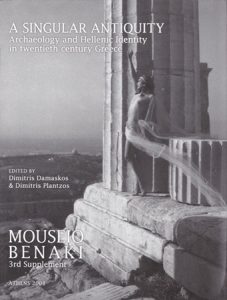 Στον συλλογικό τόμο δημοσιεύεται μεγάλο μέρος των εργασιών του συνεδρίου με τίτλο «Αρχαιολογία, Αρχαιότητα και Ελληνικότητα στην Ελλάδα του εικοστού αιώνα» που πραγματοποιήθηκε στο Κτήριο της Οδού Πειραιώς τον Ιανουάριο του 2007. Ο τόμος «A Singular Antiquity» συγκεντρώνει – για πρώτη φορά σε τέτοιο διεπιστημονικό εύρος – εργασίες αρχαιολόγων, ιστορικών, ανθρωπολόγων, και ιστορικών της λογοτεχνίας, της τέχνης και της αρχιτεκτονικής. Κοινός στόχος όλων είναι η διακρίβωση των διαδικασιών μέσω των οποίων η αρχαιολογία εξελίχθηκε σε παράγοντα πνευματικής καλλιέργειας, αλλά και πρωταγωνιστή στη συζήτηση περί ελληνικής κουλτούρας, πολιτισμικής κληρονομιάς και εθνικής ταυτότητας.
Παναγιώτης Καρκάνας
Αθήνα
2010
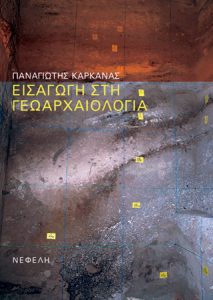 "Μιας και η αρχαιολογία βρίσκει όλα τα βασικά δεδοµένα της µε την ανασκαφή, κάθε αρχαιολογικό πρόβληµα ξεκινά ως πρόβληµα της γεωαρχαιολογίας". H ρήση αυτή του διάσημου αρχαιολόγου C. Renfrew φανερώνει τη σημασία ενός επιστημονικού κλάδου που ξεκίνησε μεν τυπικά πριν από τριάντα πέντε χρόνια περίπου, αλλά παραμένει ακόμη νεωτερισμός για πολλές αρχαιολογικές ανασκαφές.
