J. Driessen, I. Schoep, F. Carpentier, I. Crevecoeur, M. Devolder, F. Gaignerot-Driessen, H. Fiasse, P. Hacıgüzeller, S. Jusseret, C. Langohr, Q. Letesson & A. SchmittLouvain-la-Neuve2009
During 2007 and 2008, the Belgian School at Athens undertook its first ever excavation on Crete, at the Minoan site of Sissi on the north coast of the island. Located at a few kilometres from the palatial site of Malia, the Sissi settlement presents a unique test case to examine the relationship between a palace site and its hinterland during the Bronze Age (2600-1250 BC).
For several decades we know quite a lot of sites in the northern Levant which yield Aegean finds, especially Mycenaean pottery and figurines. This study contains a catalogue of Mycenaean pottery, imported as well as locally made, found in Syria, the Lebanon and Cilicia in undisturbed contexts. These are of particular importance for the synchronization with sites in Southern Greece. There, the typology of the Mycenaean pottery is ensured by several settlement sequences.
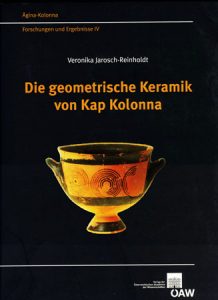
The Protogeometric and Geometric pottery presented in this volume was mainly found on the Kolonna Hill, a cape protruding into the sea in front of the island of Aigina, bearing a settlement from Neolithic times onwards. The high quantities of Protogeometric pottery indicate that the acropolis of Cape Kolonna, which was abandoned during the Late Mycenaean times, was resettled in the 10th century B.C. It is apparent that the inhabitants of Aigina had close relations with Athens from the beginning, independent of their transmitted Doric descent, as the decorated ceramic fine wares have been almost exclusively imported from there.
The book publishes the Proceedings of the four day Symposium ‘Interconnections in the Eastern Mediterranean during the Bronze Age (Early, Middle, Late) and the Iron Age’ that was held in November 2008 in Beirut (Lebanon). The aims of the Symposium were: 1) To initiate in Lebanon an International forum for Mediterranean archaeology, 2) To focus on regionalism between ancient Lebanon and the Mediterranean world during Bronze Age and Iron Age.
Derek B. Counts & Bettina Arnold (επιμέλεια)Budapest 2010
Old World iconography from the Upper Paleolithic to the Christian era consistently features symbolic representations of both female and male protagonists in conflict with, accompanied by or transmuted partly or completely into, animals. Adversarial relationships are made explicit through hunting and sacrifice scenes, including heraldic compositions featuring a central figure grasping beasts arrayed on either side, while more implicit expressions are manifested in zoomorphic attributes (horns, headdresses, skins, etc.) and composite or hybrid figures that blend animal and human elements into a single image.
William A. Parkinson & Michael L. Galaty (επιμέλεια)Santa Fe, New Mexico 2010
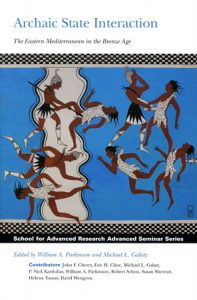
In current archaeological research the failure to find common ground between world-systems theory believers and their counterparts has resulted in a stagnation of theoretical development in regards to modeling how early state societies interacted with their neighbors. This book is an attempt to redress these issues. By shifting the theoretical focus away from questions of state evolution to state interaction, the authors develop anthropological models for understanding how ancient states interacted with one another and with societies of different scales of economic and political organization.
This book examines the economic control and the administration in Greece at the time of the Mycenaean palaces (texts dating to between ca. 1450 and 1200 BC). It relies primarily on the inscribed tablets discovered in the palaces and proposes a synthesis of the main aspects of the subject: the scribes (responsible for the book-keeping) and the organisation of the archives, the administrative geography, the taxation system, the administration of personnel, the control of land, the relationship between palatial administration and sanctuaries, the degree of palatial involvement in trade, as well as the use of palace functionaries or local dignitaries in procedures of economic control.
Πρόκειται για τον επετειακό τόμο για τα είκοσι χρόνια του συνεδρίου Το Αρχαιολογικό έργο στη Μακεδονία και στη Θράκη. Σχεδόν όλα τα άρθρα είναι γραμμένα στην ελληνική γλώσσα (εκτός από δύο) και συνοδεύονται από εκτεταμένη αγγλική περίληψη. Πολλά από αυτά αναφέρονται στους προϊστορικούς χρόνους και δημοσιεύουν νέα στοιχεία για την Μακεδονία και τη Θράκη.
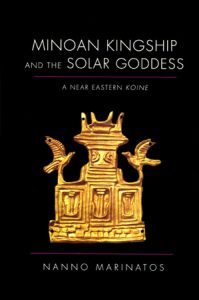
Ancient Minoan culture has been typically viewed as an ancestor of classical Greek civilization, but this book shows that Minoan Crete was on the periphery of a powerfully dynamic cultural interchange with its neighbors. Rather than viewing Crete as the autochthonous ancestor of Greece’s glory, Nanno Marinatos considers ancient Crete in the context of its powerful competitors to the east and south.
Η ανασκαφή στη θέση Καντού-Κουφόβουνος αποτελεί την πρώτη ανασκαφή του Εθνικού και Καποδιστριακού Πανεπιστημίου Αθηνών στην Κύπρο. Έλαβε χώρα υπό την αιγίδα του Πανεπιστημίου και υπό τη διεύθυνση της συγγραφέως αυτού του τόμου. Οι ανασκαφικές εργασίες στη θέση άρχισαν το καλοκαίρι του 1992 και ολοκληρώθηκαν το καλοκαίρι του 1999. Κατά τις περιόδους του καλοκαιριού του 1996, του χειμώνα του 1998 και των καλοκαιριού των ετών 2000 και 2001 η επιστημονική ομάδα ασχολήθηκε κυρίως με την καταγραφή και μελέτη του υλικού, ενώ παράλληλα διενεργήθηκαν εργασίες συντήρησης των αρχαιολογικών καταλοίπων.
Το βιβλίο αυτό επιχειρεί να ανοίξει ένα παράθυρο στην καθημερινή ζωή των προϊστορικών κατοίκων της Ελλάδας, μέσα από το οποίο θα ρίξουμε τη ματιά μας στην «κουζίνα» τους και πιο ειδικά στα φυτικά συστατικά της. Τα δεδομένα στα οποία βασίζεται, καθώς και αρκετές από τις ιδέες που αναπτύσσονται, έχουν ήδη ανακοινωθεί στην επιστημονική κοινότητα μέσα από επιμέρους εργασίες, δημοσιευμένες μέσα στην τελευταία εικοσαετία. Εδώ επιχειρείται η παρουσίασή τους συνολικά για τις προϊστορικές θέσεις της Ελλάδας.
Sigrid Deger-Jalkotzy & Anna Elisabeth Bächle (επιμέλεια)Wien 2009
The Vienna workshops on LH III C Chronology and Synchronisms serve the purpose of developing a generally applicable chronological framework of the LH III C period and to contribute to a better understanding of the history of this important phase of the early history of Greece. The third workshop was dedicated to the last phases of the Mycenaean civilisation and the transition to the Protogeometric period.
Γ. Χαμηλάκης & N. Momigliano (επιμέλεια)Αθήνα 2010
Ο τόμος αυτός διερευνά ζητήματα τόσο της παραγωγής όσο και της κατανάλωσης του «μινωικού» παρελθόντος. Εξετάζονται η πρόσληψη και διαχείριση των «Μινωιτών» σήμερα σε διάφορα πεδία (από τη δόμηση τοπικών ταυτοτήτων μέχρι τη φροϋδική ψυχανάλυση, από τις εικαστικές τέχνες και τη λογοτεχνία μέχρι την παιδαγωγική).
This volume brings together an international group of researchers to address how Mycenaean and Minoan states controlled the economy. The contributions, originally delivered at the 2007 Langford Conference at the Florida State University, examine the political economies of state (and pre-state) entities within the Aegean Bronze Age, including the issues of: centralization and multiple scales of production, distribution, and consumption within a polity importance of extraregional trade, craft specialization, role of non-elite institutions, temporal/diachronic variation within regions, ‘Aegean’ political economy as a monolithic process, political economy before the emergence of the palaces.