Tombs are an important source for reconstructing ancient social structures. The region of Messenia in south-western Peloponnese was a centre of the Middle and Late Helladic culture (2100/2000–1200 BC). Basis of the present study of tombs in Messenia is a catalogue of 57 find-spots with about 240 tombs.
Situated between the worlds of the Near East, Europe and Africa, the archaeology and culture of Cyprus are central to an understanding of the ancient Mediterranean world. This book treats the archaeology of Cyprus from the first-known human presence during the Late Epipalaeolithic (ca. 11,000 BC) through the end of the Bronze Age (ca. 1000 BC).
In this book, Thomas F. Tartaron presents a new and original reassessment of the maritime world of the Mycenaean Greeks of the Late Bronze Age. By all accounts a seafaring people, they enjoyed maritime connections with peoples as distant as Egypt and Sicily.
Bernard Knapp, Jennifer Webb & Andrew McCarthy (επιμέλεια)Uppsala2013
This volume presents the extensively revised papers from a conference held in honour of J.R.B. Stewart at the Cyprus American Archaeological Research Institute (CAARI) in March 2013.
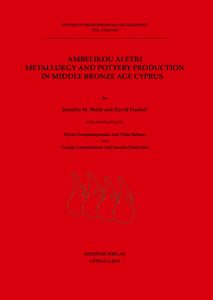
David Frankel & Jennifer Webb (with contributions by M. Georgakopoulou, T. Rehren, G. Constantinou & I. Panayides)Uppsala2013
This volume presents the full documentation, analysis and discussion of the excavations carried out by Porphyrios Dikaios in 1942 at Ambelikou Aletri. The site lies to the west of the modern village of Ambelikou, northwest of the Skouriotissa copper mines, in the northern foothills of the Troodos Mountains.
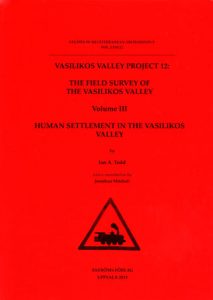
This volume is the twelfth report in the series of final publications of the excavations and studies of the Vasilikos Valley Project in the Larnaca District adjacent to the southern coast of Cyprus. The volume is the second of three devoted to the field survey, and contains an analysis of the settlement pattern revealed by the survey, and an examination of structures of all types found by the fieldwork.
This volume reconstructs the processes used to create Minoan hammered precious-metal and copper-alloy vessels, combining an assessment of the archaeological material with the practical application of replicated equipment and techniques.
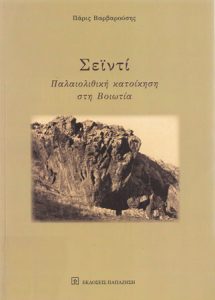
Στο βιβλίο αυτό παρουσιάζονται οι ανασκαφικές έρευνες των Γερμανών αρχαιολόγων Rudolf Stampfuss και Elisabeth Schmid που πραγματοποιήθηκαν στα μέσα περίπου του περασμένου αιώνα στη βραχοσκεπή Σεϊντί της Αλιάρτου και βεβαίωσαν κατοίκηση από την Ανώτερη Παλαιολιθική.
Tracey Cullen, Lauren E. Talalay, Donald R. Keller, Lia Karamali & William R. FarrandyPhiladelphia2013
The results of two related fieldwork projects are presented: a brief salvage excavation at Plakari (a Final Neolithic site near the modern town of Karystos) and a survey of prehistoric sites on the Paximadi peninsula (the western arm of the Karystos bay), both located in southern Euboea.
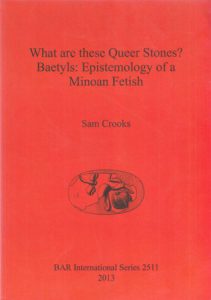
This monograph examines the aniconic cult stones, or baetyls, of the Aegean Bronze Age. Minoan baetyls are commonly understood by reference to the interpretive vocabularies of ancient Near Eastern traditions developed by comparative ethnographies popular in the early 20th century.
This work, based on my 2007 MA dissertation for the Italian Archaeological School at Athens focuses on two Protopalatial houses of Phaistos (Crete), excavated by the Italian Archaeological Mission. These are located in an area known as the ‘Quarter West of the West Court’ (Piazzale I) of the Phaistos palace, which consists of blocks of houses situated on three terraces, set at different levels, located West of a street that leads North and runs along the west side of the court.
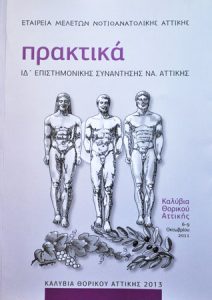
Πρόκειται για τα πρακτικά της ΙΔ΄ Επιστημονικής Συνάντησης ΝΑ. Αττικής, που διοργανώθηκε στα Καλύβια Θορικού στις 6-9 Οκτωβρίου 2011. Στο βιβλίο δημοσιεύονται 44 ανακοινώσεις. Κάποιες από αυτές αναφέρονται στους προϊστορικούς χρόνους.
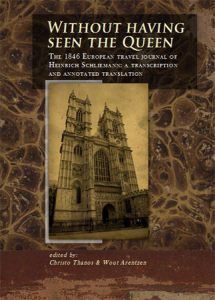
Heinrich Schliemann (1822-1890), a shrewd trader and later in life one of the best known archaeologists of the 19th century, made many travels around the world. He recorded his experiences in several diaries. This publication is a transcription and translation of Schliemann’s first travel diary: his European journey in the winter of 1846/47.
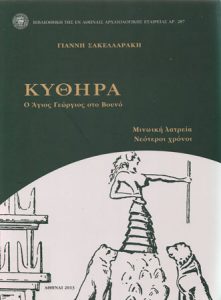
Είναι προφανές ότι η ανασκαφή του ασύλητου μινωικού ιερού κορυφής στον Άγιο Γεώργιο στο Βουνό έδωσε μοναδικά στοιχεία για τη μελέτη της λατρείας σε αυτού του τύπου τα ιερά. Το γεγονός είναι βέβαια αξιοσημείωτο, λόγω της ιδιάζουσας μορφής της λατρείας στα ιερά κορυφής, δεδομένης δηλαδή της κλειστής μινωικής ανακτορικής ή και οικιακής λατρείας.
The excavations by Klaus Kilian in the Lower Citadel of Tiryns between 1976 and 1983 brought to light one of the most important settlements of the Mycenaean postpalatial period (LH III C).