The organisation of the 1st conference on Computer Applications and Quantitative Methods in Archaeology in Greece (CAA-GR) and the publication of its proceedings have been the culminating events of CAA Greek Chapter since its formation at the International CAA meeting in 2012 in Southampton. The need of Greek Chapter sprang out from the continuously increasing number of researchers dealing with the application of Informatics in archaeology in Greece and in the wider region of Eastern Mediterranean.
Barry P.C. Molloy & Chloë N. Duckworth (επιμέλεια)Oxford2014
This book presents aspects of research on the archaeological investigations at the multi-period site of Priniatikos Pyrgos and surrounding area. Incorporating the Vrokastro Survey Project, the Istron Geoarchaeological Project, the Priniatikos Pyrgos Excavation Project and other researches, this volume presents interdisciplinary case-studies that deal with domestic, technological and mortuary practices at the site and how these relate to settlement and resource exploitation in the surrounding landscape.
This volume presents a comprehensive review of palaeoenvironmental evidence and its incorporation with landscape archaeology from across the Mediterranean. A fundamental aim of this book is to bridge the intellectual and methodological gaps between those with a background in archaeology and ancient history, and those who work in the palaeoenvironmental sciences.
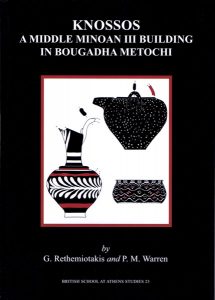
Giorgos Rethemiotakis & Peter M. Warren London2014
From at least 1700 BC, and for several centuries thereafter, a city of substantial houses flanked the palace of Knossos in north-central Crete. Those immediately adjacent to it, like the Royal Villa or the South House, excavated by Sir Arthur Evans, are well known, as are the Little Palace and Unexplored Mansion to the north-west. In fact the whole lower western hill-slope (Bougadha Metochi, the modern village) was terraced with fine, ashlar masonry buildings, served by well-engineered paved roads.
Το ανά χείρας βιβλίο απευθύνεται κυρίως σε αρχαιολόγους που βρίσκονται στην αρχή της σταδιοδρομίας τους, αλλά και σε γεωλόγους που θα ενδιαφέρονταν να ασχοληθούν με την επίλυση αρχαιολογικών προβλημάτων. Η αρχαιολογική επιστήμη από τις αρχές της ύπαρξής της ως ανεξάρτητο επιστημονικό πεδίο στηρίχτηκε στις βασικές αρχές της Γεωλογίας. Συχνά, όμως, στην πράξη ο ένας επιστημονικός κλάδος επικαλύπτει τον άλλον.
Ce second volume de l’histoire de l’art égéen est consacré à l’art mycénien, depuis son apparition en Grèce continentale, vers 1600 av. J.-C., jusqu’à la fin du deuxième millénaire, vers 1050-1000. L’art mycénien naît, à Mycènes en particulier, avec les œuvres prestigieuses des tombes à fosse puis s’affirme et se transforme, d’abord lorsque les Mycéniens s’installent en Crète, au palais de Cnossos, après 1450, puis lorsqu’ils édifient eux-mêmes, à partir de 1350, leurs propres palais à Mycènes, Tirynthe, Pylos et Thèbes.
To present the results of archaeological research in the Corinthia both to the academic community and the wider public, the LZ΄ Ephorate of Prehistoric and Classical Antiquities, in association with the Directorate of Prehistoric and Classical Antiquities and the Athens department of the German Archaeological Institute, organized the international conference entitled »Corinthia and the Northeast Peloponnesus. Topography and History from Prehistoric Times until the End of Antiquity«.
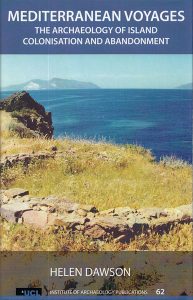
This book is a comparative study of the archaeology of colonisation, abandonment, and resettlement of the Mediterranean islands in prehistory. Presenting an extensive and up-to-date body of evidence, it provides a pan-Mediterraneanre view of island data, a task last completed in the mid-1990s.
In 1177 B.C., marauding groups known only as the “Sea Peoples” invaded Egypt. The pharaoh’s army and navy managed to defeat them, but the victory so weakened Egypt that it soon slid into decline, as did most of the surrounding civilizations. After centuries of brilliance, the civilized world of the Bronze Age came to an abrupt and cataclysmic end. Kingdoms fell like dominoes over the course of just a few decades.
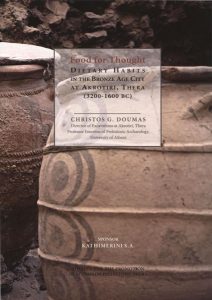
Στο βιβλίο αυτό γίνεται προσπάθεια ανάπλασης του διαιτολογίου των προϊστορικών Θηραίων πρωτίστως μέσα από τα κατάλοιπα τροφών που έχουν βρεθεί στα ερείπια του Ακρωτηρίου,αλλά και έμμεσα από τις απεικονίσεις φυτών και ζώων στην αγγειογραφία και τις τοιχογραφίες.
In this second part of The Schliemann Diaries we follow Heinrich Schliemann (the famous 19th century archaeologist, trader and traveller) through his diary on his second journey: his travels to America from December 1850 to March 1853. The original diary was written in English and for a small part in Spanish. This publication is a transcription and translation of Schliemann’s travel diary.
The pottery and figurines from the Mycenaean cemeteries at Kolonaki, Hagia Anna, Ismenion and Elektrae Gates in Thebes were first published by the excavator A. Keramopoullos in the AE 49 (1910) and AD 3 (1917) in association with the chamber tombs and also in context with the other tomb deposits.
The ‘Ochsenkrater-Grab’ from Nicosia Ayia Paraskevi in Cyprus has long been known but never fully documented. Named after the Mycenaean IIIB crater decorated with bulls included amongst its contents, the presumed tomb group was acquired by Max Ohnefalsch-Richter in the 1880s and subsequently sold to the Königliche, now Staatliche Museen zu Berlin, Germany, where part of what is left of it remains.
Η ακρόπολη στο Κορφάρι των Αμυγδαλιών (Πάνορμος) Νάξου συγκέντρωσε το ενδιαφέρον των μελετητών του Κυκλαδικού Πολιτισμού ήδη από την εποχή της ανακάλυψής της, το 1963 από τον τότε επιμελητή αρχαιοτήτων καθηγητή Χρίστο Γ. Ντούμα. Θεωρείται από τις χαρακτηριστικές θέσεις της περιόδου της ομάδας Καστριού, στη διάρκεια της οποίας νέοι «ανατολίζοντες» τύποι κεραμικής κάνουν την εμφάνισή τους στις Κυκλάδες μαζί με ευρύτερες αλλαγές και ανακατατάξεις, οι οποίες θεωρείται ότι ανέκοψαν την ομαλή πολιτισμική εξέλιξη κατά τους τελευταίους αιώνες της τρίτης χιλιετίας π.Χ.
Natalia Vogeikoff-Brogan, Jack L. Davis & Vasiliki Florou (επιμέλεια)Atlanta2015
Carl W. Blegen is the most famous American archaeologist ever to work in Greece, and no American has ever had a greater impact on Greek archaeology. Yet Blegen, unlike several others of his generation, has until now found no biographer. In part, the explanation or this must lie in the fact that his life was so multifaceted: not only was he instrumental in creating the field of Aegean prehistory, but Blegen, his wife, and their best friends, the Hills (“the family”) were also significant forces in the social and intellectual community of Athens.