Um die Mitte des 9. Jhs. v. Chr. bringen die Töpfer und Vasenmaler auf Kreta einen eigenwilligen geometrischen Keramikstil hervor, dessen Hauptmerkmale kurvolineare Ornamente und erste figürliche Darstellungen nach dem Ende der bronzezeitlichen minoischen Kultur sind. Besonders die Ornamente - Schlaufenlinien, Spiralen und Flechtbänder - sind in der Forschung häufig auf nahöstlichen Einfluss zurückgeführt worden.
The volume presents the study of the material associated with textile manufacture, deriving from the Neolithic and Minoan levels of Phaistos and Ayia Triada. It includes 6 chapters and 5 technical appendixes. In the first chapter, the archaeological sequence of both sites is described with particular attention to the areas and periods with more important evidence of textile production.
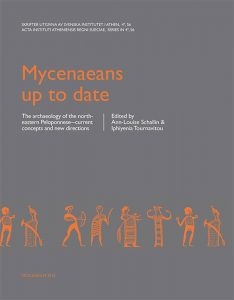
This volume contains the proceedings of the conference “Mycenaeans up to date: The archaeology of the north-eastern Peloponnese—current concepts and new directions”, which was held on 10–16 November 2010, under the auspices of the Swedish Institute at Athens.
Η υποδοχή του βιβλίου από το αναγνωστικό κοινό της Τήνου και από ενδιαφερόμενους ειδικούς επιστήμονες και Βιβλιοθήκες πολύ σύντομα εξάντλησαν την πρώτη έκδοση του παρόντος. Στην παρούσα 2η έκδοση ο συγγραφέας με περισσότερα και νεότερα στοιχεία αναδομεί τα Κεφάλαια και τα περιεχόμενα τους λαμβάνοντας υπόψη νεότερες μελέτες και άρθρα με τα οποία βελτιώνονται κάποιες θέσεις, ενισχύονται κάποιες απόψεις του και προτείνονται σε συγκεκριμένα ζητήματα νέες εκδοχές.
On the 13th of December 2010, a small group of Early Iron Age specialists from Greece and Cyprus, who represent two generations of Greek scholars that have followed in the footsteps of Professor J. N. Coldstream, met at the Archaeological Research Unit of the University of Cyprus to honour his memory.
This volume is the first comprehensive archaeological catalogue of all the extant inscriptions written in the un-deciphered syllabary of Late Bronze Age Cyprus (1500-1200 BC): the so-called Cypro-Minoan script.
Maria Relaki & Despina Catapoti (επιμέλεια)New York & London 2013
Within archaeological studies, land tenure has been mainly studied from the viewpoint of ownership. A host of studies has argued about land ownership on the basis of the simple co-existence of artefacts on the landscape; other studies have tended to extrapolate land ownership from more indirect means.
Το παρόν βιβλίο είναι το αποτέλεσμα δύο διαφορετικών ανασκαφών που έγιναν με διαφορά ενός αιώνα, κάθε μία με τα δικά τηs χαρακτηριστικά, μεθόδους και πρακτικές. Η πρώτη ανασκαφή έγινε την περίοδο 1902-1914 από τον Ιταλό αρχαιολόγο Federico Halbherr στην περιοχή του οικισμού της Αγίας Tριάδας η οποία ονομάστηκε “Villaggio”.
Thanks to the biography by Joan Evans, sister of Arthur Evans, the research of John J. Wilkes and the new biography by Silvia L. Horwitz, we know much about Arthur Evans’s work in the Balkans prior to his discoveries on Crete.
The main scope of this book is to demonstrate the extent of the Cypriote influence on Crete during the Iron Age, both with regard to the import of goods, especially pottery and also the degree of influence which Cypriote objects, again mainly pottery, exercised on Cretan artistic production.
Η Θήβα είναι η μόνη σπουδαία αρχαιοελληνική πόλη που ανασκάπτεται εδώ και πάνω από έναν αιώνα αποκλειστικά από Έλληνες αρχαιολόγους, μέλη της Αρχαιολογικής Υπηρεσίας. Το έργο τους ακουμπά διαχρονικά τρεις αιώνες.
Ο τόµος αυτός είναι ο καρπός της ∆ιεπιστηµονικής Συνάντησης, την οποία οργάνωσε τον Οκτώβριο του 2012, στο Αµφιθέατρο του Μουσείου Μπενάκη της οδού Πειραιώς, η Επιστηµονική Επιτροπή του Έργου «Έρευνα, Συντήρηση, ∆ιαµόρφωση, Προστασία και Ανάδειξη του Αρχαιολογικού Χώρου Παλαµαρίου Σκύρου», µε αφορµή τη συµπλήρωση τριάντα ενός ετών από την πρώτη δοκιµαστική ανασκαφή του 1981 στον όρµο Παλαµάρι της ΒΑ ακτής της Σκύρου, όπου ανασκάπτεται µια οχυρωµένη πόλη της Πρώιµης και της Μέσης Εποχής του Χαλκού, µε ευρήµατα που παρέχουν νέα στοιχεία για τον πολιτισµό του Αιγαίου την εποχή αυτή.
Το βιβλίο αυτό έχει σκοπό να φωτίσει πτυχές της οικονομίας και της κοινωνίας του προϊστορικού Αιγαίου, στη μινωική και μυκηναϊκή εποχή, που άπτονται του πρωτογενούς τομέα της οικονομίας και να διαλευκάνει τις σχέσεις μεταξύ κεντρικής εξουσίας και ιδιωτών στο νευραλγικό αυτό χώρο, πολύ σημαντικό για κάθε προϊστορική κοινωνία.
The famous ‘Silk Roads’ have long evoked a romantic picture of travel through colourful civilizations that connected the western and eastern poles of Eurasia, facilitating the exchange of exotic luxury goods, peoples, pathogens and ideas. But how far back can we trace such interaction? Increasing evidence suggests considerable time-depth for Trans-Eurasian exchange, with the expanding urban networks of the Bronze Age at times anticipating later caravan routes.
Η Μακεδονία λόγω της κεντρικής θέσης της στο σταυροδρόμι μεταξύ Αιγαίου και Βαλκανίων, Ανατολής και Δύσης, αποτέλεσε από νωρίς τόπο όπου αναπτύχθηκαν σημαντικοί νεολιθικοί οικισμοί, αρκετοί από τους οποίους έχουν ερευνηθεί τις τελευταίες δεκαετίες και πολλοί περισσότεροι έχουν καταγραφεί με επιφανειακές έρευνες.