Το παρόν βιβλίο αποτελεί βελτιωμένη δημοσίευση της διδακτορικής διατριβής του συγγραφέα, η οποία υποστηρίχθηκε το χειμώνα του 2011/2012 στη Φιλοσοφική Σχολή του Πανεπιστημίου του Tübingen.
Florence Gaignerot-Driessen & Jan Driessen (επιμέλεια)Louvain-la-Neuve2014
From 2010 to 2012, a seminar series entitled La naissance des cités crétoises was organised by UCL, with the support of the National Research Foundation (FNRS), the Hubert Curien Partnership Tournesol (PHC Tournesol), the Centre for the Study of Ancient Worlds (CEMA), and the Institute for Civilisations, Arts and Literature (INCAL).
Despite being explored as early as 1877, just one year after Schliemann’s discovery of Circle A at Mycenae, Mycenaean Attica has never been the subject of a general overview. Attention has only been devoted to single outstanding discoveries, such as the monumental tombs and cemeteries of Spata, Menidi, and Perati, or the citadels and settlements of the Acropolis at Athens, Eleusis, and Kiapha Thiti.
Mycenaean architecture is a topic widely investigated by archaeologists, from typological and/or technological and/or artistic perspectives and, more recently, from the socio-economic point of view.
Στον παρόντα τόμο δημοσιεύονται τα σημεία κεραμέως που έχουν μέχρι σήμερα εντοπιστεί στο ιερό του Ερμή και της Αφροδίτης στη Σύμη της Βιάννου. Η παρουσίαση τους οργανώνεται σε επτά ενότητες-κεφάλαια.
Ο θεσμός των Κρητολογικών Συνεδρίων έχει πια ενηλικιωθεί. Συμπληρώθηκε ήδη μισός αιώνας αδιάκοπης λειτουργίας του, που τον ανέδειξε σε πεδίο δημιουργικής συνάντησης των απανταχού γης ειδικών επιστημόνων ασχολούμενων με την έρευνα και μελέτη της ιστορίας και του πολιτισμού της Μεγαλονήσου.
Το βιβλίο με τίτλο «Σπυρίδων Μαρινάτος 1901-1974: Η ζωή και η εποχή του», που εξεδόθη από το Ινστιτούτο του Βιβλίου – Α. Καρδαμίτσα, είναι ο τόμος των Πρακτικών του διήμερου επιστημονικού συνεδρίου που οργάνωσε το Τμήμα Ιστορίας και Αρχαιολογίας του Εθνικού και Καποδιστριακού Πανεπιστημίου Αθηνών στη μνήμη του αείμνηστου Καθηγητή και Ακαδημαϊκού Σπυρίδωνα Μαρινάτου στις 22 και 23 Ιουνίου 2012.
The eruption of the Thera (Santorini) volcano in the Aegean Sea in the mid-second millennium BC was a clearly defined, specific moment in Aegean and east Mediterranean prehistory that impacted on all the major cultures of the region.
Antonis Kotsonas (επιμέλεια)Leuven - Paris - Walpole, MA2014
This volume is designed as a wide-ranging analysis of ceramic standardization and variation, and as a contribution to pottery studies in the Mediterranean and beyond.
Women in Mycenaean Greece is the first book-length study of women in the Linear B tablets from Mycenaean Greece and the only to collect and compile all the references to women in the documents of the two best attested sites of Late Bronze Age Greece - Pylos on the Greek mainland and Knossos on the island of Crete.
Space and Time in Mediterranean Prehistory addresses these two concepts as interrelated, rather than as separate categories, and as a means for understanding past social relations at different scales. The need for this volume was realised through four main observations: the ever growing interest in space and spatiality across the social sciences;
Dudley Moore, Edward Rowlands & Nektarios KaradimasCambridge2014
Although many books focus on the fascinating story of Heinrich Schliemann, little has been written on Mycenae before his excavations. This book, therefore, fills this gap. It looks at the English-speaking pioneers who visited the citadel at Mycenae before Schliemann, providing additional biographic references in the footnotes (and bibliography and associated sources).
Στους διακηρυγμένους στόχους της Ένωσης Αρχαιολόγων Ελλάδας ΗΩΣ συγκαταλέγονται η διευκόλυνση του διαλόγου πάνω σε θέματα που απασχολούν την ελληνική αρχαιολογική κοινότητα, η χωρίς προκαταλήψεις συζήτηση παλαιότερων και νέων προσεγγίσεων σχετικών με το ρόλο και την προστασία των μνημείων και η σχέση των τελευταίων με το κοινωνικό σύνολο.
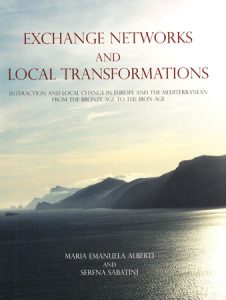
Maria Emanuela Alberti & Serena Sabatini (επιμέλεια)Oxford & Oakville2013
Throughout the local Bronze and Iron Age, European and Mediterranean societies appear to have been involved in complex systems of exchange networks which invariably affected local customs and historical developments.
Ο παρών συλλογικός τόμος, ο πρώτος σε μια σειρά τόμων, που προγραμματίζονται για τα επόμενα χρόνια, περιλαμβάνει συμβολές, πέραν αυτών του υπογραφομένου, συνεργατών της εκπαιδευτικής-ερευνητικής ανασκαφής του Πανεπιστημίου Ιωαννίνων, η οποία διενεργείται συστηματικά, υπό την αιγίδα και με σταθερή χρηματοδότηση του Πανεπιστημίου και με τη συμπαράσταση της Τοπικής Αυτοδιοίκησης, σε περιοχές της νότιας Σαλαμίνος, από το 1997 (είχε αρχίσει ως ανασκαφική έρευνα από τον υπογραφόμενο στο ιστορικό σπήλαιο –Σπήλαιο Ευριπίδη- στα Περιστέρια Σαλαμίνος το 1994).