Quartier Mu of Malia is an exceptional architectural ensemble of the time of the First Minoan Palaces. Excavations brought to light the remains of a group of adjacent but independent buildings, remarkably well preserved by the violent fire that caused their destruction.
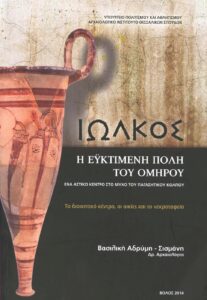
Ο μυκηναϊκός οικισμός του Διμηνίου αποτελεί ένα εξαιρετικό παράδειγμα ανάπτυξης ενός μεγάλου αστικού κέντρου στην ανατολική Θεσσαλία, καθώς είναι ο μόνοs από τους τρεις γνωστούς οικισμούς στην παραλιακή ζώνη του λιμανιού του Παγασητικού Κόλπου (Κάστρο Βόλου/Παλιά, Πευκάκια και Διμήνι), αλλά και από τους υπόλοιπους μυκηναϊκούς οικισμούς της Θεσσαλίας, που έχει ανασκαφεί συστηματικά σε μεγάλη έκταση.
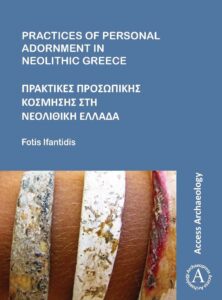
Στόχος του βιβλίου είναι η επανεξέταση των πρακτικών προσωπικής κόσμησης κατά τη νεολιθική περίοδο στην Ελλάδα μέσω της επανεκτίμησης των διαθέσιμων στοιχείων που προέρχονται από περισσότερες από εκατό ανεσκαμμένες νεολιθικές θέσεις, καθώς και η λεπτομερειακή μελέτη του corpus κοσμημάτων που προέρχονται από τη λιμναία θέση της Μέσης-Νεότερης Νεολιθικής περιόδου στο Δισπηλιό Καστοριάς.
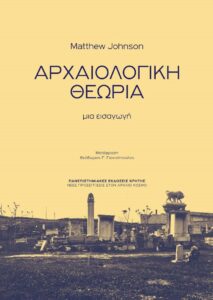
Matthew Johnson (μετάφραση: Θεόδωρος Γ. Γιαννόπουλος)Αθήνα2018
Δεν υπάρχει πράξη χωρίς θεωρία. Δεν υφίσταται δυνατότητα κατανόησης μιας κοινωνίας, χωρίς ένα ουσιαστικό θεωρητικό υπόβαθρο. Ακούγοντας και διαβάζοντας καθημερινά κάθε είδους αποφάνσεις περί της κοινωνίας, συχνά δεν υποψιαζόμαστε ότι η θεωρητική μελέτη της δεν είναι μόνο μια «εμπειροτεχνική» ενασχόληση, αλλά και μια εξειδικευμένη επιστημονική δραστηριότητα.
Corien W. Wiersma & Sofia Voutsaki (επιμέλεια)Oxford-Philadelphia2017
This volume brings together papers that discuss social change. The main focus is on the Early Helladic III to Late Helladic I period in southern Greece, but also touches upon the surrounding islands. This specific timeframe enables us to consider how mainland societies recovered from a ‘crisis’ and how they eventually developed into the differentiated, culturally receptive and competitive social formations of the early Mycenaean period.
L'émeri, le σμύρις grec, est une roche abrasive par excellence. D’après les sources écrites, il est ex-ploité aux époques archaïque et classique. Ce livre, s’intéressant au monde égéen du Néolithique et de l’âge du Bronze (VIe-IIe millénaires av. J.-C.), tente de retracer les origines de cette exploitation et d’en éclairer les modalités. Ce travail propose un outil méthodologique adapté pour l’étude de ce ma-tériel fondé sur une documentation variée et une approche pluridisciplinaire.
John K. Papadopoulos & Evelyn Lord SmithsonPrinceton-New Jersey2018
This volume, the first of two dealing with the Early Iron Age deposits from the Athenian Agora, publishes the tombs from the end of the Bronze Age through the transition from the Middle Geometric to Late Geometric period. An introduction deals with the layout of the four cemeteries of the period, the topographical ramifications, periodization, and a synthesis of Athens in the Early Iron Age.
Maria Relaki & Yiannis Papadatos (επιμέλεια)Oxford-Philadelphia2018
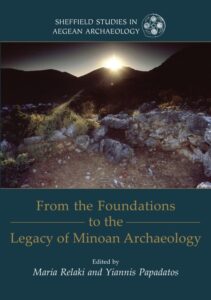
From the Foundations to the Legacy of Minoan Archaeology provides a range of new approaches to key issues in Minoan archaeology, inspired by Professor Keith Branigan’s long-standing contribution to the archaeology of Bronze Age Crete.
Although architecture provides a decisive frame-work for many forms of social interaction, thus preconfiguring them, and simultaneously represents an expression and hence a product of social conventions, few connections have thus far been made between the scholarly study of architecture and the social history of Mycenaean Greece. The present study attempts to fill this research gap with respect to the palace complexes of the Peloponnese.
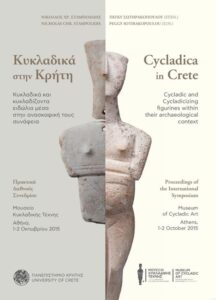
Οι εργασίες του Συνεδρίου με θέμα «Κυκλαδικά στην Κρήτη: Κυκλαδικά και κυκλαδίζοντα ειδώλια μέσα στην ανασκαφική τους συνάφεια», που φιλοξενήθηκε στο Μουσείο Κυκλαδικής Τέχνης τον Οκτώβριο του 2015, έδωσαν την ευκαιρία σε όλο το κοινό να παρακολουθήσει τις παρουσιάσεις των ανασκαφέων και των μελετητών, από την Ελλάδα και το εξωτερικό, και να ακούσει τις συγκλίσεις αλλά και τις αποκλίσεις των διαφόρων απόψεων.
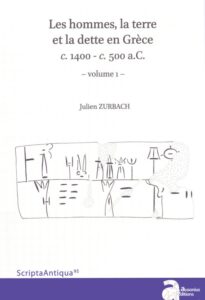
The long neglected issues of land distribution and exploitation had to be placed again at the heart of the history of early Greece, from the great period of Mycenaean palaces to the formation of City-States. This book presents an analysis of land tenure systems based on all available sources, from Mycenaean texts to traditions on Archaic Greece and rural archaeology.
Sacrifice is not simply an expression of religious beliefs. Its highly symbolic nature lends itself to various kinds of manipulation by those carrying it out, who may use the ritual in maintaining and negotiating power and identity in carefully staged 'performances'.
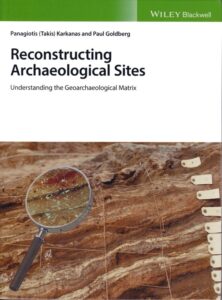
Reconstructing Archaeological Sites offers an important text that puts the focus on basic theoretical and practical aspects of depositional processes in an archaeological site. It contains an in-depth discussion on the role of stratigraphy that helps determine how deposits are organised in time and space.
Colin Renfrew, Olga Philaniotou, Neil Brodie, Gior-gos Gavalas & Michael J. Boyd (επιμέλεια)Cambridge2018
The status of Kavos on Keros as the earliest maritime sanctuary in the world is documented by the present volume, which includes (in Part A) the full publication of the marble finds from the Special Deposit South at Keros. These constitute the largest assemblage of Early Cycladic sculptures and vessels ever recovered in a controlled excavation, although they were all found in fragmentary condition.
This book investigates the production technology and inter-site circulation of a large and diverse Late Neolithic ceramic assemblage from the flat-extended settlement of Makrygialos (Phase II), in northern Greece. Comparative samples from Dimini, in Thessaly, and Agrosykia A and Giannitsa B, in western Macedonia, are also incorporated.