H αρχαιολόγος και λαογράφος Άννα Αποστολάκι (1881-1958) ήταν πρωτοπόρα μορφή της ελληνικής επιστήμης: μια από τις πρώτες φοιτήτριες του Πανεπιστημίου Αθηνών, από τις πρώτες γυναίκες μέλος πολλών επιστημονικών φορέων και η πρώτη γυναίκα διευθύντρια μουσείου στην Ελλάδα. Η σταδιοδρομία της έχει έναν παραδειγματικό χαρακτήρα: αντικατοπτρίζει όλες τις δυσκολίες και αγκυλώσεις που κλήθηκαν να αντιμετωπίσουν οι γυναίκες της εποχής της στην προσπάθειά τους να σταδιοδρομήσουν και να αναλάβουν έναν πιο ενεργό ρόλο στην κοινωνία και στην επιστήμη.
Tout en tenant compte des nouveautés apparues au cours de cette période charnière, on remarque une forte continuité de l’âge du bronze à l’âge du fer, y compris d’un point de vue linguistique, comme en témoignent les inscriptions d’Ini. Au fil des siècles, les habitants de la Messara et des montagnes environnantes, qui ont su développer une économie florissante fondée sur l’agricul-ture, l’élevage et l’artisanat, se sont mélangés aux nouveaux arrivants (Mycéniens du continent, «Doriens», Levantins), en donnant ainsi naissance à une culture où la tradition et les nouveaux apports coexistent et se mélangent au cœur de l’une des régions les plus fertiles de Crète.
Angela Pontrandolfo in collaborazione con Michalis Petropoulos & Athanasios D. RizakisΡώμη2016
The institutions decided to start a systematic survey of the Eastern part of the territory now corresponding to the ancient Aegialeia and, since the area between Aigeira and Pellene belongs today to Corinthia, the investigation began from the valley of the Krios, which flows on the west of Aigeira. This volume is a collection of the results of surveys and intrasite excavations conducted in the first four years in the areas corresponding to the theoretical transects that concern both sides of the low and middle valley of the river.
Πρόθεση του συγγραφέα, Ομότιμου Καθηγητή Χρίστου Ντούμα, Διευθυντή από το 1975 των Ανασκαφών Ακρωτηρίου Θήρας, και του εκδότη, της Εταιρείας Στήριξης Σπουδών Προϊστορικής Θήρας, είναι ο οδηγός αυτός να βοηθήσει τον επισκέπτη να γνωρίσει τον αρχαιολογικό χώρο στο Ακρωτήρι και το Μουσείο Προϊστορικής Θήρας στα Φηρά.
Η παρούσα εργασία για την Εποχή του Χαλκού στο Διμήνι πραγματοποιήθηκε στο πλαίσιο εκπόνησης διδακτορικής διατριβής της συγγραφέως στο Τμήμα Ιστορίας-Αρχαιολογίας του Αριστοτελείου Πανεπιστημίου Θεσσαλονίκης. Έναυσμα για την εκπόνηση της διατριβής αποτέλεσε ο τεράστιος όγκος αρχαιολογικού υλικού που προέκυψε από τις ανασκαφές στο Διμήνι, που πραγματοποιήθηκαν από την ίδια από το 1977 έως το 1997.
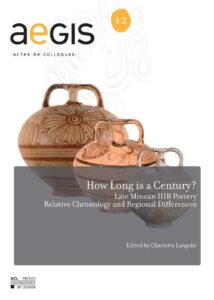
Covering approximately the century between 1300 and 1200 BC, the Late Minoan IIIB phase remains a blurred episode of Minoan civilisation. Archaeological data present a contradictory picture: on the one hand, they suggest a time of prosperity, with favourable conditions of subsistence and growth; on the other hand, there are signs of trouble illustrated by a series of abandonments of century-old occupied settlements.
Archaeologist and award-winning photographer Gavin McGuire’s involvement with the Sissi Archaeological Project, where he conducted a seven-year photographic study of the Bronze Age Minoan excavations under the auspices of the Belgian School in Athens, Université Catholique de Louvain, offered an extraordinary opportunity to capture moments of human interaction during excavations as they interconnected with an ancient Minoan culture, stretching back millennia (2600-1200 BC).
Ο παρών τόμος αποτελεί προϊόν ευρύτατης συνεργασίας και αποσκοπεί στο να προσφέρει μια επικαιροποιημένη επισκόπηση της αρχαίας κυπριακής ιστορίας από την εποχή των πρωιμότερης ανθρώπινης παρουσίας στο νησί, την 11η χιλιετία π.Χ., έως την κατάλυση των ανεξάρτητων πόλεων-βασιλείων και την ένταξη της Κύπρου στο πτολεμαϊκό βασίλειο της Αιγύπτου, στα τέλη του 4ου αι. π.Χ.
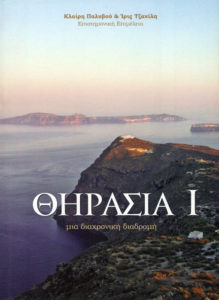
Πριν αρχίσουμε την έρευνα το 2007 σκεπτόμασταν πόσο λίγο είναι γνωστή η Θηρασία από αρχαιολογικής και ιστορικής πλευράς, μολονότι στο έδαφος της ξεκίνησε η έρευνα για την αρχαιολογία του Αιγαίου! Τεράστια αντίθεση με την κοντινή και τόσο διάσημη Θήρα, με τις μεγάλες αρχαιολογικές έρευνες (Ακρωτήρι, αρχαία Θήρα), με αρχεία, με επισκέπτες, με βιβλία για την ιδιότυπη αρχιτεκτονική της.
Το βιβλίο «Πάρος Αντίπαρος Δεσποτικό» αποτελεί ένα χρήσιμο και εύχρηστο οδηγό για το νησί της Πάρου. Ο επισκέπτης, αλλά και ο κάτοικος της Πάρου, με τον οδηγό αυτό ανά χείρας, θα έχουν τη δυνατότητα να περιηγηθούν στις ομορφιές του νησιού, να ενημερωθούν για τα μνημεία και τα αξιοθέατά της, να περπατήσουν πάνω στα χνάρια των αρχαίων Παρίων, αισθανόμενος την ιδιαίτερη αύρα που αναδύεται μέσα από τη μακραίωνη ιστορική διαδρομή της περιοχής.
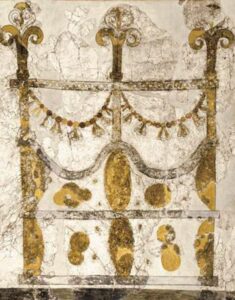
Οι εμπορικές συναλλαγές των Θηραίων θαλασσοπόρων με τη Μεσόγειο και τον κόσμο της Ανατολής απέφεραν μεγάλο πλούτο, που λάμπρυνε την πόλη του Ακρωτηρίου με μνημειώδη δημόσια και ιδιωτικά οικοδομήματα και συνέβαλε στην άνθηση μιας παραστατικής τέχνης με επίκεντρο τον άνθρωπο και το περιβάλλον του. Εκείνο δε που καθιστά το Ακρωτήρι μοναδικό στον κόσμο, είναι οι τοιχογραφίες του. Για το λόγο αυτόν, ο αναγνώστης του τόμου Προϊστορική Θήρα έχει ένα μοναδικό προνόμιο, καθώς παρουσιάζονται στις σελίδες του, για πρώτη φορά, αποκατεστημένα έργα, τοιχογραφίες και κεραμική που δεν εκτίθενται στο μουσείο.
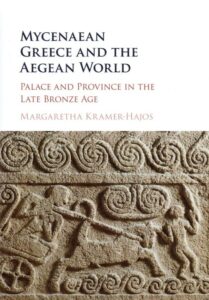
Drawing on network and agency theory, two current and highly effective methodologies in prehistoric Mediterranean archaeology, Kramer-Hajos argues that the Euboean Gulf region thrived when it was part of a decentralized coastal and maritime network, and declined when it was incorporated in a highly centralized mainland-looking network. Her research and analysis contributes new insights to our understanding of the mechanics and complexity of the Bronze Age Aegean collapse.
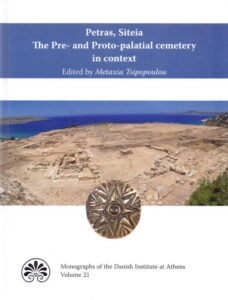
The second conference report on the archaeological site of Petras, Siteia concerns the progress of research conducted about the very important and extensive cemetery of the Pre- and Proto-palatial periods in eastern Crete - one of very few excavations started in Crete in the 21st century.
This volume is the first of two that represent the final publication of Sector I of the Prepalatial to Postpalatial Minoan urban settlement and palace of Petras, Siteia, located in eastern Crete, and it presents the results of the excavations conducted there from 1985 to 2000.
Individual chapters focus on the architecture (Tsipopoulou), cooking wares (Alberti), Early Minoan (EM) and Middle Minoan (MM) I pottery (Relaki), a unique example of an EM–MM amphora stamped with a seal prior to firing (Krzyszkowska), numerous miniature vessels and figurines (Simandiraki-Grimshaw), and a study of vessels (primarily Neopalatial) with potter’s marks (Tsipopoulou).
Eva Alram-Stern, Fritz Blakolmer, Sigrid Deger-Jalkotzy, Robert Laffineur & Jörg Weilhartner (επιμέλεια) Leuven-Liege2016
At the METAPHYSIS conference a large range of issues of ritual, myth and symbolism in the Aegean Bronze Age were addressed, such as ritual places and ritual landscapes, sacral and sepulchral rituals, social and political ceremonies, ritual acts and performances, the supernatural realm, liminality, irrationality and magic, mythology, hybrid creatures, heroes/heroines, divinities, symbols, emblems and iconography, images of power, and cosmology. Thus, META-PHYSIS was dedicated to the complex relationship between humans and ‘the other’ - the broad scholarly interface between a popular ritual belief and the cult of deities, i.e. religion in its proper sense.