Το παρόν βιβλίο αποτελεί βελτιωμένη δημοσίευση της διδακτορικής διατριβής του συγγραφέα, η οποία υποστηρίχθηκε το χειμώνα του 2011/2012 στη Φιλοσοφική Σχολή του Πανεπιστημίου του Tübingen.
Despite being explored as early as 1877, just one year after Schliemann’s discovery of Circle A at Mycenae, Mycenaean Attica has never been the subject of a general overview. Attention has only been devoted to single outstanding discoveries, such as the monumental tombs and cemeteries of Spata, Menidi, and Perati, or the citadels and settlements of the Acropolis at Athens, Eleusis, and Kiapha Thiti.
Mycenaean architecture is a topic widely investigated by archaeologists, from typological and/or technological and/or artistic perspectives and, more recently, from the socio-economic point of view.
Maria Emanuela Alberti & Serena Sabatini (επιμέλεια)Oxford & Oakville2013
Throughout the local Bronze and Iron Age, European and Mediterranean societies appear to have been involved in complex systems of exchange networks which invariably affected local customs and historical developments.
The Mediterranean has been for millennia one of the global cockpits of human endeavor. World-class interpretations exist of its Classical and subsequent history, but there has been remarkably little holistic exploration of how its societies, culture and economies first came into being, despite the fact that almost all the fundamental developments originated well before 500 BC.
Στο τρίτομο αυτό έργο ο Θεόδωρος Σπυρόπουλος, Επίτιμος Έφορος Αρχαιοτήτων Σπάρτης, παρουσιάζει τη σημαντικότατη ανασκαφική του έρευνα στην Πελλάνα Λακωνίας, που βρίσκεται 25 χλμ. βόρεια της Σπάρτης.
This work represents the first comprehensive account of all the deposits and structures uncovered over the past hundred years on the three hills of the Phaistos ridge (in south-central Crete), and also the first attempt to clarify the nature of the site – in terms of function and status – from its foundation at the end of the Neolithic period through the Early Bronze Age.
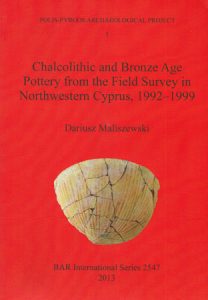
The material presented here is derived from an extensive survey conducted by the Polis-Pyrgos Archaeological Project (PAP) in 1992–1994, 1996–1997, and 1999 in the area between the western bank of the Chrysochou River and Kato Pyrgos in northwestern Cyprus.
This pioneering volume approaches the languages and scripts of ancient Cyprus from an interdisciplinary point of view, with a primarily linguistic and epigraphic approach supplemented by a consideration of their historical and cultural context.
The idea of publishing a collective volume on the archaeological sites and monuments of Corinthia was born of the need to fill the gap existing in the relevant bibliography. However, our concern was not to write a run-of-the-mill tourist guidebook, like those on sale to visitors in the museums, but to present the monuments and their history in such a way as to enhance Corinthia's outstanding place in the ancient world.
«Dans sa recherche sur l’histoire des hommes, il combinait les données de l’archéologie et du droit : pour comprendre une société et ses règles, n’y a-t-il pas nécessité de connaître les contraintes techniques qui s’imposaient à elle autant que la nature des rapports entre ses membres et des lois qui les réglementaient?»
Την Παρασκευή 31 Μαΐου 2013 έγινε στην Αρχαιολογική Εταιρεία επιστημονική ημερίδα στη μνήμη του Γεωργίου Εμμ. Μυλωνά (1898-1988) που οργανώθηκε από την Εταιρεία, την Ακαδημία Αθηνών και την Έδρα Ελληνικών Σπουδών του Πανεπιστημίου Missouri St. Louis των Ηνωμένων Πολιτειών της Αμερικής την οποία κατέχει ο εταίρος καθηγητής αρχαιολογίας κ. Μιχάλης Κοσμόπουλος.
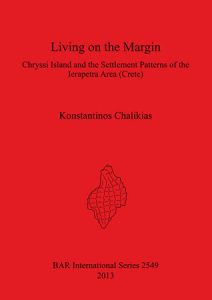
Τhis monograph examines the settlement history of a small island off the coast of southeast Crete and its exploitation by the settlements in the southern part of the Ierapetra Isthmus. Recent archaeological discoveries by the 24th Ephorea on Chryssi Island led to an intensive survey that uncovered numerous sites, dating from the Final Neolithic to the Ottoman period.
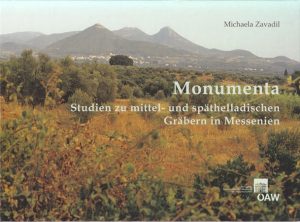
Tombs are an important source for reconstructing ancient social structures. The region of Messenia in south-western Peloponnese was a centre of the Middle and Late Helladic culture (2100/2000–1200 BC). Basis of the present study of tombs in Messenia is a catalogue of 57 find-spots with about 240 tombs.
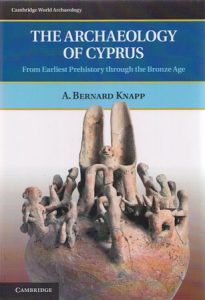
Situated between the worlds of the Near East, Europe and Africa, the archaeology and culture of Cyprus are central to an understanding of the ancient Mediterranean world. This book treats the archaeology of Cyprus from the first-known human presence during the Late Epipalaeolithic (ca. 11,000 BC) through the end of the Bronze Age (ca. 1000 BC).