ΑΡΘΡΑ | 2026
New anthropological insights into the use of stonemasons’ percussive stone tools at the site of Malia, Crete based on experiments
Journal of Archaeological Science: Reports 69, 2026: 105321
This paper presents part of the research conducted in the framework of the MCSA LiTechAe project exploring the percussive tools and techniques used for stone dressing in monumental architecture in the 2nd millennium BC Aegean world on the basis of experiments and use-wear analysis.Exploring Mycenaean knappers’ toolkit: confocal microscopy and surface topography
Digital Applications in Archaeology and Cultural Heritage 40, 2026: e00513
The aim of this preliminary pilot study is to develop methods for the observation and characterisation of Aegean Bronze Age stone arrowheads. This will allow us to reconstruct the techniques employed for their manufacture.Absolute dating of the Late Bronze Age palace at Agios Vasileios: Insights from dendrochronology and radiocarbon methods
Dendrochronologia 97, 2026: 126500
Agios Vasileios, a major Late Bronze Age site in Laconia known since the late 1960s, has gained renewed scholarly attention over the past decade following the discovery of Linear B tablets.Exploring mobility in Bronze Age Greece: A Sr isotope perspective
PLoS One 21(9) 2026: e0357576
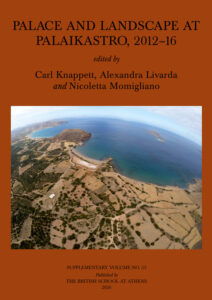
The Mediterranean region saw significant socio-economic and cultural transformations during the Bronze Age, varying across regions and through time. Expanding exchange networks played an important role in these developments by connecting distant communities.Palace and Landscape at Palaikastro 2016–22
London
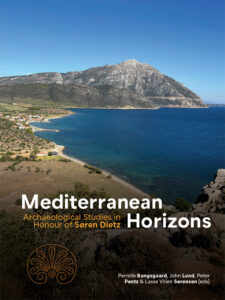
Mediterranean Horizons: Archaeological Studies in Honour of Søren Dietz
Leiden