
ΑΡΘΡΑ | 2010
“Gone with the wind”. Aerial photography of Bâtiment Pi, Malia, Crete (Bronze Age)
AARGnews. The newsletter of the Aerial Archaeology Research Group 40 (March 2010): 17-24.
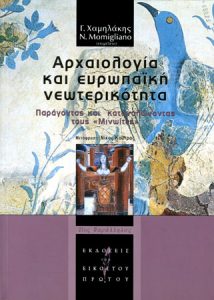
The archaeological site of Malia is located on the north shore of Crete, about 30 km east of the island’s modern capital, Heraklion. During the Bronze Age, also known as the Minoan era (about 3000-1400 B.C.), the area progressively developed to become one of the principal palatial centers of the island. The site has been excavated since 1915, revealing a Minoan palace and a surrounding city.Αρχαιολογία και ευρωπαϊκή νεωτερικότητα. Παράγοντας και καταναλώνοντας τους «Μινωίτες»
Αθήνα
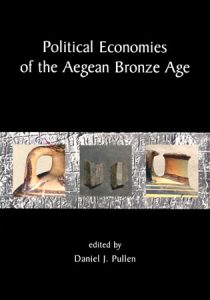
Political Economies of the Aegean Bronze Age: Papers from the Langford Conference, Florida State University, Tallahassee, 22-24 February 2007
Oxford & Oakville
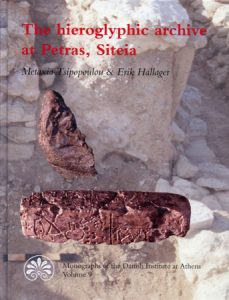
The Hieroglyphic Archive at Petras, Siteia
Αθήνα
Βιβλιοκρισία του: Minos and the Moderns. Cretan Myth in Twentieth-Century Literature and Art
The Classical Review
Augoustakis, A., 2010. Review of T. Ziolkowski, Minos and the Moderns. Cretan Myth in Twentieth-Century Literature and Art (New York: Oxford University Press, 2008), The Classical Review 60.1 (April): 290-291.
Βιβλιοκρισία του: Conservation and Presentation of the Cultural and Natural Heritage of the Large Islands of the Mediterranean
The Classical Review
Christophilopoulou, A., 2010. Review of V. Karageorghis & A. Giannikouri (eds), Conservation and Presentation of the Cultural and Natural Heritage of the Large Islands of the Mediterranean. Proceedings of the International Symposium, Rhodes, 1–3 September 2005 (Athens: Ministry of Culture/A.G. Leventis Foundation, 2006), The Classical Review 60.1 (April): 266-268.
Βιβλιοκρισία του: Mycenaean Art: A Psychological Approach
European Journal of Archaeology
Lindstrøm, T.C., 2010. Review of G. Muskett, Mycenaean Art: A Psychological Approach (Oxford: Archaeopress, 2007), European Journal of Archaeology 13 (April): 126-128.
Βιβλιοκρισία του: A Social Archaeology of Households in Neolithic Greece: an Anthropological Approach
European Journal of Archaeology
Duru, G., 2010. Review of S. Souvatzi, A Social Archaeology of Households in Neolithic Greece: An Anthropological Approach (Cambridge: Cambridge University Press, 2008), European Journal of Archaeology 13 (April): 120-123.
Βιβλιοκρισία του: Childhood in the Past
European Journal of Archaeology
Högberg, A., 2010. Review of the journal Childhood in the Past, Volume 1, 2008, European Journal of Archaeology 13 (April): 119-120.
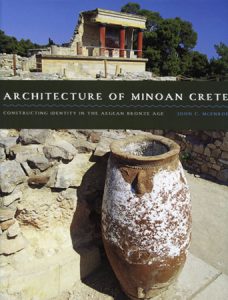
Architecture of Minoan Crete: Constructing Identity in the Aegean Bronze Age
Austin
Βιβλιοκρισία του: Die Palastkeramik
Gnomon
Thomas, E., 2010. Review of W. Voigtländer, Die Palastkeramik (Mainz: von Zabern, 2003), Gnomon 82.2: 181-182.
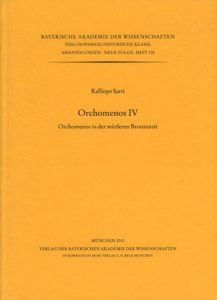
Orchomenos IV. Orchomenos in der mittleren Bronzezeit
Munich
Ανάσκαμμα. Ανασκαφικό περιοδικό. Τόμος 4, 2010
Θεσσαλονίκη
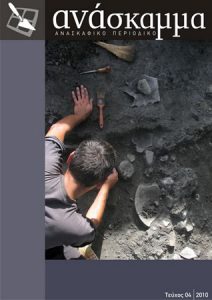
Πρόκειται για το τέταρτο τεύχος του περιοδικού Ανασκάμματος.