ΣΥΝΘΕΤΗ ΑΝΑΖΗΤΗΣΗ +

Αιγεύς Εταιρεία Αιγαιακής Προϊστορίας

ΒΙΒΛΙΑ | 2013

The Making of the Middle Sea: A History of the Mediterranean from the Beginning to the Emergence of the Classical World

London 2013

The Making of the Middle Sea: A History of the Mediterranean from the Beginning to the Emergence of the Classical World The Mediterranean has been for millennia one of the global cockpits of human endeavor. World-class interpretations exist of its Classical and subsequent history, but there has been remarkably little holistic exploration of how its societies, culture and economies first came into being, despite the fact that almost all the fundamental developments originated well before 500 BC.

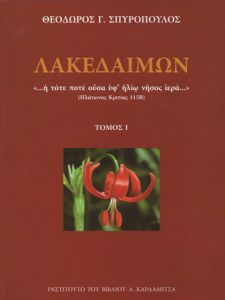
Λακεδαίμων (3 τόμοι)

Αθήνα 2013

Λακεδαίμων (3 τόμοι) Στο τρίτομο αυτό έργο ο Θεόδωρος Σπυρόπουλος, Επίτιμος Έφορος Αρχαιοτήτων Σπάρτης, παρουσιάζει τη σημαντικότατη ανασκαφική του έρευνα στην Πελλάνα Λακωνίας, που βρίσκεται 25 χλμ. βόρεια της Σπάρτης.

Βιβλιοκρισία του: Pottery Production and Supply at Bronze Age Kolonna, Aegina. An Integrated Archaeological and Scientific Study of a Ceramic Landscape

Journal of Hellenic Studies 133 (2013): 255-256

Schallin, A.-L., 2013. Review of W. Gauss & E. Kiriatzi, Pottery Production and Supply at Bronze Age Kolonna, Aegina. An Integrated Archaeological and Scientific Study of a Ceramic Landscape (Vienna 2011), Journal of Hellenic Studies 133 (2013): 255-256.
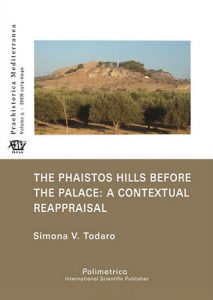
The Phaistos hills before the Palace: a contextual reappraisal

Monza

The Phaistos hills before the Palace: a contextual reappraisal This work represents the first comprehensive account of all the deposits and structures uncovered over the past hundred years on the three hills of the Phaistos ridge (in south-central Crete), and also the first attempt to clarify the nature of the site – in terms of function and status – from its foundation at the end of the Neolithic period through the Early Bronze Age.

14C Dating of Humic Acids from Bronze and Iron Age Plant Remains from the Eastern Mediterranean

Radiocarbon 55:2-3 (2013): 599-607.

Radiocarbon dating of plant remains is often difficult due to the complete dissolution of the samples in the alkaline step of the ABA pretreatment. At the VERA laboratory, this problem was encountered frequently when numerous Bronze and Early Iron Age samples from the eastern Mediterranean were dated in the course of the special research program SCIEM2000 and in other collaborations with archaeologists focused on that area and time period.

Interpreting Radiocarbon Dates from the Paleolithic Layers of Theopetra Cave in Thessaly, Greece

Radiocarbon 55:2-3 (2013): 1432-1442.

Theopetra Cave is a unique prehistoric site for Greece, as the Middle and Upper Paleolithic, Mesolithic, and Neolithic periods are present here, bridging the Pleistocene with the Holocene. During the more than 20 yr of excavation campaigns, charcoal samples from hearths suitable for 14C dating were collected from all anthropogenic layers, including the Paleolithic ones.

Overseers of an Entangled Island: Hybrid Cultural Identities of Early Iron Age Cyprus

Journal of Ancient Egyptian Interconnections 5:3 (September 2013): 61-73.

Archaeologists studying Late Bronze and Iron Age Cyprus have produced diverse theories regarding the origins of the Cypriot Iron Age city kingdoms, but it has proved difficult to integrate Cyprus within larger models designed to evaluate relationships between communities of the East Mediterranean.

Accumulations: Updating the Role of Cypriot Bichrome Ware in Egypt

Journal of Ancient Egyptian Interconnections 5:3 (September 2013): 44-60.

Cypriot Bichrome Wheel-made Ware is an important index for the study of interrelations in the Ancient Eastern Mediterranean World. The ware is a chronological marker for the beginning of the Late Cypriot Bronze Age and was the subject of a research project during the last decade within the Cyprus project of SCIEM 2000.

From Egyptian to Egyptianizing in Cypriot Glyptic of the Late Bronze Age

Journal of Ancient Egyptian Interconnections 5:3 (September 2013): 10-43.

The 228 contextualized seals at Enkomi allow for detailed views into how Egyptian seal types were used in the Late Bronze Age(ca. 1650–1050 BCE) in one settlement on Cyprus. Over time the emphasis shifted from Egyptian seal rings and uncarved scarabs and scaraboids in tombs to Egyptianizing designs on Cypriot cylinder and conoid stamp seals that recalled the carved details on the bottoms of scarabs.

Cyprus and Egypt in the Late Bronze Age

Journal of Ancient Egyptian Interconnections 5:3 (September 2013): 1-9.

The socioeconomic and ideological transformations that characterize Late Bronze Age Cyprus have been linked to a major expansion in interconnections with the older cultures of ancient western Asia and Egypt.