ΣΥΝΘΕΤΗ ΑΝΑΖΗΤΗΣΗ +

Αιγεύς Εταιρεία Αιγαιακής Προϊστορίας

ΒΙΒΛΙΑ | 2016

Human Mobility and Technological Transfer in the Prehistoric Mediterranean

Cambridge 2016

Human Mobility and Technological Transfer in the Prehistoric Mediterranean This volume represents a significant contribution to this new trend as it engages thematically with a wide range of connectivities in the later prehistory of the Mediterranean, from the later Neolithic of northern Greece to the Levantine Iron Age, and with diverse forms of materiality, from pottery and metal to stone and glass. With theoretical overviews from leading thinkers in prehistoric mobilities, and commentaries from top specialists in neighbouring domains, the volume integrates detailed case studies within a comparative framework.

La costa occidentale dell’ Attica durante il Neolitico Finale e il Bronzo Antico: scelte insediative e rapporti con le Cicladi

Στο F. Longo, R. di Cesare & S. Privitera (eds) 2016. ΔΡΟΜΟΙ. Studi sul mondo antico offerti a Emanuele Greco dagli allievi della Scuola Archeologica Italiana di Atene, Atene-Paestum: 37-47.

Direct or indirect trade between the west coast of Attica and settlements in Attica itself and in the Cyclades are attested as early as the Final Neolithic. This moves the Aegean cultural koiné of BA II identified by Renfrew almost a thousand year back.

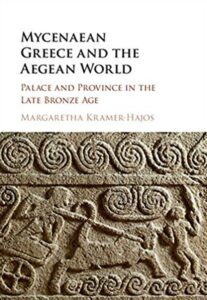
Mycenaean Greece and the Aegean World. Palace and Province in the Late Bronze Age

New York

Mycenaean Greece and the Aegean World. Palace and Province in the Late Bronze Age In this book, Kramer-Hajos examines the Euboean Gulf region in Central Greece to explain its flourishing during the postpalatial period. Providing a social and political history of the region in the Late Bronze Age, she focuses on the interactions between this “provincial” coastal area and the core areas where the Mycenaean palaces were located.

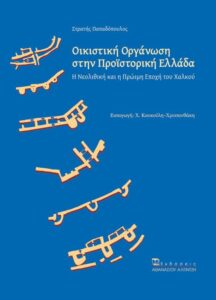
Οικιστική οργάνωση στην προϊστορική Ελ-λάδα. Η Νεολιθική και η Πρώιμη Εποχή του Χαλκού

Θεσσαλονίκη

Οικιστική οργάνωση στην προϊστορική Ελ-λάδα. Η Νεολιθική και η Πρώιμη Εποχή του Χαλκού Η «Οικιστική οργάνωση στην προϊστορική Ελλάδα της Νεολιθικής περιόδου και της Πρώιμης Εποχής Χαλκού» του Στρατή Παπαδόπουλου προσφέρει μια συνοπτική και εξαιρετικά περιεκτική παρουσίαση αρχαιολογικών δεδομένων και θεωρητικού προβληματισμού γι’ αυτές τις δύο σημαντικές φάσεις του Προϊστορικού Αιγαίου.

Kavousi IIC. The Late Minoan IIIC. Settlement at Vronda. Specialist Reports and Analyses

Philadelphia-Pennsylvania

Kavousi IIC. The Late Minoan IIIC. Settlement at Vronda. Specialist Reports and Analyses Detailed analyses of the architecture, pottery, other finds (including figurines and stone tools), and botanical and faunal remains are presented in this third volume, along with a complete history of the site and an attempt to reconstruct the social, political, and religious organization of the settlement.

An Archaeology of Prehistoric Bodies & Embodied Identities in the Eastern Mediterranean

Oxford

An Archaeology of Prehistoric Bodies & Embodied Identities in the Eastern Mediterranean In these 28 thematically arranged papers, specialists in the archaeology of the eastern Mediterranean confront the perceived invisibility of past bodies and ask new research questions. Contributors discuss new and old evidence; they examine how bodies intersect with the material world, and explore the role of body-situated experiences in creating distinct social and other identities.

Le cadre géographique et la présence humaine à l’époque prèhistoire

Στο J. Fournier (ed.), 2016. Philippes, de la Préhistoire à Byzance (BCH Supplément 55), Athènes: 23-43.

Dans la seconde phase de l’Holocène, depuis 3000 av. J.-C. jusqu’à aujourd’hui, les modifications qui ont débuté au Bronze Récent, lorsque les activités humaines se sont peu à peu transportées en altitude, ont été plus rapides. Les changements environnementaux ont été plus nombreux et plus soutenus du IVe s. av. J.-C. jusqu’à l’Antiquité tardive, en raison de l’augmentation démographique et de la création de centres urbains.

Physico-chemical study of pigments from the prehistoric settlement of Ialysos, Rhodes

Στο E. Photos-Jones, Y. Bassiakos, E. Filippaki, A. Hein, I. Karatasios, V. Kilikoglou & E. Kouloumpi (eds), 2016. Proceedings of the 6th Symposium of the Hellenic Society for Archaeometry (Bar International Series 2780), Oxford: 133-140.

Διαβάστε το άρθρο

This paper presents the results of physicochemical analysis (observation and microanalysis with SEM-EDX, XRD and FTIR spectroscopy) of selected samples, revealing the composition of the raw pigments material and their manufacturing technology. Significant information is gained on an important aspect of the technology and its evolution during this period, which until recently was regarded as one of the darkest periods of the prehistoric Aegean.

A comparative study of Cypriot bronzes dated to the Late Bronze and the Early Iron Age

Στο E. Photos-Jones, Y. Bassiakos, E. Filippaki, A. Hein, I. Karatasios, V. Kilikoglou & E. Kouloumpi (eds), 2016. Proceedings of the 6th Symposium of the Hellenic Society for Archaeometry (Bar International Series 2780), Oxford: 95-99.

The sites under study are the area of the modem city of Limassol (a number of Late Bronze Age tombs situated in several areas of the city), the Late Bronze Age settlement of Pyla Kokkinokremos and the Early Iron Age cemetery of Palaepaphos Skales. This research intends to provide significant information primarily regarding the use of tin, as well as the presence and use of other metals, for the production of the bronze artefacts.