
ΑΡΘΡΑ | 2014
Βιβλιοκρισία του: Materiality and Consumption in the Bronze Age Mediterranean
Cambridge Archaeological Journal
Mac Sweeney, N., 2014. Review of L. Steel, Materiality and Consumption in the Bronze Age Mediterranean (London and New York 2013), Cambridge Archaeological Journal 24:03 (October 2014), 554-556.
Βιβλιοκρισία του: Maritime Networks in the Mycenaean World
Cambridge Archaeological Journal
Berg, I., 2014. Review of T.F. Tartaron, Maritime Networks in the Mycenaean World (Cambridge 2013), Cambridge Archaeological Journal 24:03 (October 2014), 544-546.
Dating the Thera (Santorini) eruption: archaeological and scientific evidence supporting a high chronology
Antiquity 88:342 (December 2014), 1164-1179
The date of the Late Bronze Age Minoan eruption of the Thera volcano has provoked much debate among archaeologists, not least in a recent issue of Antiquity (‘Bronze Age catastrophe and modern controversy: dating the Santorini eruption’, March 2014).KE-RA-ME-JA. Studies Presented to Cynthia W. Shelmerdine
Philadelphia/Pennsylvania

Βιβλιοκρισία του: The archaeology of Cyprus: from earliest prehistory through the Bronze Age
Antiquity
Fischer, P.M., 2014. Review of B. Knapp, The archaeology of Cyprus: from earliest prehistory through the Bronze Age (Cambridge 2013), Antiquity 88:339 (March 2014), 319-321.
The Early Helladic II–III transition at Lerna and Tiryns revisited: Chronological difference or synchronous variability?
Hesperia 83:3 (July-September 2014), 383-407
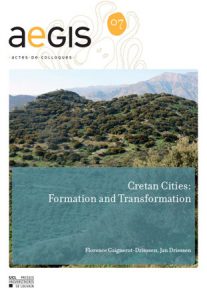
Lerna and the Lower Citadel of Tiryns are key sites for understanding the Early Helladic II–III transition in the northeastern Peloponnese. We argue that the differences between the two settlements do not reflect chronological variation, but rather the ways in which each settlement responded to events ca. 2200 b.c.Cretan Cities: Formation and Transformation
Louvain-la-Neuve
Βιβλιοκρισία του: The Oxford handbook of the European Bronze Age
Antiquity
Kristiansen, K., 2014. Review of H. Fokkens & A. Harding (eds), The Oxford handbook of the European Bronze Age (Oxford 2013), Antiquity 88:340 (June 2014), 672-674.
Long-Term Grain Storage and Political Economy in Bronze Age Crete: Contextualizing Ayia Triada’s Silo-Complexes
American Journal of Archaeology 118.3 (July 2014): 429-449.
Since the beginning of archaeological exploration on Crete, agricultural storage has attracted a great deal of scholarly interest.Goddesses Refusing to Appear? Reconsidering the Late Minoan III Figures with Upraised Arms
American Journal of Archaeology 118.3 (July 2014): 489–520.
Large wheelmade terracotta figures with upraised arms, found together with typical cultic equipment, are characteristic of Cretan Postpalatial bench sanctuaries. It is generally assumed that these figures represent one or more deities and were used as cult images.Making the Lion Gate Relief at Mycenae: Tool Marks and Foreign Influence
American Journal of Archaeology 118.3 (July 2014): 451-488.
This article considers the stoneworking techniques and implements that were employed in the production of the Lion Gate relief at Mycenae, as deduced from tool marks preserved on the sculpture.Βιβλιοκρισία του: Individuals and Society in Mycenaean Pylos
American Journal of Archaeology
Lantzas, K., 2014. Online review of Dimitri Nakassis, Individuals and Society in Mycenaean Pylos (Leiden 2013), American Journal of Archaeology 118.2 (April 2014).
Βιβλιοκρισία του: Materiality and Consumption in the Bronze Age Mediterranean
American Journal of Archaeology
Kelder, J.M., 2014. Online review of Louise Steel, Materiality and Consumption in the Bronze Age Mediterranean [Routledge Studies in Archaeology 7] (New York 2013), American Journal of Archaeology 118.2 (April 2014).
Βιβλιοκρισία του: Mediterranean Islands, Fragile Communities and Persistent Landscapes: Antikythera in Long-term Perspective
Antiquity
Rajala, U., 2014. Review of A. Bevan & J. Conolly, Mediterranean Islands, Fragile Communities and Persistent Landscapes: Antikythera in Long-term Perspective (Cambridge 2013), Antiquity 88:340 (June 2014), 676-677.