ΣΥΝΘΕΤΗ ΑΝΑΖΗΤΗΣΗ +

Αιγεύς Εταιρεία Αιγαιακής Προϊστορίας

ΑΡΘΡΑ | 2016

Obsidian consumption in the Late Pleistocene-Early Holocene Aegean: con-textualising new data from Mesolithic Crete

Annual of the British School at Athens 111 (2016): 13-34

Σε αυτό το άρθρο παρατίθεται η ανάλυση τεσσάρων τεχνέργων από οψιανό από τη Μεσολιθική θέση Λιβάρι Σκιάδι, μια από τις σπάνιες προ- Νεολιθικές θέσεις στην Κρήτη. Η ανάλυση με τη χρήση EDXRF ταυτίζει τις πρώτες ύλες με την περιοχή Στα Νύχια στη Μήλο.

Early Bronze Age chronology of mainland Greece: a review with new dates from the excavations at Kouphovouno

Annual of the British School at Athens 111 (2016): 35-49

Δημοσιεύουμε εδώ για πρώτη φορά μια σειρά από χρονολογήσεις ραδιοάνθρακα για την πρώιμη εποχή του Χαλκού από τις ανασκαφές στο Κουφόβουνο. Υιοθετώντας μια προσέγγιση βασισμένη στο μοντέλο Bayes, η χρήση του 14C μας επιτρέπει μεγαλύτερη ακρίβεια στην προσέγγιση μιας απόλυτης χρονολόγησης για αυτή την περίοδο.

Central ceiling and roof supports in Early Minoan II architecture

Annual of the British School at Athens 111 (2016): 51-69

Το άρθρο αυτό επικεντρώνεται σε μερικούς κεντρικούς υποστηρικτικούς τοίχους των πρώιμων μινωικών κτηρίων στην Αγία Τριάδα, στο Φούρνου Κορυφή (Μύρτο) και στη Βασιλική. Οι τοίχοι, οι οποίοι έχουν σχήμα Π, C, και L, έχουν ερμηνευθεί ως τοίχοι στήριξης οροφής.

Minoanisation in the Middle Bronze Age: evaluating the role of Cycladic producers and consumers

Annual of the British School at Athens 111 (2016): 71-93

Παρόλο που ο εκμινωισμός, η διαδικασία δηλαδή κατά την οποία τα κρητικά έθιμα διαδόθηκαν στο Αιγαίο, είναι ένα βασικό θέμα έρευνας για τις Κυκλάδες κατά την Μέση και Ύστερη Εποχή του Χαλκού, η συζήτηση για τις πρωταρχικές αιτίες αυτού του φαινομένου έχει επικεντρωθεί βασικά στην Ύστερη Εποχή του Χαλκού.

Truth lies in details: identifying an apiary in the miniature wall painting from Akrotiri, Thera

Annual of the British School at Athens 111 (2016): 95-120

Διαβάστε το άρθρο

Ανάμεσα στις αινιγματικές παραστάσεις της αιγαιακής εικονογραφίας της 2ης χιλιετίας π.Χ. συγκαταλέγεται η κατασκευή που εικονίζεται στο νότιο τοίχο της Μικρογραφικής Ζωφόρου από τη Δυτική Οικία του Ακρωτηρίου Θήρας.

RA-PI-NE-U. Studies on the Mycenaean World offered to Robert Laffineur for his 70th Birthday

Louvain

RA-PI-NE-U. Studies on the Mycenaean World offered to Robert Laffineur for his 70th Birthday This volume, in honour of one of the Odysseuses in Aegean archaeology, Professor Robert Laffineur, comprises a combination of papers presented during a seminar series on recent developments in Mycenaean archaeology at the Université de Louvain during the academic year 2015-2016. These were organised within the frame of the ARC13/18 - 049 (concerted research action) “A World in Crisis?”.

Staging Death. Funerary Performance, Architecture and Landscape in the Aegean

Berlin/Boston

Staging Death. Funerary Performance, Architecture and Landscape in the Aegean Places are social, lived, ideational landscapes constructed by people as they inhabit their natural and built environment. An ‘archaeology of place’ attempts to move beyond the understanding of the landscape as inert background or static fossil of human behaviour. From a specifically mortuary perspective, this approach entails a focus on the inherently mutable, transient and performative qualities of ‘deathscapes’: how they are remembered, obliterated, forgotten, reworked, or revisited over time.

Cretomania. Modern Desires for the Minoan Past

London/New York

Cretomania. Modern Desires for the Minoan Past Since its rediscovery in the early 20th century, through spectacular finds such as those by Sir Arthur Evans at Knossos, Minoan Crete has captured the imagination not only of archaeologists but also of a wider public.

The Pottery from Dhaskalio

Cambridge

The Pottery from Dhaskalio This volume treats in detail the pottery from the settlement on the islet of Dhaskalio, whose excavation is described in Volume I of the series. Much of the importance of this material lies in the undisturbed stratigraphy of the settlement, a fact that allowed for the recognition of three successive phases of occupation of the site with considerable ceramic continuity between them, as well as for safe inferences about its chronology, with wider implications for the later Εarly Βronze Αge of the Cyclades.

Η αρχαιολογία στην Ελλάδα του σήμερα. Μνημεία και άνθρωποι σε κρίση

Αθήνα

Διαβάστε όλο το βιβλίο σε ψηφιακή μορφή
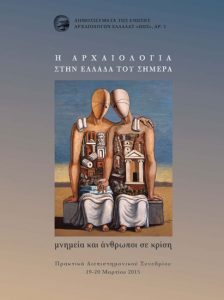
Η αρχαιολογία στην Ελλάδα του σήμερα. Μνημεία και άνθρωποι σε κρίση Πρόκειται για τα πρακτικά του Διεπιστημονικού Συνεδρίου «Η αρχαιολογία στην Ελλάδα του σήμερα. Μνημεία και άνθρωποι σε κρίση» που πραγματοποιήθηκε στην Αθήνα στις 19-20 Μαρτίου 2015.

Phantom Trojans at the Dardanelles?

Talanta XLVI-XLVII (2014-2015): 27-50

The assumption that a Trojan War took place in the so-called Troas at the Dardanelles depends on the belief that there once existed a population called Troes in this region, as the Ilias maintains. However, the Troes in the Ilias do not carry Anatolian, but only Greek and Thracian or Illyrian names; there is no Trojan identity.