ΣΥΝΘΕΤΗ ΑΝΑΖΗΤΗΣΗ +

Αιγεύς Εταιρεία Αιγαιακής Προϊστορίας

ΒΙΒΛΙΑ | 2009

Pseira X: The Excavation of Block AF

Philadelphia 2009
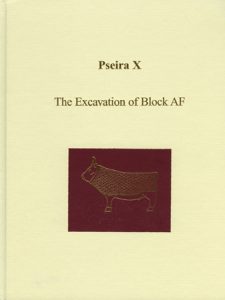
Pseira X: The Excavation of Block AF This book is the tenth volume in the series of excavation reports about the harbor town of Pseira, which is located on the island of the same name, just off the northeast coast of Crete. The book focuses on the excavation and interpretation of the architecture and material culture in Block AF. This southern group of buildings is one of the most important areas in the settlement because of its long succession of building phases. Block AF provides the fullest sequence of building phases from any one area at Pseira, with habitation extending from before MM II to LM III. It has examples of complex architectural details including a “pillar crypt”, elaborate upstairs floors, a well-preserved U-shaped staircase, and a well-designed kitchen, all of which contribute significantly to our knowledge of East Cretan building practices.

The prehistoric finds from the Halasarna survey project 2003-2006, Kos: A preliminary report

Aegean Archaeology 8 (2005-2006) [2009]: 7-19.

This is a preliminary report on the six most important prehistoric sites identified during the Halasarna Survey Project. The early occupation of Kos was until recently only slightly touched on by archaeological investigations and this survey has provided substantial data for better understanding of settlement on the island, in particular during the Neolithic and the Early Bronze Age.

Rapid cooling effects in Early Bronze Age copper smelting slags from Chrysokamino

Aegean Archaeology 8 (2005-2006) [2009]: 21-30.

During the Early Bronze Age, the promontory of Chrysokamino in the Mirabello Bay area of Crete housed a small copper smelting installation. Under the direction of Philip P. Betancourt, a team from Temple University excavated the site from 1996 to 1997. Slag from the smelting operations was abundantly present, up to sixty centimeters deep. Initial analyses of the slag suggested that the smelting operation, although relying upon simple technology, was nonetheless effective. With chimneys and artificial draft, the furnaces probably reached temperatures of up to 1230° C, sufficient to separate copper from its ores and produce slag.

A reconsideration of depositional practices in Early Bronze Age Crete

Aegean Archaeology 8 (2005-2006) [2009]: 31-50.

Aegeanists typically argue that the state formed on Crete as it did in the ancient Near East. Hierarchical structures developed over the course of the Bronze Age culminating in the centralization of civil and religious power at Knossos near the beginning of the Late Bronze Age. Already at EM I Knossos emerging elites competed in the conspicuous consumption of food, drink and fine pottery to legitimate their authority.

Inferences for use of Skotino Cave during the Bronze Age and later based on a speleological and environmental study at Skotino Cave, Crete

Aegean Archaeology 8 (2005-2006) [2009]: 51-63.

Inferences for the use of Skotino Cave in the Bronze Age are based on a speleological and environmental study of the cave conducted in 2007. Level II of the cave, an area excavated by Davaras, was the focus of the inquiry.
From the ground up: Earth in Minoan construction. The case of Building 5 at Palaikastro

Aegean Archaeology 8 (2005-2006) [2009]: 65-80.

The violent destruction by fire of Building 5 at Palaikastro, Crete, provided an interesting and varied collection of well-preserved fired-earth elements. Those include fragments of mudbricks, mud coatings, roofs/ceilings, doorjambs, and other samples which bear impressions of wooden elements, probably from installations made of a combination of earth and wood.

The ownership of hard stone seals with the motif of a pair of recumbent bovines from the Late Bronze Age Greek mainland: A contextual approach

Aegean Archaeology 8 (2005-2006) [2009]: 81-93.

Hard stone seals with the motif of a pair of side-to-side recumbent bovines form one of the most recognizable groups of Late Bronze Age Aegean glyptic. In an attempt to shed some light on aspects of their ownership, this paper examines in detail the contextual associations of a small corpus of these seals from eight Late Bronze Age burials and burial assemblages of the Greek mainland.

2006–2007 Excavations of the Mycenaean cemetery at Ayia Sotira, ancient Nemea

Aegean Archaeology 8 (2005-2006) [2009]: 95-109.

During the summers of 2006 and 2007 the Canadian Institute in Greece sponsored the excavation of a Mycenaean chamber tomb cemetery at Ayia Sotira near Koutsomodi in the Nemea valley. The cemetery was discovered in 2002, when the 4th Ephorate of Prehistoric and Classical Antiquities discovered illegal digging in an olive grove above the small church of Ayia Sotira, and immediately conducted salvage excavations of one of the chamber tombs.

Archaeologies of Cult: Essays on Ritual and Cult in Crete

Princeton

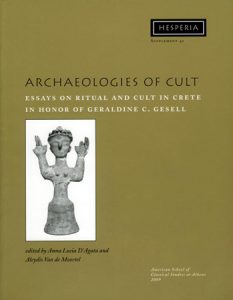
Archaeologies of Cult: Essays on Ritual and Cult in Crete Twenty-five years after Colin Renfrew’s seminal book, The Archaeology of Cult, was published, the study of ritual and religion in Crete remains one of the most vital and debated areas of research in Old World prehistory. For the present volume, 25 specialists in the archaeology of the island have been invited to bring the subject up to date. Their multivocalist discourse ranges in time from the Bronze to the Iron Age and includes, in five diverse sections, unpublished finds, theoretically-informed discussion of ritual behavior, and innovative reconstructions of sacred landscapes.

Χανιά (Κυδωνία). Περιήγηση σε χώρους αρχαίας μνήμης

Χανιά

Χανιά (Κυδωνία). Περιήγηση σε χώρους αρχαίας μνήμης H πόλη των Χανίων υπερηφανεύεται δικαίως ότι συγκαταλέγεται στις πόλεις με μακραίωνη ιστορία και ειδικά στις πόλεις στις οποίες οι ανασκαφικές εργασίες έχουν αποκαλύψει συνεχή κατοίκηση σε αλλεπάλληλα οικιστικά στρώματα. Είναι η μοναδική πόλη στη σύγχρονη Κρήτη που ξεθάβει τόσες πολλές μνήμες καθημερινά και φέρνει στο φως τόσα πολλά ίχνη από το μακρινό παρελθόν της. Ίχνη σβησμένα και ξανασβησμένα, όπως σε ένα παλίμψηστο χειρόγραφο, αλλά πάντα με αναγνώσιμα και αναγνωρίσιμα αποτυπώματα. Έτσι έχει αρχίσει η ανασύνθεση του μοναδικού αρχιτεκτονικού παλίμψηστου της πόλης των Χανίων, η οποία έχει χαρακτηριστεί στην Επικράτεια Πολιτισμού ως η πόλη της αρχιτεκτονικής της Μεσογείου. Ταυτόχρονα, είναι μια από τις αρχαιότερες πόλεις της Μεσογείου και ολόκληρης της Ευρώπης, τίτλος που στηρίζεται στην ύπαρξη οργανωμένου οικισμού με «αστικό» χαρακτήρα ήδη από την τρίτη χιλιετία π.Χ.

Mycenae revisited part 2. Exploring the local versus non-local geographical origin of the individuals from Grave Circle A: Evidence from Strontium Isotope Ratio (87Sr/86Sr) Analysis

The Annual of the British School at Athens 104 (2009) [February 2010]: 279-291.

Η ανάλυση της ισοτοπικής αναλογίας του στροντίου (87Sr/86Sr) εφαρμόστηκε σε δείγματα οδοντικού σμάλτου από έντεκα ενήλικες από τον Ταφικό Κύκλο Α στις Μυκήνες προκειμένου να διερευνηθεί η τοπική ή μη-τοπική γεωγραφική τους προέλευση.

X-radiography of Knossian Bronze Age vessels: Assessing our knowledge of primary forming techniques

The Annual of the British School at Athens 104 (2009) [February 2010]: 137-173.

Στο άρθρο αυτό εξετάζονται oι δυνατότητες της ραδιογραφίας ακτίνων-Χ στην αναγνώριση βασικών τεχνικών κατασκευής των κρητικών αγγείων της Εποχής του Χαλκού. Η ακτινογράφηση ενενήντα πέντε ΠΜ III έως και ΥΜ II αγγείων από την Κνωσό, χρονολογούμενων από την ΠΜ III έως την ΥΜ II, απέδειξε την καταλληλότητά της τεχνικής αυτής για την εξέταση της κρητικής λεπτής, ημιχονδροειδούς και χονδροειδούς κεραμικής.

Mycenae and Tiryns: the pottery of the second half of the thirteenth century BC – contexts and definitions

The Annual of the British School at Athens 104 (2009) [February 2010]: 175-232.

Από το 1950 εκτεταμένες και σημαντικές ανασκαφικές έρευνες έχουν λάβει χώρα στην Αργολίδα. Για τις Μυκήνες και την Τίρυνθα ένα μεγάλο μέρος της μεταανασκαφικής μελέτης έχει πλέον ολοκληρωθεί δίχως ωστόσο να έχει φτάσει στο τελικό στάδιο της δημοσίευσης.